



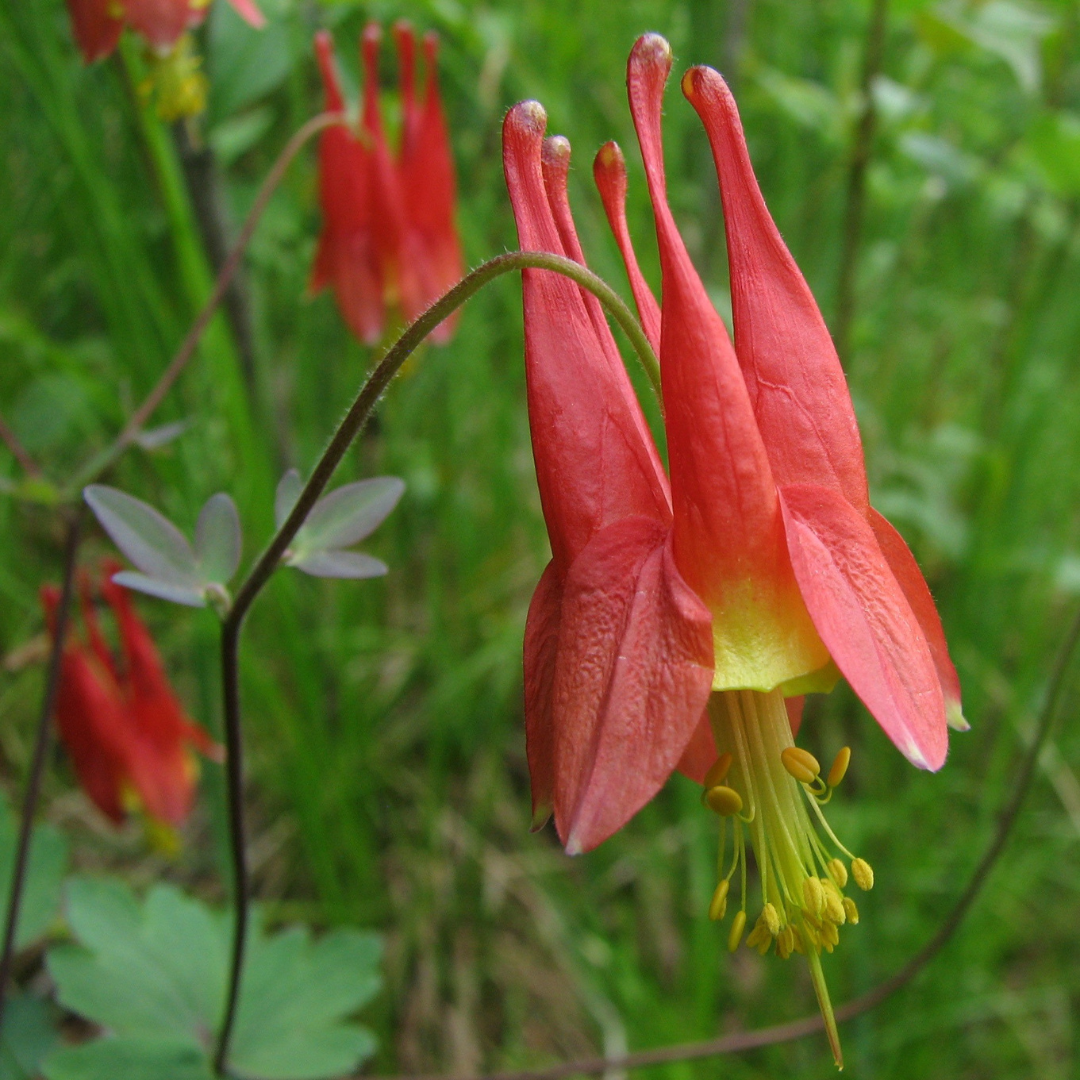
Aquilegia canadensis
Add to Wishlist Full Sun
 Partial Sun
 Deer Resistant
 Pollinator Friendly
 Native
- In stock, ready to ship
Aquilegia canadensis: Red Lanterns on the Hummingbird Route
Nodding red and yellow lanterns with long spurs, the native columbine that hummingbirds have on speed dial. It shows up in spring and reseeds wherever it pleases. HOMEGROWN FIREWORKS.
Plant Characteristics:
- Botanical Name: Aquilegia canadensis
- Common Name: Eastern Red Columbine, Wild Columbine
- Height: 30–75 cm (1–2.5 ft)
- Spread: 30–45 cm (1–1.5 ft)
- Flowers: Nodding, red with yellow, 2.5–5 cm (1–2 in) long, with long upright spurs
- Bloom Time: Mid to late spring (May to June)
- Foliage: Finely divided, blue-green leaves
- Features: Rabbit resistant, self-seeds
Where to Plant: It shines in woodland gardens, rock gardens, shady borders and pollinator plantings, and it fills gaps on its own over time by self-seeding. It's a good choice for a spot that gets spring sun before the overhead canopy fills in.
Companion Plants: Bergenia 'Bressingham Ruby' flowers magenta in April and May and adds bold, leathery leaves. Aruncus aethusifolius brings cream plumes at 25 to 45 cm in June and July, as the red columbine finishes. Monarda fistulosa rises behind with lavender flowers from June to August. All three grow in full sun or partial sun.
Plant Care: Plant in part sun or full sun in well-drained soil. It does best in average to slightly alkaline soil and doesn't need rich ground. Avoid spots that stay wet. Water through the first season, after which it copes with normal dry spells. Each plant is fairly short-lived, but self-sown seedlings carry it on and bloom in their second year. Leave some seed heads if you want more. If the leaves get tired, marked by leaf miners or mildew by midsummer, cut them back and fresh growth will follow. It doesn't need dividing.
History: Eastern red columbine grows wild across much of eastern and central Canada, including Ontario and Quebec, and south through the eastern United States, often on rocky slopes and woodland edges. Its bloom lines up with the spring return of ruby-throated hummingbirds.
Final Thoughts: Plant it once and let it wander through the garden. Deer and rabbits don't bother it. THE HUMMINGBIRDS WILL NEVER LEAVE YOUR YARD.



