

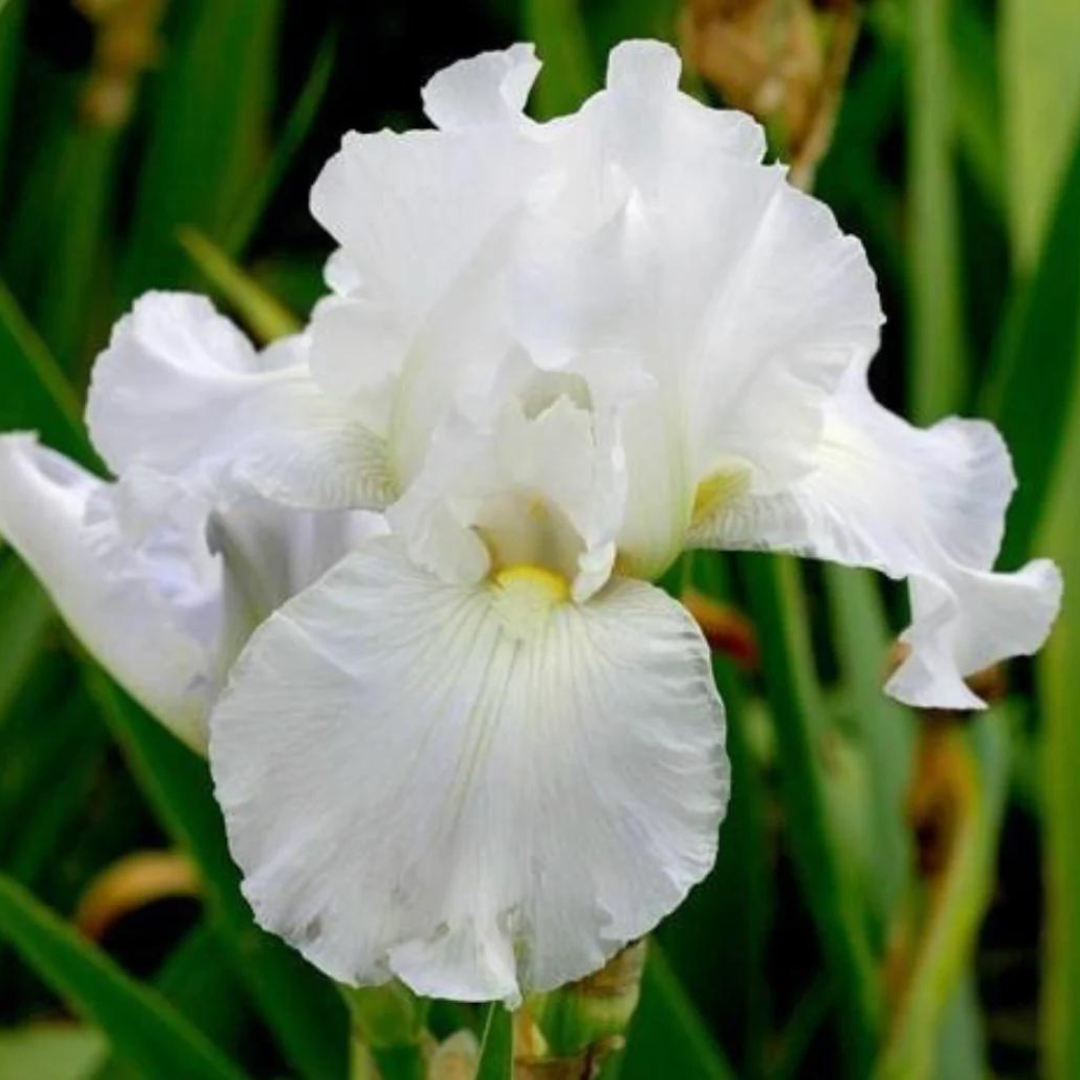
Iris 'Immortality'
- In stock, ready for delivery
Iris 'Immortality': Ruffled White That Refuses to Retire
Ruffled pure white flowers that bloom, then come back AGAIN, then dare you to say goodbye. 'Immortality' is the plant that heard about retirement and decided it wasn't interested.
Plant Characteristics:
- Botanical Name: Iris germanica 'Immortality' (tall bearded iris)
- Common Name: Bearded Iris
- Height: 65–76 cm (26–30 in)
- Spread: 60 cm (24 in)
- Flowers: Ruffled pure white with white beards, lightly fragrant, several flowers per stem
- Bloom Time: Early summer (June), often reblooming from late summer to fall (August to October)
- Foliage: Upright, sword-shaped grey-green leaves
- Features: Reblooming
Where to Plant: White flowers fit almost anywhere in a sunny border, and it suits moon gardens, cottage beds and cutting gardens. It's a good choice where deer visit, and in clay soil, plant it high so water drains away from the rhizomes.
Companion Plants: Use white 'Immortality' in a sunny, dry bed with magenta pinks, curly red gaillardia and white beardtongue. Dianthus 'Firewitch' edges the front with magenta pinks at 15 to 20 cm in May and June. Gaillardia SpinTop® Mariachi Red Sky adds curly semi-double daisies at 30 to 35 cm from June to September. Penstemon digitalis brings white beardtongue at 90 to 120 cm in June and July. Eragrostis spectabilis adds a pink-purple haze at 30 to 60 cm from July to September.
Plant Care: Set the rhizome with its top at soil level and the roots spread beneath. Keep mulch away from it. Water through the first season, then only during long droughts. A light feeding with a low-nitrogen fertilizer after the first bloom, plus water during dry summer weeks, helps the rebloom. Cut spent stalks to the base. Remove dead foliage in late fall to limit iris borer. Divide every three to five years in July or August.
History: Lloyd Zurbrigg bred 'Immortality' from a cross of 'I Do' and 'English Cottage' and registered it in 1982, and the American Iris Society gave it an Honorable Mention in 1986 and an Award of Merit in 1990. Rebloom has since been reported in many U.S. states, several Canadian provinces and parts of Europe.
Final Thoughts: Deer resistant, drought tolerant once established and a sun lover. Plant it and enjoy the comeback tour. IT ISN'T GOING ANYWHERE.