

Imperata 'Red Baron'
- In stock, ready for delivery
Imperata 'Red Baron': Backlit Blades Blushing Redder by the Week
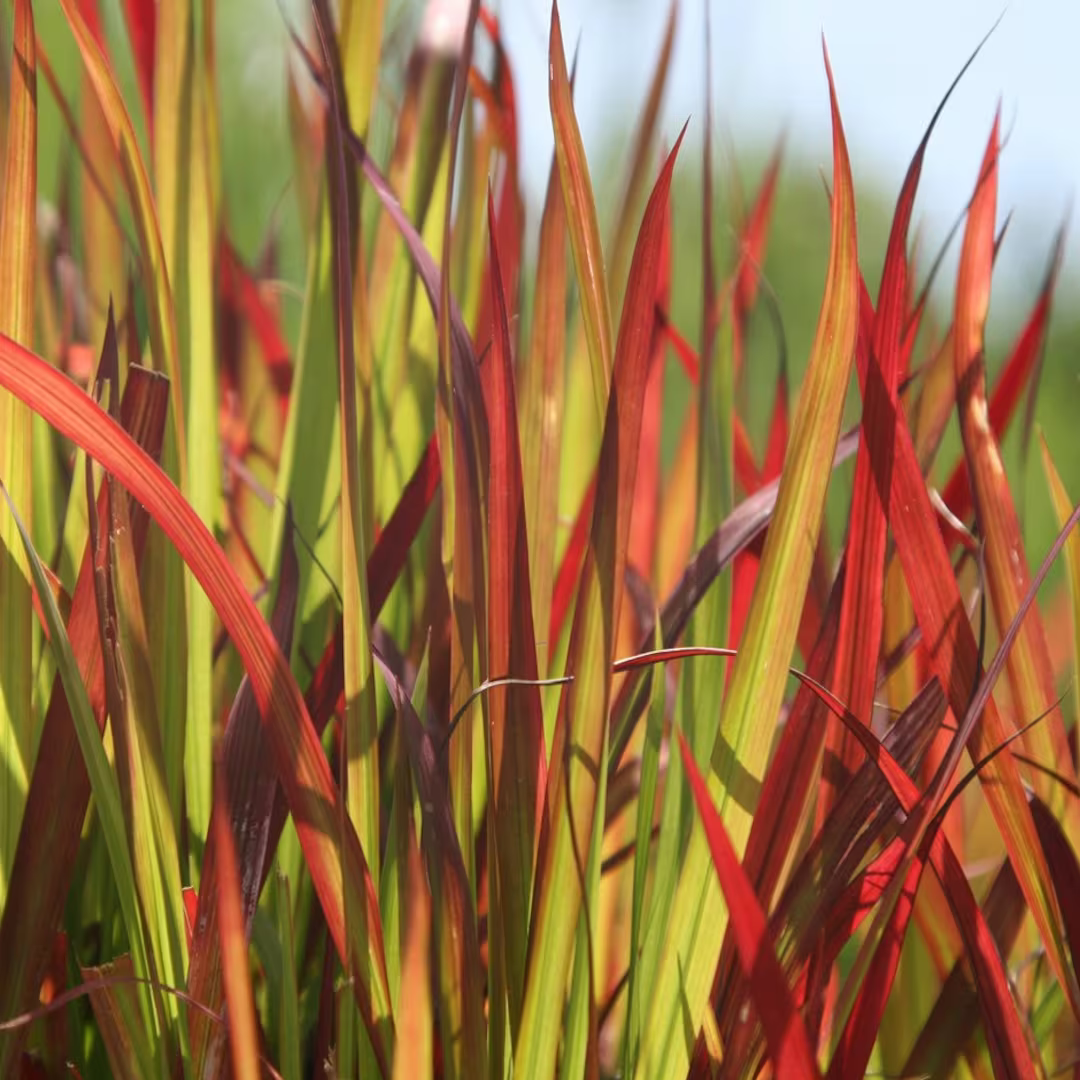
Narrow, upright blades that start green and go blazing red at the tips, like every leaf just heard some juicy gossip. 'Red Baron' only gets redder as summer turns to fall. THE BLUSH JUST KEEPS SPREADING.
Plant Characteristics:
- Botanical Name: Imperata cylindrica 'Red Baron' (also sold as 'Rubra')
- Common Name: Japanese Blood Grass
- Height: 45–50 cm (18–20 in)
- Spread: 30–45 cm (12–18 in)
- Flowers: Rarely flowers. Grown for its foliage.
- Foliage: Narrow, upright blades, green at the base with red tips. The red deepens through summer and into fall.
- Features: Long-season foliage colour
Where to Plant: Plant it where low sun can backlight it, such as the front of a border, along a path, or in a container on a sunny patio, and use it in groups or drifts. It's at the edge of its hardiness in Ottawa and Montreal, so give it a sheltered spot with good snow cover there, or grow it in a container and keep it somewhere protected over winter.
Companion Plants: Plant 'Red Baron' where low sun can shine through its red blades, in a sunny, well-drained bed with lavender and red. Phlox 'Emerald Blue' carpets the front at 10 to 15 cm with lavender-blue flowers in May and June. Pulsatilla vulgaris 'Red Bells' opens red pasque flowers at 15 to 30 cm in April and May. Salvia 'May Night' adds deep indigo spikes at 45 to 60 cm in June and July. Echinacea 'Mellow Scarlets' brings orange and red coneflowers at 80 cm from June to October.
Plant Care: Plant in average to moist soil that drains well, especially in winter. Water regularly through the first season and in hot, dry spells. A layer of mulch after the ground freezes helps it through a cold winter. Cut the old foliage to the ground in early spring before new growth starts. Divide crowded clumps in spring. Important: watch for any shoots that come up all green, and dig them out, roots and all. The green form of this species, cogongrass, is a serious invasive weed in warm climates. The red cultivar is far less vigorous, but green reversions can be aggressive, so don't let them stay.
History: The species Imperata cylindrica, known in its green wild form as cogongrass, is one of the world's most troublesome weeds. The red-tipped form was selected in Japan as a garden plant and is sold as 'Rubra' or 'Red Baron', two names generally treated as the same plant.
Final Thoughts: Deer resistant, low maintenance and best in sun, where the red goes full volume. Plant it where the light comes through. RED ALERT, IN THE BEST WAY.