



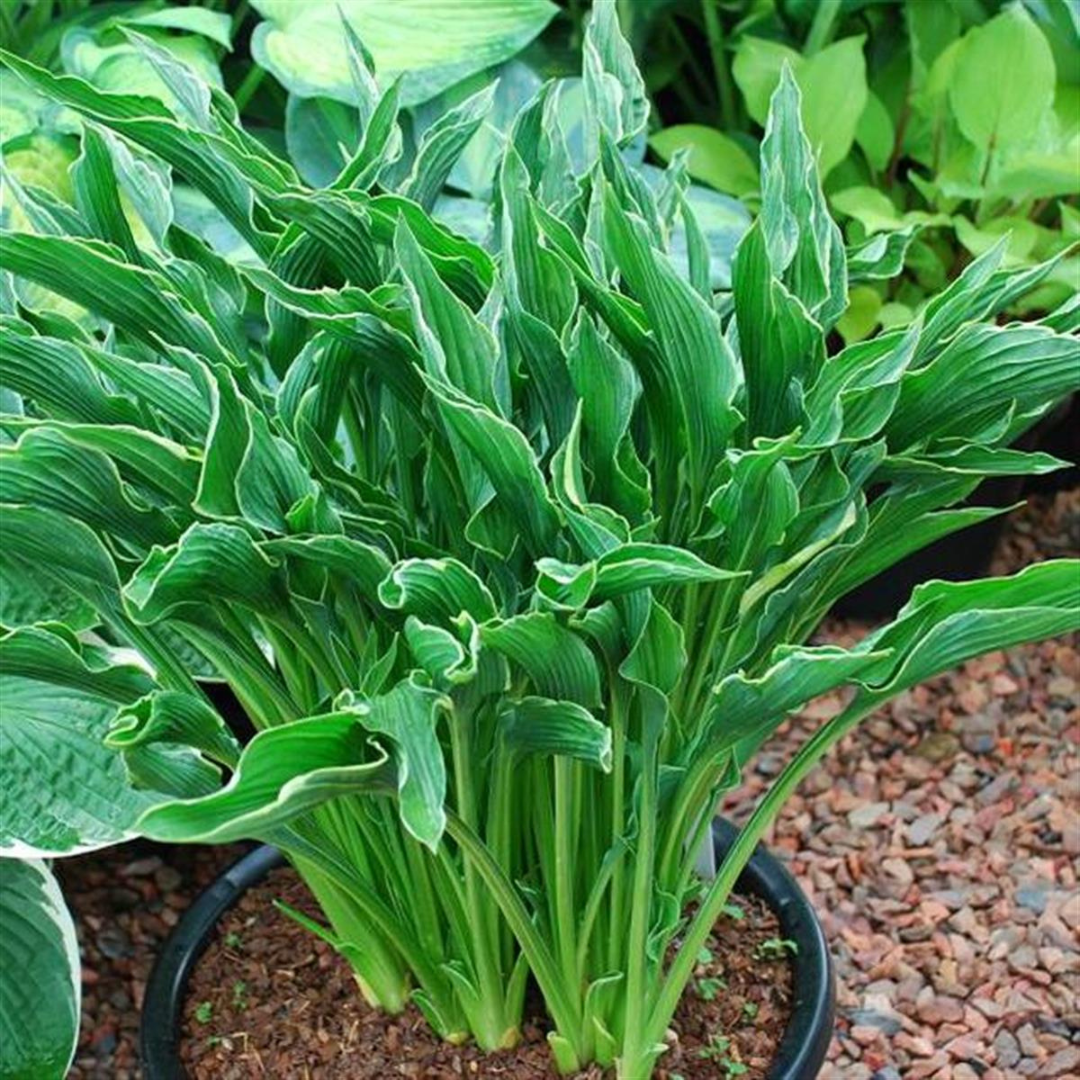
Hosta 'Praying Hands'
Add to Wishlist Partial Sun
 Full Shade
 Pollinator Friendly
 Low Maintenance
- In stock, ready to ship
Hosta 'Praying Hands': Folded Leaves Standing Like a Sculpture
Narrow leaves folded so tightly and standing so upright, it looks like somebody told it to sit still for the family photo. This hosta HOLDS THE POSE all season long.
Plant Characteristics:
- Botanical Name: Hosta 'Praying Hands'
- Common Name: Plantain Lily, Hosta
- Height: 36–46 cm (14–18 in)
- Spread: 30–41 cm (12–16 in)
- Flowers: Lavender, on reddish stems about 46 cm (18 in) tall
- Bloom Time: Mid to late summer (late July to August)
- Foliage: Narrow, upright, tightly folded dark green leaves with wavy edges and a thin cream to white margin
- Features: Hosta of the Year 2011
Where to Plant: Its upright shape makes it a great contrast in a low, mounded planting, where it reads like a small sculpture. It shines in a container on a shaded patio, where you can see the folded leaves up close.
Companion Plants: Astilboides tabularis grows to 125 cm behind this upright hosta, and its huge, round leaves are the opposite of the hosta's narrow, folded ones. Liriope 'Royal Purple' adds grassy leaves and purple spikes in August and September, just as the hosta finishes. Galium odoratum carpets the ground at 10 to 25 cm with white flowers in May and June. The mix of shapes makes this a great corner for full shade to part sun.
Plant Care: Plant in part sun to full shade, in moist, well-drained soil rich in organic matter. Morning sun is fine; protect it from hot afternoon sun. Water regularly through its first season and during dry spells. Deer and rabbits will eat hostas, so use a repellent or fencing if they visit. The folded leaves can hide slugs, so check the base of the clump in wet weather. Remove the flower stems once they fade and clear the foliage after a hard frost. Divide in spring when needed.
History: Gerald Williams of Minnesota registered 'Praying Hands' in 1996, and its parentage is not known, though hosta author Mark Zilis suggested it most likely arose as a sport of a Fortunei-type hosta. The American Hosta Growers Association named it Hosta of the Year in 2011.
Final Thoughts: Nothing else in the shade looks like this. Plant it where people walk by and watch them do a double take. SAY CHEESE.



