



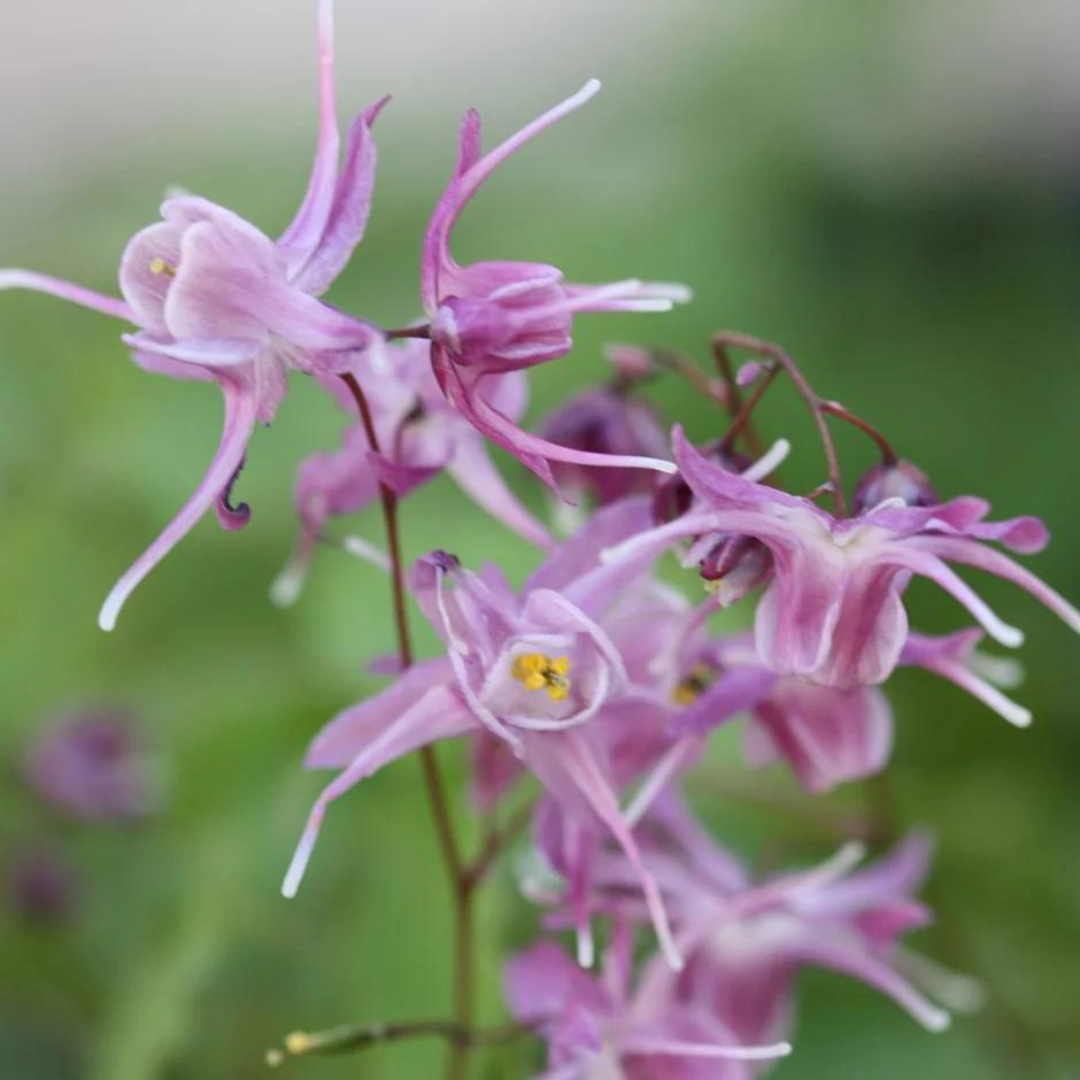
Epimedium 'Lilafee'
Add to Wishlist Partial Sun
 Full Shade
 Drought Tolerant
 Deer Resistant
 Pollinator Friendly
- In stock, ready to ship
Epimedium 'Lilafee': Lilac Fairies at Your Feet
Lavender-violet flowers with long, pale spurs flutter over the leaves like tiny fairies who got lost on the way to a costume party. 'Lilafee' looks whimsical, but it's TOUGHER THAN IT LOOKS.
Plant Characteristics:
- Botanical Name: Epimedium grandiflorum 'Lilafee'
- Common Name: Barrenwort, Bishop's Hat
- Height: 25–30 cm (10–12 in)
- Spread: 30 cm (12 in)
- Flowers: Lavender-violet with long, pale spurs, about 2.5 cm (1 in) across, in open sprays
- Bloom Time: Spring (April to May)
- Foliage: Deciduous, heart-shaped leaves that emerge bronze-purple, mature green and colour red-bronze in fall
- Features: Tolerates dry shade once established, rabbit resistant, early flowers
Where to Plant: This is a front-of-the-bed plant, so put it along a shady path, beside a rock or at the edge of a woodland garden where you can see the flowers up close. A group of three or five makes a neat, slow-spreading groundcover.
Companion Plants: Pulmonaria 'Pink-a-Blue' blooms in May and June with bicolour flowers that follow on from the violet barrenwort. Carex 'Bowles Golden' adds bright, grassy leaves at 60 to 90 cm, a fine texture against heart-shaped epimedium leaves. Hosta 'Abiqua Drinking Gourd' fills in with bold leaves and white flowers in June and July. All three are at home in shade or part sun.
Plant Care: Plant in part shade to full shade in humus-rich, well-drained soil. Add compost at planting and water regularly through the first season. Once settled, it can handle dry spells, but it looks its best with some moisture in spring. This is a slow starter. Expect it to take two or three years to reach full size. Cut old leaves back in late winter or very early spring, before the new flower shoots appear. The young shoots are fragile, so trim carefully. Divide in late summer or early fall if needed.
History: Epimedium grandiflorum is native to the mountain woodland floors of Japan, Korea and parts of China, and 'Lilafee' is credited to the German nurseryman Ernst Pagels. Lilafee means lilac fairy in German, a nod to its colour and its winged look.
Final Thoughts: Give it shade, ignore it through a dry spell and watch it colour up again in fall. THE FAIRIES HAVE SIGNED A LONG LEASE.



