



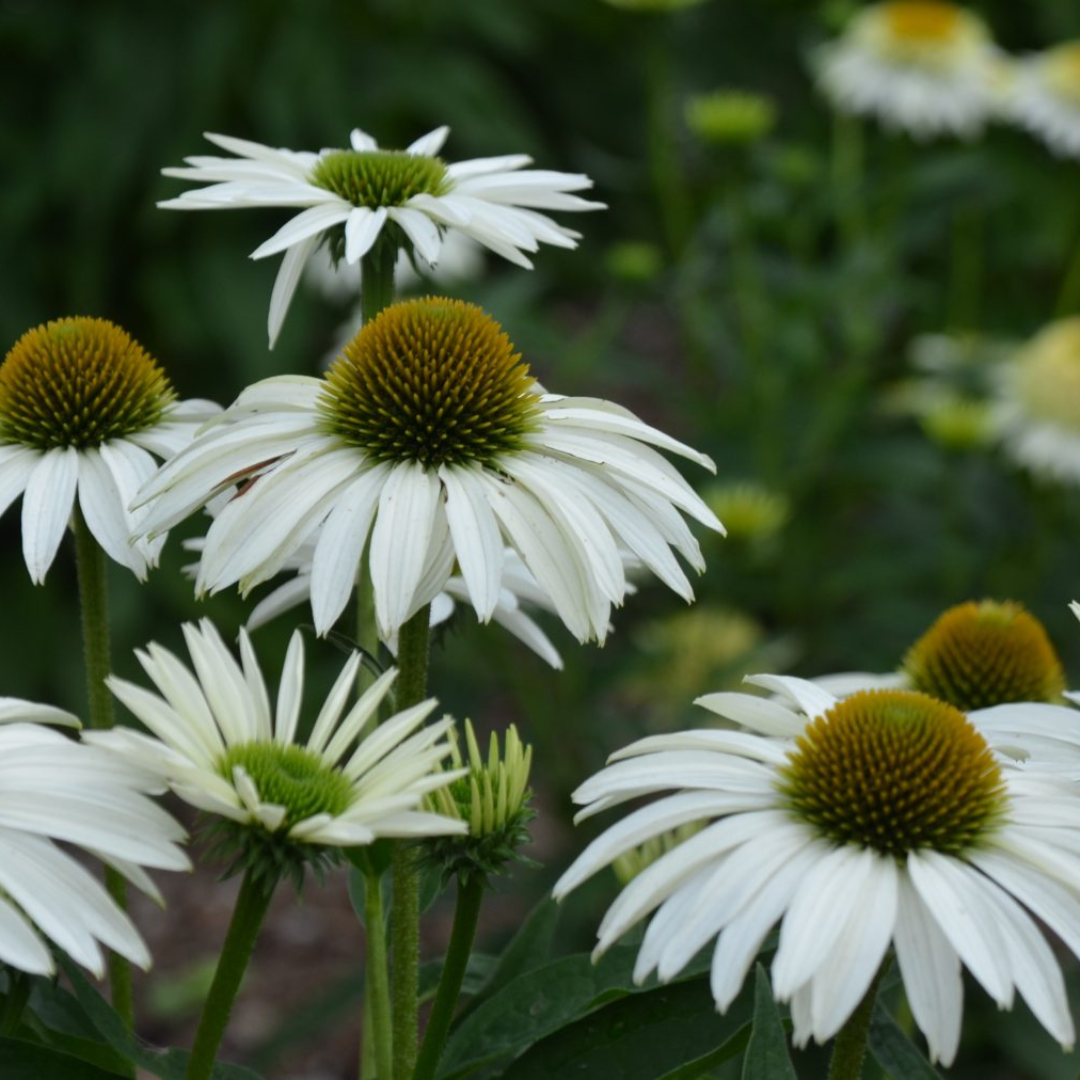
Echinacea 'White Swan'
Add to Wishlist Full Sun
 Partial Sun
 Drought Tolerant
 Deer Resistant
 Pollinator Friendly
- In stock, ready to ship
Echinacea 'White Swan': Creamy Swan Petals Around a Copper Cone
Gently drooping white petals around a coppery cone, like a swan that just got some very sad news about the stock market. 'White Swan' is pure elegance, and it HANDLES CLAY WITHOUT COMPLAINING.
Plant Characteristics:
- Botanical Name: Echinacea purpurea 'White Swan'
- Common Name: White Coneflower, Purple Coneflower
- Height: 60–90 cm (2–3 ft)
- Spread: 45–60 cm (18–24 in)
- Flowers: White, gently drooping petals around a coppery orange to bronze cone, about 8–10 cm (3–4 in) across
- Bloom Time: Midsummer to early fall (July to September)
- Foliage: Dark green, coarse, lance-shaped leaves in an upright clump
- Features: Seeds feed goldfinches, tolerates clay, good cut flower
Where to Plant: It works in the middle of a sunny border, in cottage gardens and in meadow-style or pollinator plantings, where the white cools hot colours and lights things up at dusk. It handles hot summers, cold winters and heavy clay, which makes it a dependable pick for Ontario and Quebec gardens.
Companion Plants: Filipendula 'Venusta' towers at 180 to 240 cm with fluffy pink plumes from June to August, a soft backdrop for white coneflowers. Geranium 'Cambridge' carpets the front with magenta flowers from May to July. In between, Calamintha nepeta 'Blue Cloud' adds a haze of small blue flowers from June to September. This layered planting suits sun or part sun.
Plant Care: Plant in full sun, or part sun with at least six hours of light, in average, well-drained soil. Clay is fine. Water regularly the first season, then only during long droughts. Deadhead through summer if you want more flowers. Leave the late seed heads standing so the goldfinches can feed on them, then cut stems back in early spring. It can self-seed, but seedlings may not come true to white. Divide crowded clumps in spring every four years or so.
History: Purple coneflower is native to the prairies, open woods and meadows of central and eastern North America, and Indigenous peoples used its roots as medicine long before it became a garden plant. 'White Swan' is a long-established seed-grown white selection of the species.
Final Thoughts: Plant it in heavy soil where fussier flowers fail and let the goldfinches handle the seeds. GRACE UNDER PRESSURE, LITERALLY.



