

Dicentra Valentine®
- In stock, ready for delivery
Dicentra Valentine®: Bleeding Hearts in Bold Cherry Red
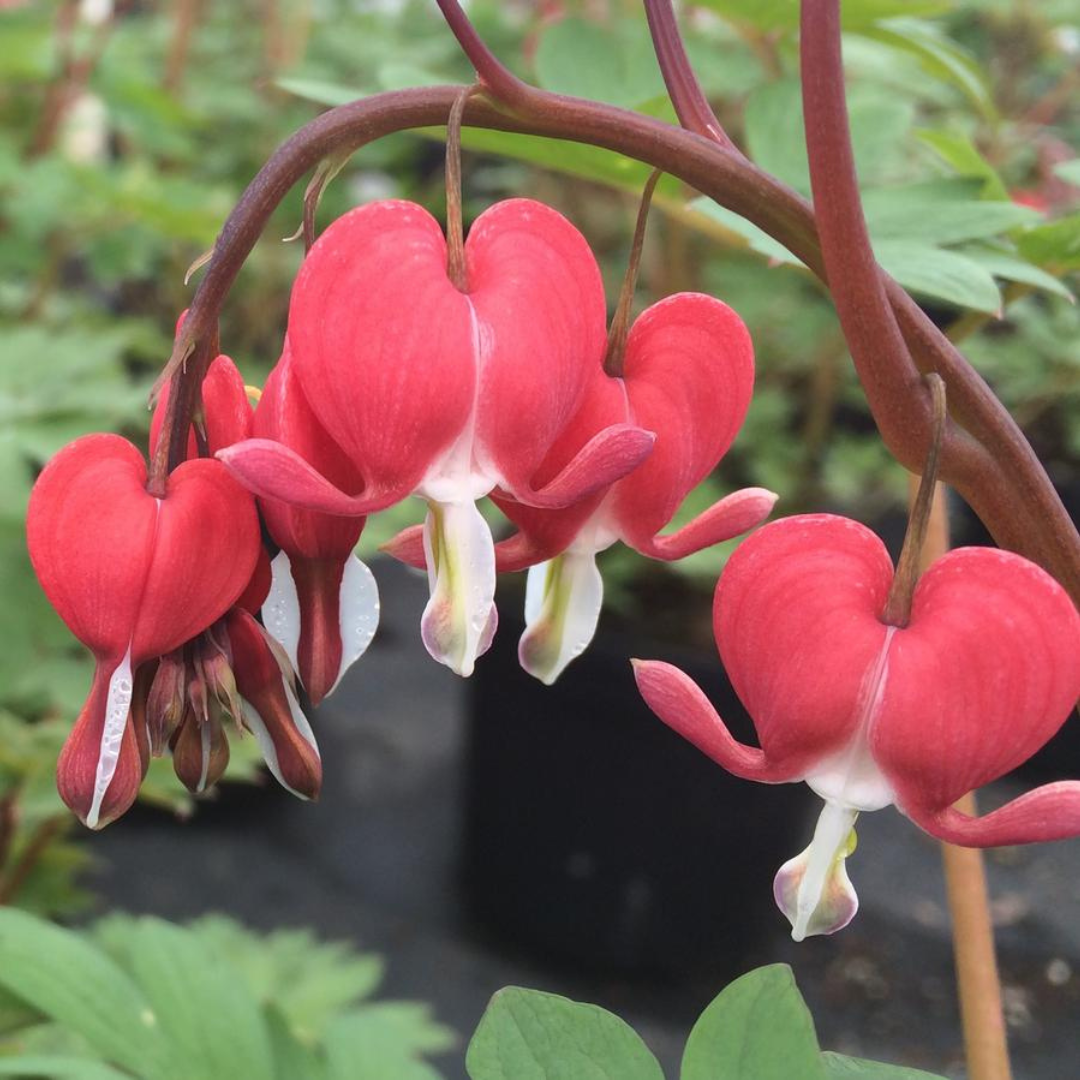
Cherry-red hearts on dark red stems, as if this bleeding heart skipped the drugstore card aisle and went straight for the grand gesture. Even the new leaves come up purple-red. HOPELESS ROMANTIC. ZERO CHILL.
Plant Characteristics:
- Botanical Name: Lamprocapnos spectabilis (formerly Dicentra spectabilis), cultivar 'Hordival'
- Common Name: Old-fashioned Bleeding Heart
- Series: A Proven Winners® Proven Selections® perennial
- Height: 70–75 cm (28–30 in)
- Spread: 70–75 cm (28–30 in)
- Flowers: Cherry-red hearts with white inner petals on dark red stems
- Bloom Time: Late spring to early summer (May to June)
- Foliage: Emerges purple-red, maturing to grey-green. It may go dormant in summer heat.
- Features: Excellent cut flower
Where to Plant: Put it in a shady border, a woodland garden or a bed on the north side of the house, where the red really pops against green. Plan for a summer gap, since the foliage usually fades in hot weather.
Companion Plants: Plant Valentine® in a moist, shady bed with blue spring flowers and gold leaves to follow. Pulmonaria 'Moonshine' opens pale blue bells at 20 to 25 cm in April and May over silvery leaves. Astilbe 'Spotlight' adds soft pink plumes over gold leaves at 50 to 55 cm in July and August. Aralia 'Sun King' brings bold gold leaves at 90 to 180 cm. Hakonechloa 'All Gold' edges the bed at 23 to 36 cm with bright gold blades.
Plant Care: Plant in part shade to full shade in moist, well-drained, fertile soil. Add compost to clay so the roots don't sit wet over winter. Keep it out of hot afternoon sun. Water regularly through spring. When the leaves yellow in summer, cut them back. That's normal dormancy. Mark the spot so you don't plant over it. It prefers to stay put, so divide only if needed, in early spring. Wear gloves when handling: the sap can irritate skin and the plant is toxic if eaten.
History: Valentine® started as a chance seedling discovered in 2005 in the British Columbia garden of Phyllis and Lyle Sarrazin, a real colour break for a species known for pink flowers. It holds the Royal Horticultural Society's Award of Garden Merit and is sold in Europe as Lamprocapnos spectabilis 'Hordival'.
Final Thoughts: Cut a few stems for a vase and you'll never need flowers delivered again. CHEAPER THAN A DOZEN ROSES, AND IT COMES BACK EVERY YEAR.