

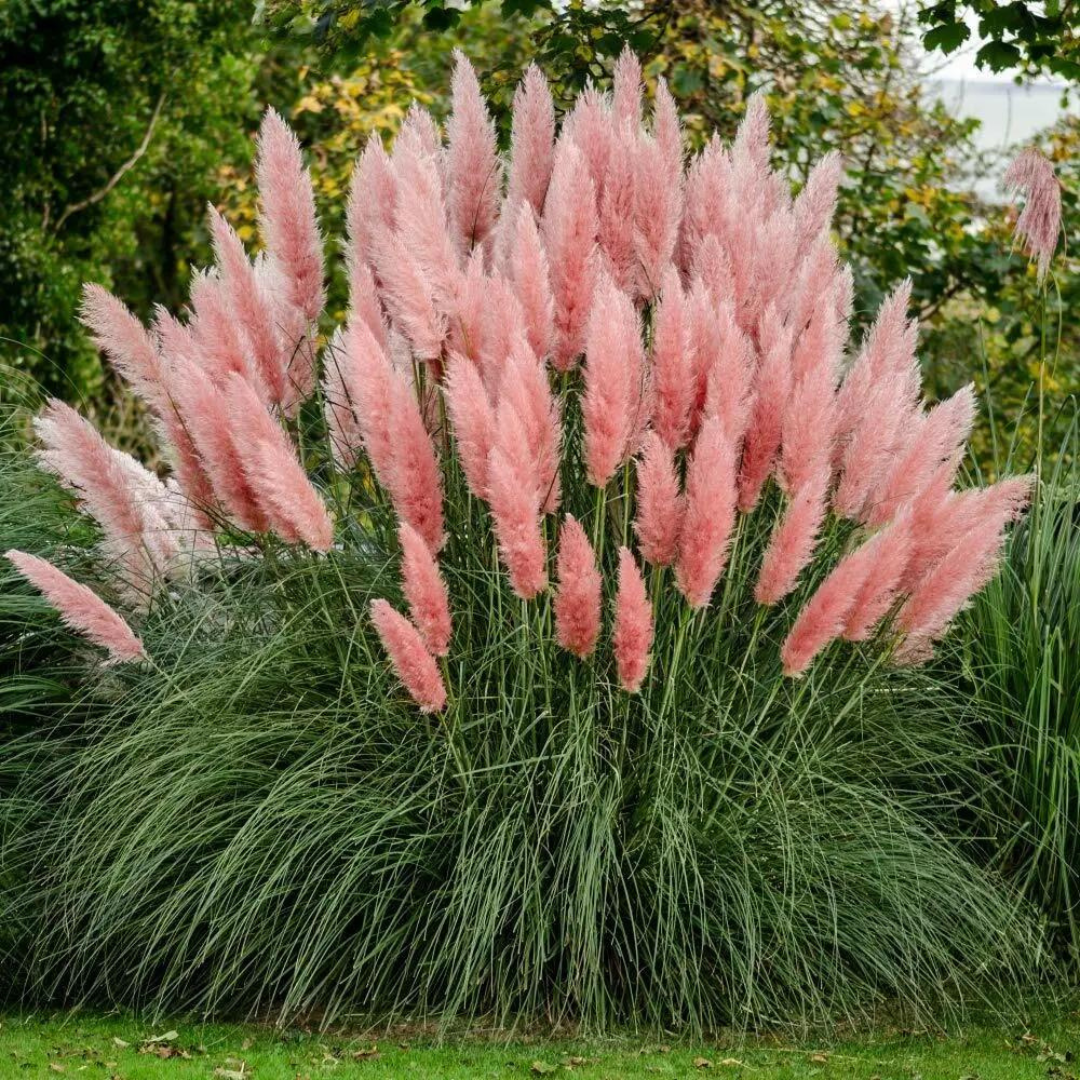
Cortaderia selloana 'Rosea'
- In stock, ready for delivery
Cortaderia selloana 'Rosea': Pink-Blushed Plumes Worth Bragging About
Pink Pampas Grass sends up silky blush plumes from a clump that means business. And yes, we've all heard the rumour about what pampas grass in the front yard means. WE'RE JUST HERE TO SELL GRASS.
Plant Characteristics:
- Botanical Name: Cortaderia selloana 'Rosea'
- Common Name: Pink Pampas Grass
- Height: 240–300 cm (8–10 ft) in flower where fully hardy, often shorter in colder gardens
- Spread: 90–180 cm (3–6 ft)
- Flowers: Large, silky plumes flushed soft pink, fading to pale buff, held well above the leaves
- Bloom Time: Late summer to fall (August to October)
- Foliage: Long, narrow, arching green blades with sharp, finely toothed edges
- Features: Plumes good for drying
Where to Plant: Give it room to stand alone as a specimen where the plumes catch low autumn light, or use it as a tall seasonal screen or the centrepiece of a large sunny bed. Keep it back from paths, since the leaf edges can cut skin, and choose a south-facing spot against a wall or fence in Toronto-area gardens. In colder parts of Ottawa and Montreal, grow it in a large container and overwinter it somewhere cool and frost-free.
Companion Plants: Give pink pampas grass a sheltered, sunny spot as a specimen, with lower plants around its base. Armeria Dreameria® 'Sweet Dreams' edges the front with lavender-pink globes at 25 to 30 cm from May to September. Echinacea SunMagic® Vintage Lipstick adds hot pink coneflowers at 45 to 60 cm from July to September. Penstemon digitalis brings white beardtongue at 90 to 120 cm in June and July. Alcea 'Mars Magic' adds red hollyhocks at 150 to 180 cm in July and August.
Plant Care: Plant in full sun in deep, well-drained soil. It tolerates sand and clay as long as water doesn't pool in winter. Water regularly the first season, then only in long dry spells. For winter, leave the foliage standing to protect the crown, tie it loosely together if you like, and mulch the base deeply with leaves or straw, especially in the first winter. Wet, cold soil is what kills it most often. In early spring, cut the old growth down to about 15–30 cm (6–12 in), wearing gloves and long sleeves. It may take a couple of seasons to reach full size and flower heavily. Divide in late spring if needed.
History: Pampas grass is native to the grasslands of southern South America, including Argentina, Brazil and Chile. Male and female flowers grow on separate plants, and the female plants produce the fuller, showier plumes, so named garden selections are usually female.
Final Thoughts: Deer resistant, drought tolerant once settled, and the dried plumes look fantastic in a vase. Plant it out front and LET THE NEIGHBOURS WONDER.