

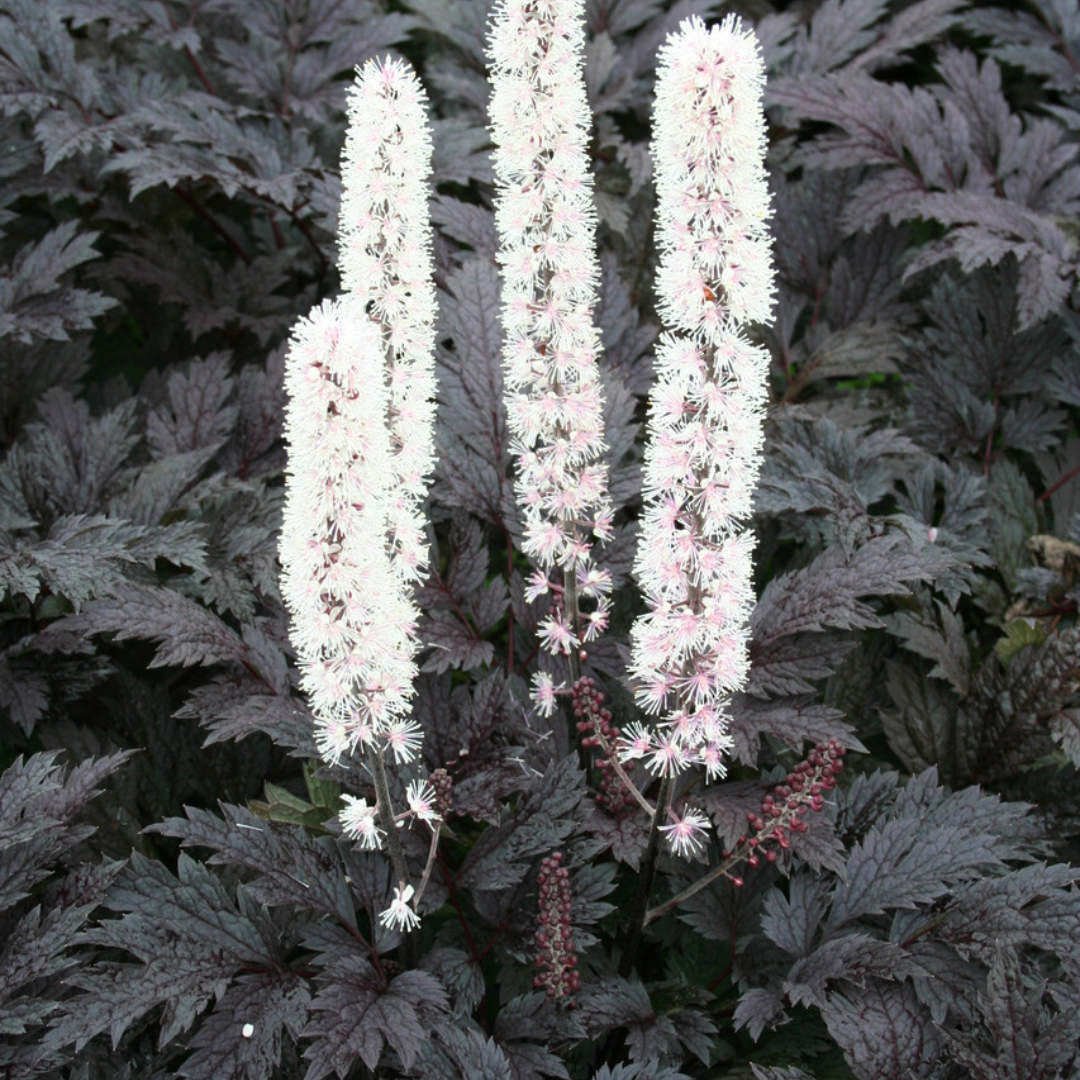
Cimicifuga 'Pink Spike'
- In stock, ready for delivery
Cimicifuga 'Pink Spike': Blush Pink Spires on Dark Foliage
Most bugbanes stick to white. 'Pink Spike' dyed its tips pink and never looked back. Fragrant, soft pink bottlebrushes rise over purple-bronze leaves, like the one guest who actually dressed for the theme party. COMMITTED TO THE BIT.
Plant Characteristics:
- Botanical Name: Actaea simplex 'Pink Spike' (syn. Cimicifuga ramosa 'Pink Spike')
- Common Name: Bugbane
- Height: 120–150 cm (4–5 ft) in flower
- Spread: 60–75 cm (24–30 in)
- Flowers: Fragrant, soft pink bottlebrush spikes from raspberry-pink buds, fading paler with age
- Bloom Time: Late summer to fall (August to October)
- Foliage: Finely divided, purple-bronze leaves
- Features: Pink flowers, dark foliage, rabbit resistant, fragrant
Where to Plant: Use it toward the back of a shady or part-shade border, at a woodland edge, or as a tall accent behind lower plantings. Set it near a path so you can enjoy the fall fragrance.
Companion Plants: Plant 'Pink Spike' in a moist, shady bed where pink fall spikes follow blue spring flowers. Brunnera macrophylla opens sky-blue sprays at 30 to 45 cm in April and May. Astilbe 'Visions' adds raspberry-pink plumes at 36 to 41 cm in July and August. Hosta 'Paul's Glory' brings gold-centred, blue-edged leaves at 55 to 65 cm. Carex rosea edges the front with a fine native sedge at 30 cm.
Plant Care: Plant in rich, moist, well-drained soil in part shade. It can handle morning sun if the soil stays damp, but protect it from hot afternoon sun. Water during dry spells and mulch to keep roots cool. Bugbanes are slow to establish, so expect it to fill out over a few seasons. Once it's planted, leave it in place. Cut back in late fall or early spring. Division is seldom needed. All parts are toxic if eaten.
History: 'Pink Spike' is a garden selection of Actaea simplex, a woodland perennial native to eastern Asia, from Russia and China to Korea and Japan. It was long known as Cimicifuga, Latin for bug repeller, which explains the common name bugbane.
Final Thoughts: Late-season pollinators love it, deer and rabbits don't. Plant it in shade and watch it steal the season finale. PINK GETS THE LAST WORD.