

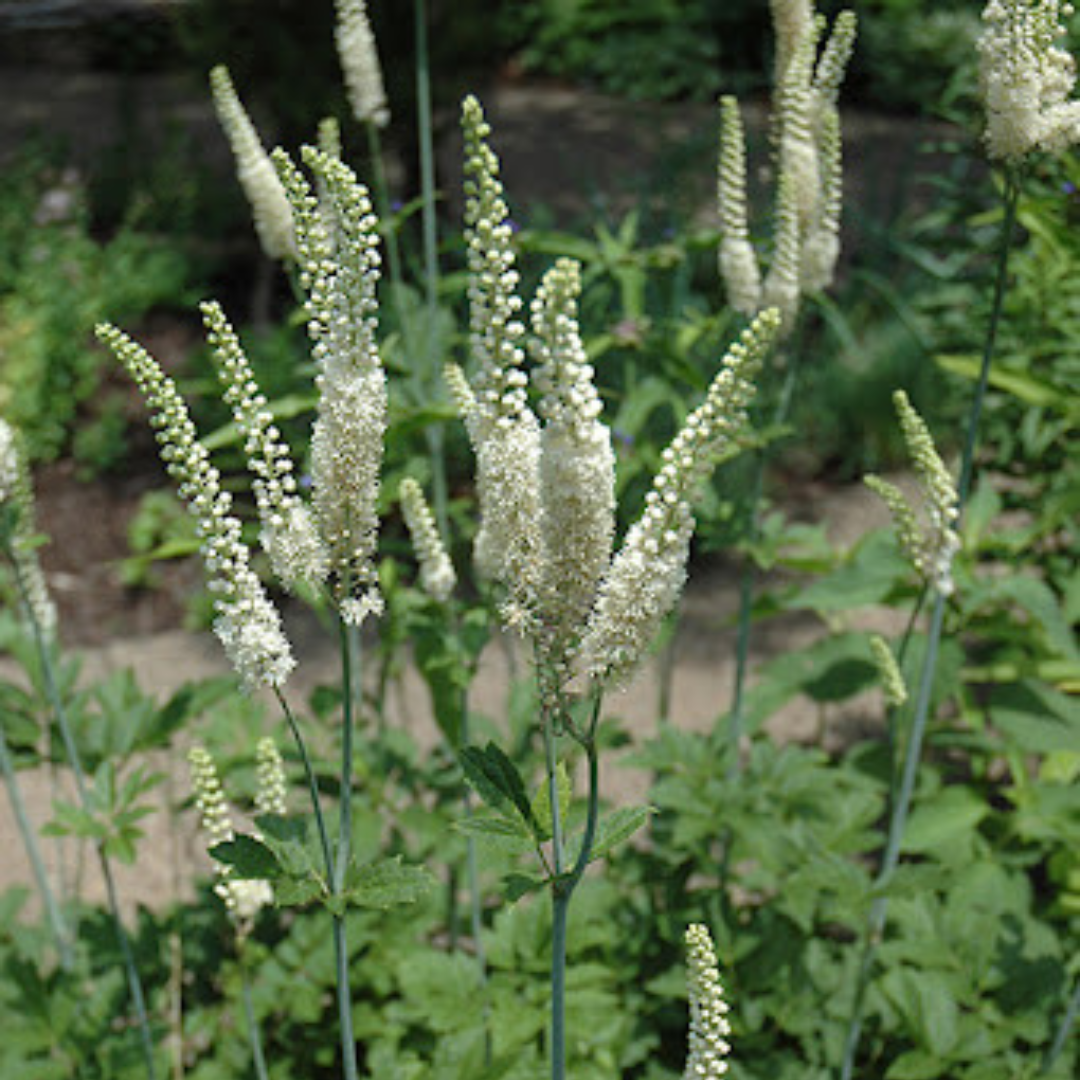
Cimicifuga racemosa
- In stock, ready for delivery
Cimicifuga racemosa: Sky-High White Candles for Deep Shade
Black Cohosh sends up long, slender spikes of creamy white flowers on wiry stems, like fireworks frozen mid-launch. Native, shade-loving and a little musky, it clearly skipped the cologne aisle. NATURE'S OWN SCENT, TAKE IT OR LEAVE IT.
Plant Characteristics:
- Botanical Name: Actaea racemosa (syn. Cimicifuga racemosa)
- Common Name: Black Cohosh, also called black bugbane or black snakeroot
- Height: 120–180 cm (4–6 ft) in flower
- Spread: 60–90 cm (2–3 ft)
- Flowers: Small and creamy white, packed into long, slender spikes on wiry stems, with a musky scent
- Bloom Time: Midsummer (July to August)
- Foliage: Large, deeply divided, dark green leaves
- Features: Larval host for azure butterflies, rarely bothered by rabbits
Where to Plant: Put it at the back of a shade border or in a woodland garden under a high canopy, where the tall spikes show off against a dark background. It adds height to shady spots that usually top out at knee level, and the seed heads stay standing into fall for a bit of winter structure.
Companion Plants: Plant black cohosh in a moist, shady native woodland bed with spring flowers at its feet. Uvularia grandiflora opens nodding yellow bellwort at 30 to 45 cm in April and May. Tiarella cordifolia adds starry white foamflower spikes at 15 to 30 cm in May and June. Dryopteris marginalis brings leathery, blue-green evergreen fronds at 45 to 60 cm. Hystrix patula adds a native bottlebrush grass at 60 to 120 cm in flower.
Plant Care: Plant in part shade to full shade in rich, moist soil with plenty of organic matter. Mulch to keep the roots cool. Water during dry spells, especially the first two seasons. Too much hot sun or dry soil will scorch the leaves. It's slow to settle in and may take a few years to reach full height and flower heavily. In windy spots, the tall stems may need a stake. Cut it back in late fall or early spring. It doesn't enjoy being moved, so choose its spot carefully. Division is rarely needed. All parts of the plant should be kept away from curious pets and children.
History: Black cohosh grows wild in rich, moist woods from southern Ontario to Georgia and west to Missouri, and the name cohosh is thought to come from an Algonquian word meaning rough, after its knobby roots. Indigenous peoples used the roots medicinally, and its sale as an herbal supplement has led to heavy harvesting from the wild.
Final Thoughts: Azure butterflies raise their kids on it, bees work it over and the deer usually leave it alone. PLANT IT AND LET THE WOODLAND GO WILD.