

Chelone Tiny Tortuga™
- In stock, ready for delivery
Chelone Tiny Tortuga™: Pint-Sized Pink for Damp Spots
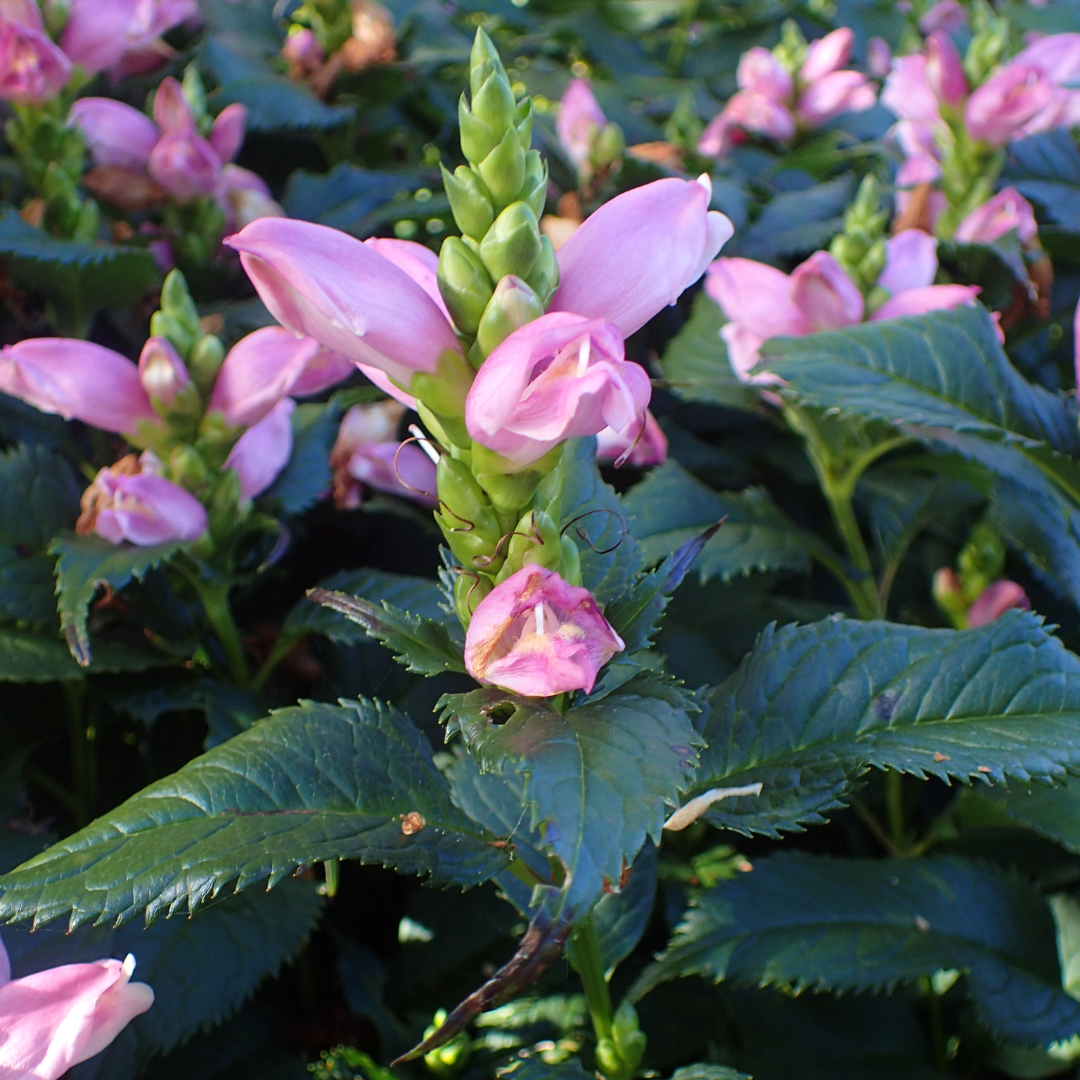
This pint-sized turtlehead packs big dark pink blooms onto a tidy little mound. Short legs, big personality and absolutely zero interest in hurrying. SLOW AND STEADY WINS THE BORDER.
Plant Characteristics:
- Botanical Name: Chelone lyonii 'Armtipp02'
- Common Name: Pink Turtlehead
- Height: 30–40 cm (12–16 in)
- Spread: 25–30 cm (10–12 in)
- Flowers: Large, dark pink, hooded blooms shaped like a turtle's head
- Bloom Time: Late summer to early fall (August to September)
- Foliage: Thick, glossy, dark green leaves on a dense, bushy mound
- Features: Compact, handles wet soil, sold under the trade name Tiny Tortuga™ with the cultivar name 'Armtipp02'
Where to Plant: Use it where a full-size plant would swallow the neighbours: the front of a moist border, a small rain garden, a damp corner by the downspout, or a container that you water faithfully. A row of them makes a tidy late-season edging.
Companion Plants: Use compact Tiny Tortuga™ at the front of a moist to wet bed in sun or part shade. Trollius 'Lemon Supreme' opens lemon-yellow globeflowers at 25 to 30 cm in May and June. Hibiscus Summerific® 'Berry Awesome' adds lavender-pink, red-eyed blooms at 120 cm in July and August. Eupatorium 'Atropurpureum' rises behind at 150 to 210 cm with dusky rose-purple heads from August to October. Deschampsia 'Goldschleier' adds fine blades and golden flower clouds at 60 to 90 cm.
Plant Care: Plant in rich, evenly moist soil. It takes full sun if the soil stays damp, and part shade anywhere. Water often in its first season and in dry spells, and mulch to hold moisture. Its compact habit means no staking and no pinching. Cut the stems back in late fall or early spring. The clump fills out slowly. Divide it in spring every few years if it gets crowded or you'd like more.
History: Tiny Tortuga™ was bred in the Netherlands by Gerardus Lentjes of Armada, from a 2009 cross between two unnamed Chelone lyonii plants, and was picked out as a single seedling in 2010. The species is native to the southern Appalachian Mountains, and the genus name comes from the Greek word for tortoise.
Final Thoughts: It fits right into wet soil, small gardens and the front of the bed, and the bumblebees will find it. LITTLE SHELL, BIG FLOWERS.