

Amsonia hubrichtii
- In stock, ready for delivery
Amsonia hubrichtii: Feathery Green Now, Pure Gold in Fall
Bright green threads that look like a feathery hairdo, then turn golden yellow in fall like the whole thing caught fire. Arkansas Blue Star is a quiet plant with one very loud season. FALL IS ITS RED CARPET.
Plant Characteristics:
- Botanical Name: Amsonia hubrichtii
- Common Name: Arkansas Blue Star, Threadleaf Blue Star
- Height: 75–90 cm (2.5–3 ft)
- Spread: 60–90 cm (2–3 ft)
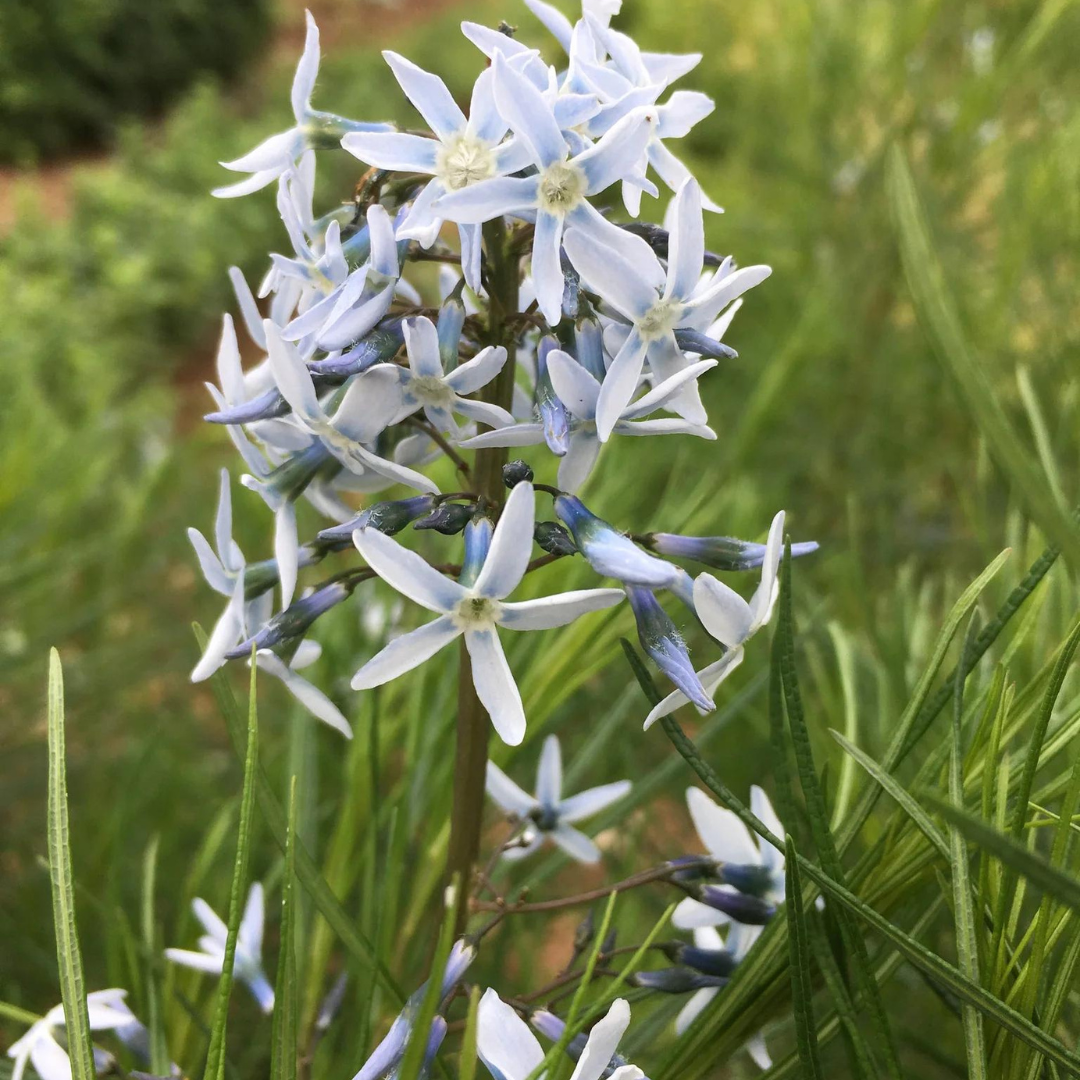
- Flowers: Clusters of pale blue, star-shaped flowers 5–8 cm (2–3 in) across
- Bloom Time: Late spring to early summer (May to June)
- Foliage: Bright green, thread-like leaves that turn golden yellow in fall
- Features: Rarely bothered by pests
Where to Plant: Use it as a soft, shrub-like presence in the middle of a border, in prairie-style and naturalistic plantings, or massed on a slope. Its fine texture makes a good contrast with bold leaves and big flowers nearby.
Companion Plants: Plant Arkansas blue star where its fine, feathery leaves can turn gold in fall beside other late colour. Veronica 'Georgia Blue' carpets the front at 10 to 15 cm with deep blue flowers in April and May. Hemerocallis 'Mauna Loa' adds amber-gold daylilies at 55 to 60 cm in July and August. Symphyotrichum novae-angliae brings purple New England asters at 90 to 180 cm in August and September. Miscanthus × giganteus makes a giant screen at the back, 250 to 350 cm tall.
Plant Care: Plant in full sun to part sun in average, well-drained soil. Full sun gives the densest habit and the best fall colour. In too much shade the stems open up and flop. Water regularly the first season. Once established, it handles drought well. It's slow to reach full size and long-lived, so give it room. If you want a tighter mound, shear it back by about a third after flowering. Cut it to the ground in late fall or, better, enjoy the fall foliage and cut it in early spring. Divide in spring if needed, though the root system is tough. The milky sap can irritate skin, so wear gloves when cutting.
History: This blue star is native to a small area of Arkansas and Oklahoma and is named after Leslie Hubricht, who first found it growing in Arkansas in 1942. The Perennial Plant Association named it the 2011 Perennial Plant of the Year®.
Final Thoughts: Pests ignore it, deer ignore it, drought doesn't bother it. You won't be able to ignore it. PLANT IT AND FORGET IT UNTIL THE LEAVES TURN.