

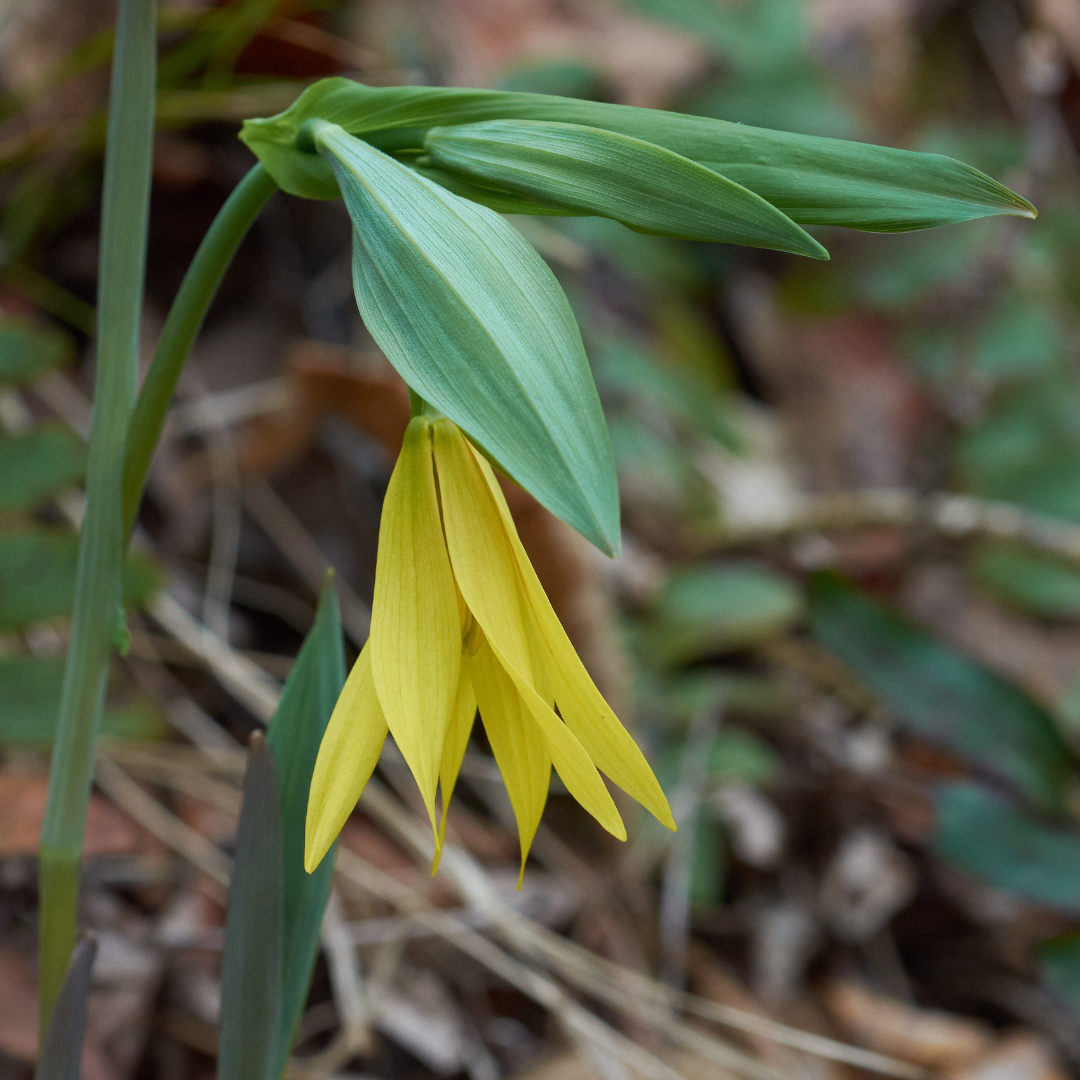
Uvularia grandiflora
- In stock, ready for delivery
Uvularia grandiflora: Lemon Bells Dangling in Spring Shade
Bellwort droops its yellow bells like it just heard the worst pun of its life. Long twisted petals, leaves the stems seem to poke right through, and plenty of woodland swagger. NATIVE, NODDING AND DEEPLY UNIMPRESSED.
Plant Characteristics:
- Botanical Name: Uvularia grandiflora
- Common Name: Large-flowered Bellwort, Merrybells
- Height: 30–45 cm (12–18 in)
- Spread: 30–40 cm (12–16 in)
- Flowers: Nodding, bell-shaped, pale to bright yellow, with six long, slightly twisted petals
- Bloom Time: Mid to late spring (April to May)
- Foliage: Bright to deep green, lance-shaped leaves that the stems appear to pass through
Where to Plant: Plant it in a woodland garden, under deciduous trees, or in a shady native bed. It slowly forms a clump and is lovely in small groups. Its leaves stay through summer, so it won't leave a gap after flowering.
Companion Plants: Plant large-flowered bellwort in a moist, shady native woodland bed with red trillium and yellow strawberry. Waldsteinia fragarioides carpets the ground at 10 to 15 cm with yellow flowers in May and June. Trillium erectum opens maroon-red flowers at 20 to 40 cm in April and May. Solidago flexicaulis adds zigzag goldenrod at 60 to 90 cm from August to October. Hystrix patula adds a native bottlebrush grass at 60 to 120 cm in flower.
Plant Care: Plant in part shade to full shade, in rich, humus-heavy soil that stays evenly moist but drains well. Work in compost or leaf mould at planting time. Water through the first season and in dry spells. Mulch with shredded leaves in fall. Slugs can nibble the foliage in damp springs. Cut the stems down in late fall or early spring. It spreads slowly by rhizomes. Divide in fall or early spring if you want more plants.
History: Large-flowered bellwort grows wild in rich, moist hardwood forests across eastern and central North America, reaching its northern limit in Manitoba, Ontario and Quebec. Its seeds carry a fatty appendage that ants collect, which helps spread new plants.
Final Thoughts: Shade, low maintenance and early food for pollinators. Plant a clump under the trees. RING THE BELL. ADD TO CART.