

Thymus pseudolanuginosus
- In stock, ready for delivery
Thymus pseudolanuginosus: Silver Fuzz You'll Want to Pet
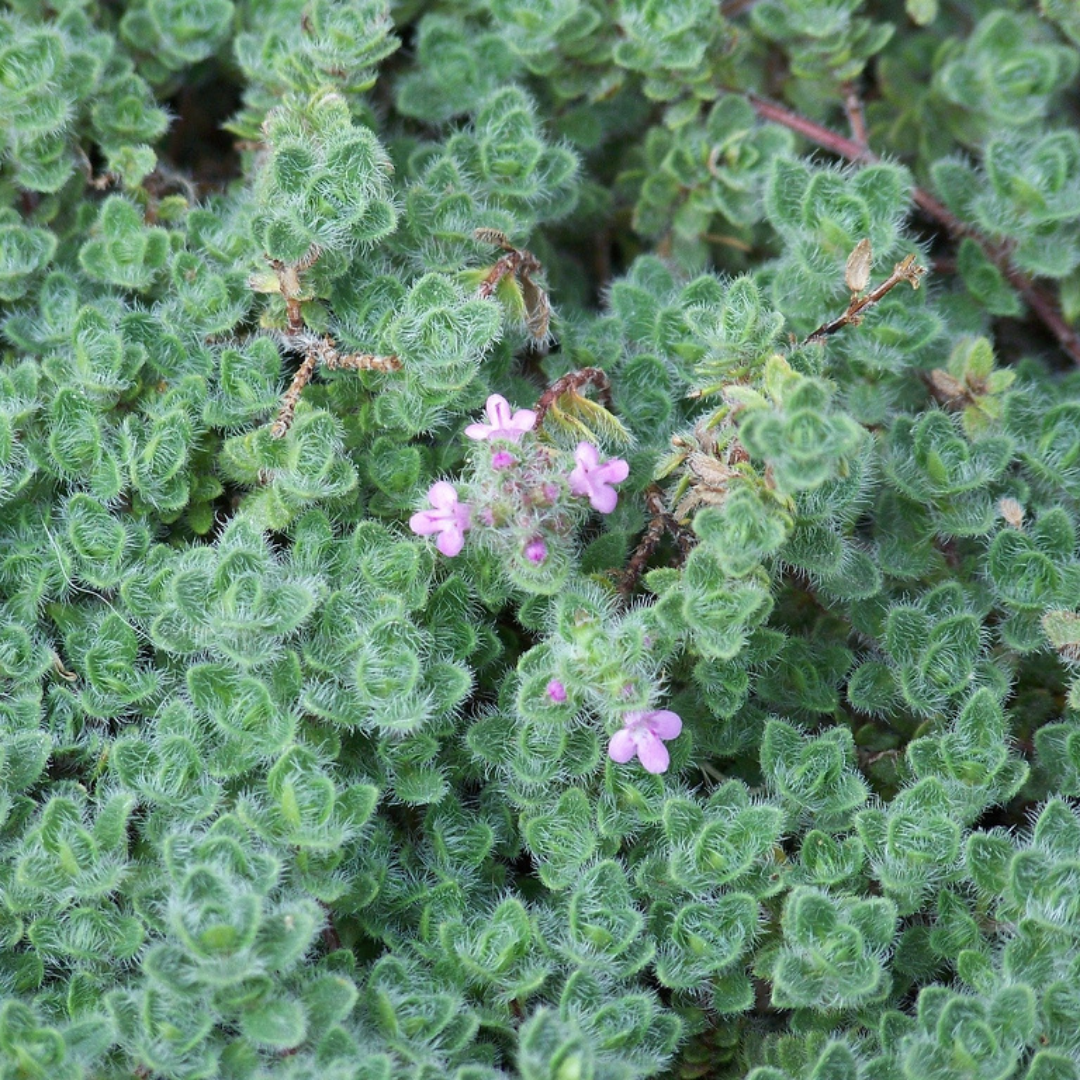
Woolly thyme looks like a sheep lay down on your pathway and refused to get up. A silvery, fuzzy mat of tiny leaves, with a few pale pink flowers for decoration. FINALLY, A PLANT AFTER OUR OWN HEART.
Plant Characteristics:
- Botanical Name: Thymus pseudolanuginosus
- Common Name: Woolly Thyme
- Height: 2–5 cm (1–2 in)
- Spread: 30–45 cm (12–18 in)
- Flowers: Small, sparse, pale pink to lilac
- Bloom Time: Early summer (June to July)
- Foliage: Tiny grey-green leaves covered in soft white hairs, forming a silvery, woolly mat; evergreen in milder winters
- Features: Rabbit resistant, handles light foot traffic
Where to Plant: Use it where texture matters: between flagstones, over the edge of a dry wall, in gravel gardens and in rock gardens. The silver foliage cools down hot colours and gives a grey-silver look at ankle height.
Companion Plants: Use woolly thyme as a soft grey carpet in a sunny, dry bed with giant alliums, yellow iris and orange coneflowers. Echinacea KISMET® 'Intense Orange' adds orange coneflowers at 40 to 45 cm from June to October. Iris 'Harvest of Memories' opens yellow bearded iris at 95 to 100 cm in June. Allium giganteum towers at 90 to 150 cm with purple globes in May and June. Schizachyrium 'Little Red Fox' grows to 60 to 75 cm and turns red and copper in fall.
Plant Care: Full sun and sharp drainage are the whole recipe. Plant in sandy, gravelly or lean soil. The fuzzy leaves hold moisture, so a wet, heavy clay site, especially one that stays soggy in winter or spring melt, leads to rot. Raised beds, slopes and gravel paths are ideal. Water through the first season, then only in long droughts. No fertilizer needed. Snip out any brown patches in spring once new growth starts. Divide small rooted pieces in spring or early fall.
History: Woolly thyme is a garden plant of somewhat uncertain botanical standing, treated by some references as its own species and by others as a hairy form of Thymus praecox, a thyme native to much of Europe. Its name means false lanuginosus, Latin for woolly, which is a fair description of the leaves.
Final Thoughts: Hot, dry and between stones is where it shines, and deer and rabbits keep off. BRING ONE HOME TO THE FLOCK.