

Thymus 'Magic Carpet'
- In stock, ready for delivery
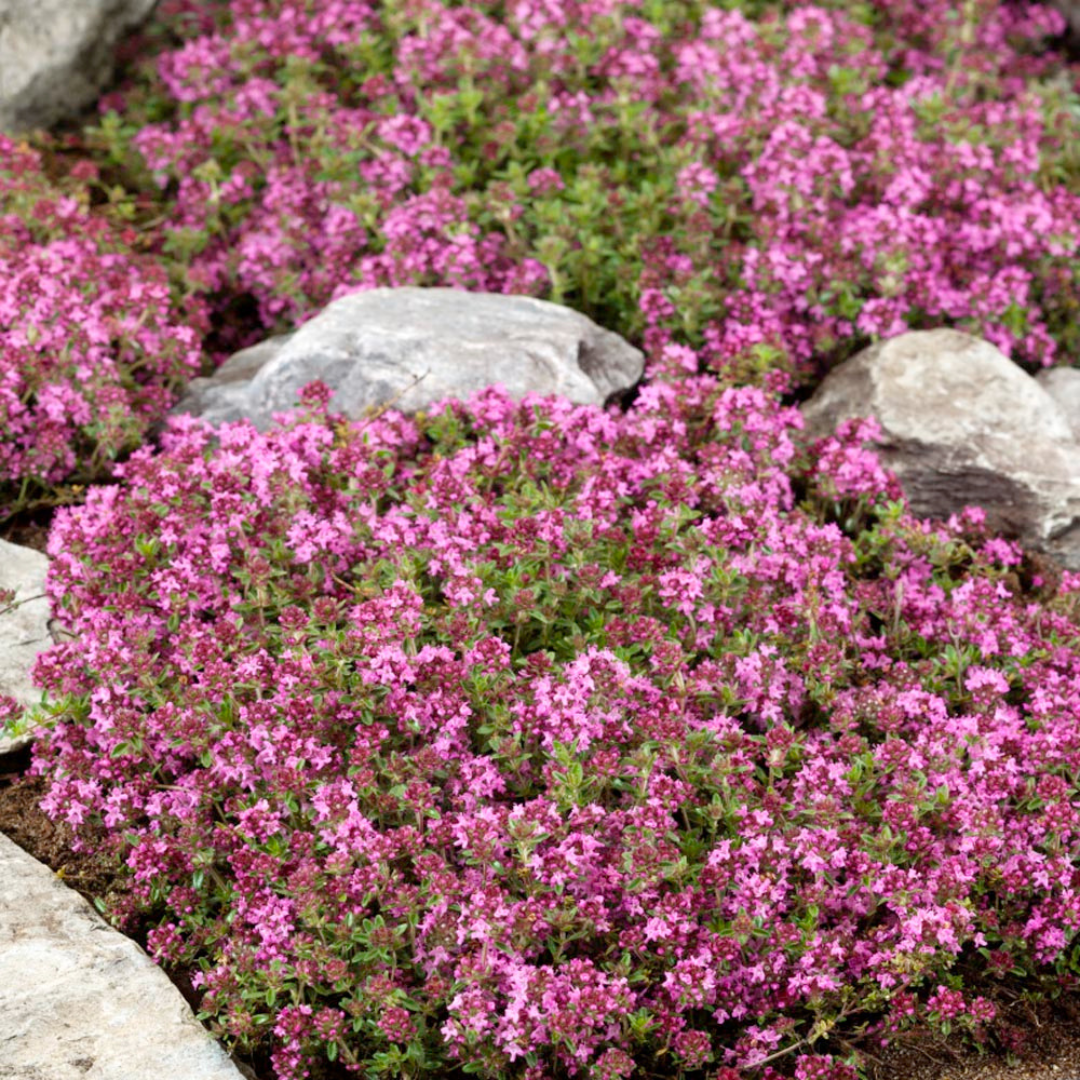
Thymus 'Magic Carpet': Magenta Steps That Smell Amazing
'Magic Carpet' doesn't fly, but it does cover the ground in magenta-pink flowers and smell like dinner. The leaves are edible too, so it's basically a rug that doubles as seasoning. A WHOLE NEW WORLD, UNDERFOOT.
Plant Characteristics:
- Botanical Name: Thymus serpyllum 'Magic Carpet'
- Common Name: Creeping Thyme
- Height: 2–5 cm (1–2 in)
- Spread: 30–45 cm (12–18 in)
- Flowers: Small magenta-pink flowers that blanket the mat
- Bloom Time: Early to midsummer (June to July)
- Foliage: Deep green, aromatic, edible leaves that stay evergreen in milder winters
- Features: Rabbit resistant, handles light to moderate foot traffic
Where to Plant: Plant it between stepping stones, along a sunny walk, over the edge of a raised bed or in a rock garden. A few trays together make a fragrant patch of groundcover where lawn struggles in hot, dry sun. It likes lean, dry soil.
Companion Plants: Let 'Magic Carpet' spread between pavers or along the front of a sunny, dry bed with violet salvia and pink iris. Salvia Sallyrosa™ April Night adds violet-purple spikes at 30 to 35 cm from May to September. Sedum 'Neon' brings bright pink heads at 40 to 50 cm in August and September. Iris 'Frappe' opens strawberry-pink bearded iris at 85 to 90 cm in June. Pennisetum 'Hameln' arches at 50 to 70 cm with soft fountain-grass plumes.
Plant Care: Plant in full sun in sandy or average soil with good drainage. Winter wet is the real enemy, so avoid soggy clay and low spots, or add grit to open the soil up. Water regularly the first season. After that, only water in long dry spells. Don't fertilize. Shear lightly after bloom to keep the mat dense and tidy. Divide in spring or early fall. Small rooted pieces establish easily.
History: Thymus serpyllum is native to Europe and reaches into western Siberia, and its species name comes from a Greek word meaning to creep. Thyme was a medieval emblem of courage, and the name may trace back to a Greek word for it.
Final Thoughts: Bees and butterflies love it, deer and rabbits don't, and it handles foot traffic. SNIP SOME FOR THE ROAST AND WALK ON THE REST.