

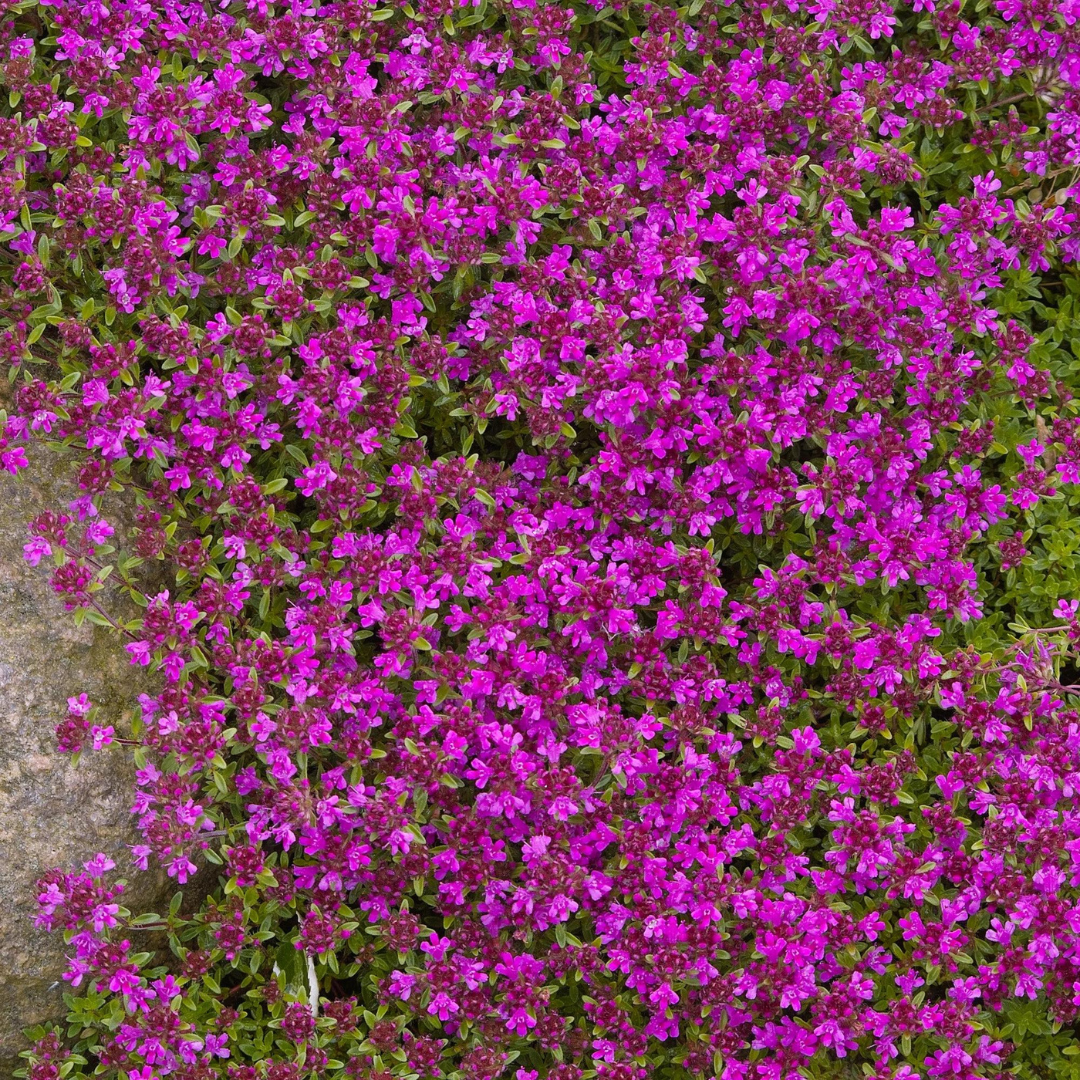
Thymus 'Coccineus'
- In stock, ready for delivery
Thymus 'Coccineus': A Scarlet Carpet That Takes Footsteps
Red creeping thyme smothers itself in magenta-red flowers so bright the pavers need sunscreen. Tiny aromatic leaves underneath, barely visible through the show. THE PATIO JUST GOT A PROMOTION.
Plant Characteristics:
- Botanical Name: Thymus praecox 'Coccineus'
- Common Name: Red Creeping Thyme
- Height: 2–5 cm (1–2 in)
- Spread: 30–45 cm (12–18 in)
- Flowers: Bright magenta-red, in tiny clusters that smother the foliage
- Bloom Time: Early to midsummer (June to July)
- Foliage: Tiny, deep green, aromatic leaves that stay evergreen in milder winters
- Features: Rabbit resistant, handles moderate foot traffic
Where to Plant: This is a classic for planting between flagstones and stepping stones. It also works along sunny path edges, in rock gardens, spilling over a low wall, and as a small lawn substitute in a hot, dry spot where lawn keeps giving up. Give it lean, dry soil.
Companion Plants: Use red creeping thyme between stones or at the front of a sunny, dry bed with violet salvia and coral hyssop. Salvia Sallyrosa™ April Night adds violet-purple spikes at 30 to 35 cm from May to September. Agastache 'Guava Lava' brings coral-orange spikes at 51 to 56 cm from July to September. Liatris pycnostachya adds tall rose-purple spikes at 90 to 150 cm from July to September. Sporobolus heterolepis adds a fine, glossy mound at 60 to 90 cm.
Plant Care: Plant in full sun in sandy, gravelly or average soil that drains well. Wet winter soil is the main thing that kills thyme, so avoid low spots and soggy clay. Raise the planting area or mix in grit if needed. Water regularly the first season. Once established, water only during long droughts. No fertilizer needed. Shear lightly after flowering to keep it dense. Divide in spring or early fall. Even small pieces with roots will establish quickly.
History: Thymus praecox grows wild across much of Europe, from Iceland south to the Mediterranean regions, and gardeners have long used low thymes between paving stones and on dry banks. The cultivar name 'Coccineus' is Latin for scarlet, a nod to its flower colour.
Final Thoughts: It takes moderate foot traffic, and the deer and rabbits just walk past. Plant it in every crack. BEES WILL FOLLOW YOU HOME.