

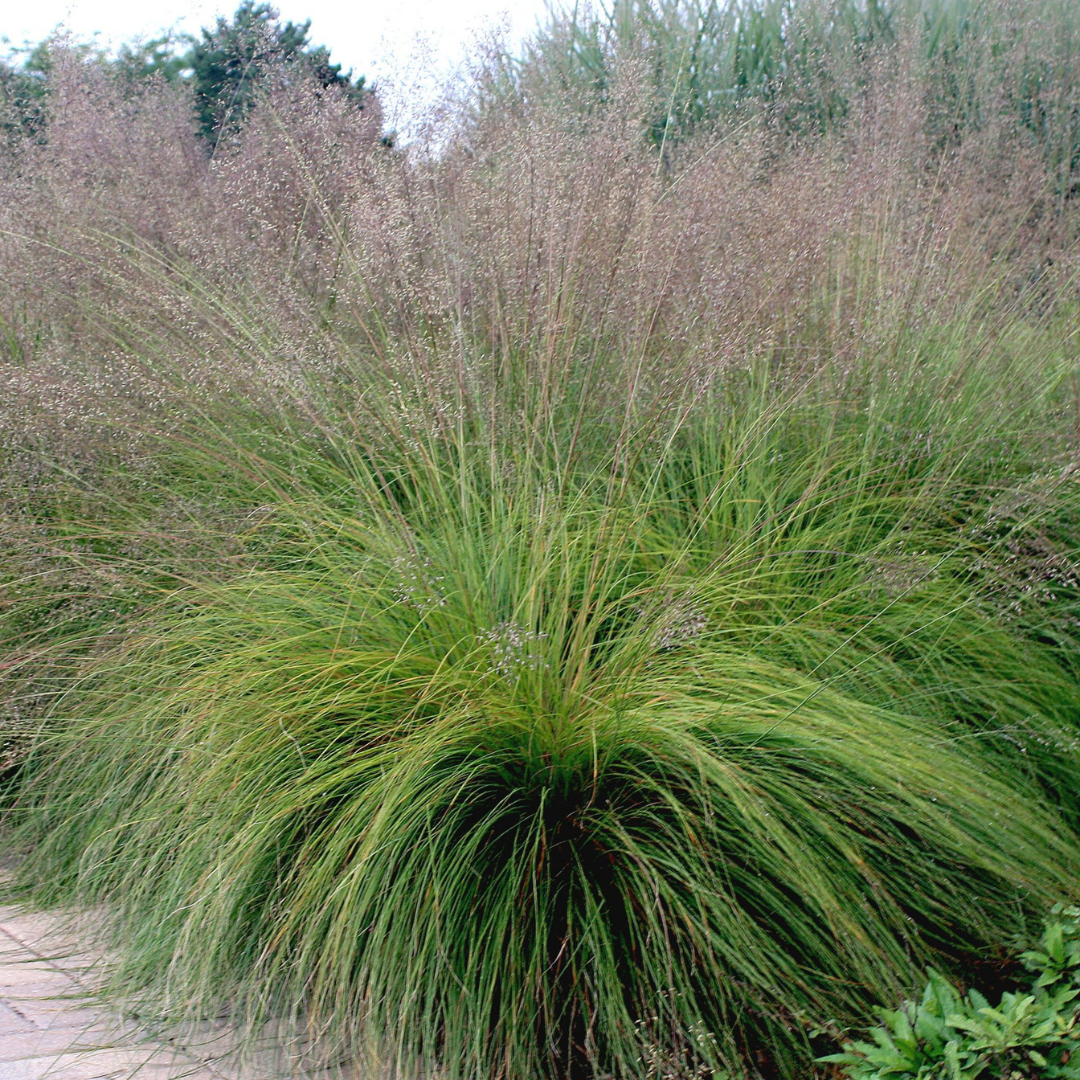
Sporobolus heterolepis
- In stock, ready for delivery
Sporobolus heterolepis: Tidy Fine-Leaved Tufts That Smell Like Popcorn
Prairie dropseed is the fountain of fine green hair that every grass secretly wants. Glossy, arching and silky, then late summer brings flowers with a scent people argue about at parties. NATIVE AND CONTROVERSIAL.
Plant Characteristics:
- Botanical Name: Sporobolus heterolepis
- Common Name: Prairie Dropseed
- Height: 60–90 cm (2–3 ft) in flower, with foliage about 40 cm (15 in)
- Spread: 60–90 cm (2–3 ft)
- Flowers: Fine, open sprays of tiny pink-tinged brown flowers with a distinctive fragrance
- Bloom Time: Late summer into fall (August to October)
- Foliage: Very fine, arching, glossy green leaves that turn deep orange in fall and fade to light copper
- Features: Tolerates heavy clay, seeds feed sparrows and juncos
Where to Plant: Plant it in drifts along a path, as an edging for a sunny border, on a slope or as the green ground layer of a prairie-style planting, in groups of three or more. It copes with heavy clay and dry summers and stays tidy enough for a front yard.
Companion Plants: Plant prairie dropseed in a dry, sunny native bed where its fine mound and fragrant fall flowers sit among prairie plants. Opuntia humifusa opens waxy yellow cactus flowers at 15 to 30 cm in June and July. Coreopsis lanceolata adds golden daisies at 30 to 60 cm from May to July. Liatris cylindracea brings fluffy pink-purple spikes at 23 to 60 cm from July to September. Dalea purpurea adds purple prairie clover heads at 30 to 90 cm in July and August.
Plant Care: Give it full sun and well-drained soil. It isn't fussy about soil type, including clay, but it dislikes sitting wet. Water regularly through the first season. After that it rarely needs help. Be patient. It grows slowly and takes a few seasons to reach full size. Leave the foliage up for winter interest, then cut it back to about 10 cm (4 in) in early spring. It seldom needs dividing.
History: Prairie dropseed is a native grass of North American prairies, glades and open ground, with a range reaching from Canada into the United States. The common name comes from the small seeds that drop free of their hulls in autumn.
Final Thoughts: Clay, drought and neglect don't faze it, and sparrows and juncos clean up the seeds. Fall turns it orange. PLANT IT AND START THE DEBATE.