

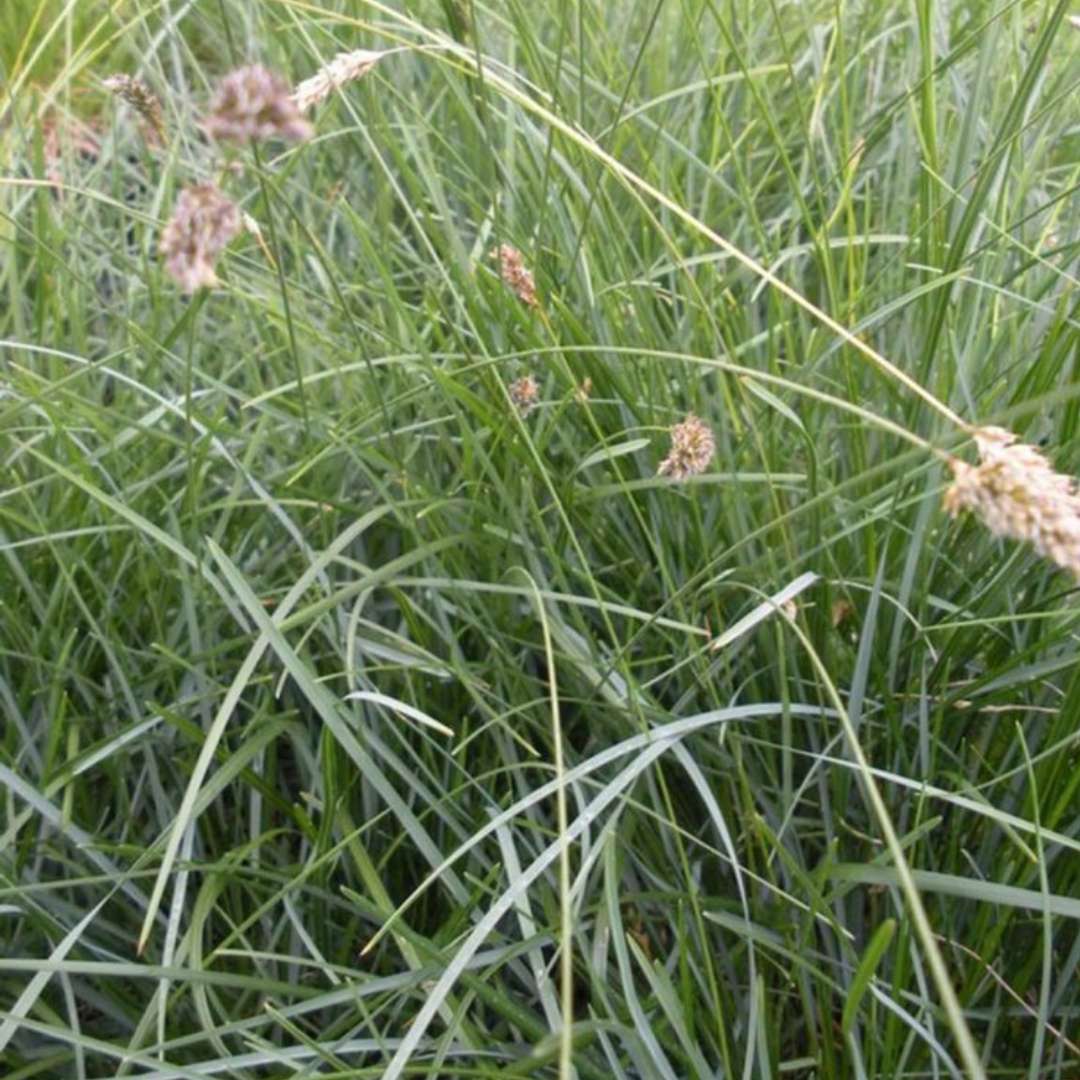
Sesleria caerulea
- In stock, ready for delivery
Sesleria caerulea: Cool Blue Tufts for Crisp Edges
Blue moor grass has a two-tone thing going on: blue-green on top, glossy dark green underneath, like a reversible jacket. Then purple-black spikes show up in spring. FASHION, BUT MAKE IT PRACTICAL.
Plant Characteristics:
- Botanical Name: Sesleria caerulea
- Common Name: Blue Moor Grass
- Height: 15–30 cm (6–12 in), including flowers
- Spread: 25–30 cm (10–12 in)
- Flowers: Small, purple-black spikes that fade to pale buff
- Bloom Time: Spring (April to May)
- Foliage: Narrow leaves, blue-green above and dark glossy green beneath, in a neat, semi-evergreen tuft
Where to Plant: Use it to edge a path, fill a rock garden, or mass as a low groundcover in gravel. It's small enough for containers and the very front of a border. A row of it gives a bed a clean, finished line.
Companion Plants: Edge a sunny or part-shade bed with blue moor grass and back it with peonies, purple spikes and fall mums. Paeonia 'Sarah Bernhardt' opens big pink double peonies at 90 cm in June. Veronica Magic Show® 'Purple Illusion' adds rosy-purple spikes at 41 to 46 cm in June and July. Leucanthemum 'Starburst' brings big white daisies at 80 to 120 cm from June to August. Chrysanthemum 'Clara Curtis' adds pink daisies at 60 to 75 cm from August to October.
Plant Care: Plant in well-drained soil in full sun to part shade. It tolerates sandy, rocky and limy soils, and copes with clay if water doesn't sit around the crown. Water through the first season, then only in long droughts. In early spring, rake out or trim any dead or winter-burned leaves with your fingers or a small pair of shears. Avoid cutting it to the ground. Divide clumps in spring or early fall when they get crowded.
History: Blue moor grass is native to Europe, including the British Isles, where it grows on limestone grassland, rocky slopes and mountain meadows. The species name caerulea means sky blue, a nod to the leaf colour.
Final Thoughts: Short, neat and deer resistant, it edges a path like it went to finishing school. PLANT A ROW AND LOOK EXPENSIVE.