

Schizachyrium 'The Blues'
- In stock, ready for delivery
Schizachyrium 'The Blues': Blue Blades You Can Spot From the Street
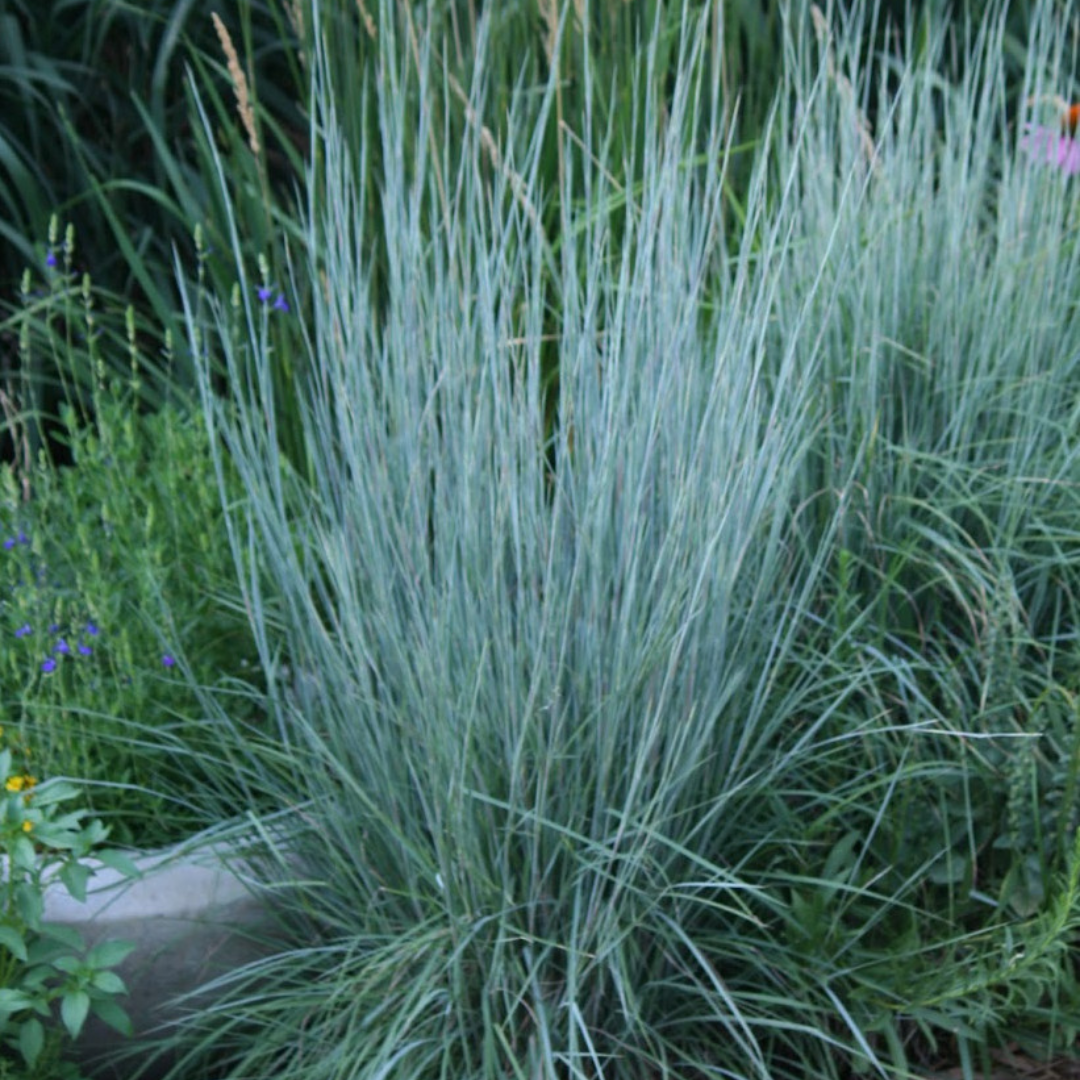
'The Blues' has a powder blue suit, a purple pocket square and a saxophone solo nobody asked for. Then fall comes and it switches to burgundy like it's moving on emotionally. HEARTBREAK NEVER LOOKED THIS GOOD.
Plant Characteristics:
- Botanical Name: Schizachyrium scoparium 'The Blues'
- Common Name: Little Bluestem
- Height: 60–90 cm (2–3 ft)
- Spread: 45–60 cm (18–24 in)
- Flowers: Fine, rosy flower stalks in late summer, followed by fluffy silver seed heads
- Bloom Time: Late summer into early fall (August to September)
- Foliage: Powder blue with deep purple highlights in summer, burgundy to russet in fall, amber in winter
- Features: Narrow upright habit, tolerates clay, moderate salt and black walnut, winter interest
Where to Plant: 'The Blues' is at its best in groups, where all that blue reads from a distance, in prairie and meadow plantings, dry borders, rock gardens and on slopes. It tolerates gravel, sand, clay, moderate salt and black walnut, so it's a handy fix for hot, dry corners and boulevard strips.
Companion Plants: Use 'The Blues' in a sunny, dry bed with purple rock cress, lime coneflowers and steel-blue globes. Aubrieta 'Rock On Purple' carpets the front at 10 to 15 cm with purple flowers from April to June. Echinacea KISMET® 'Kiwi' adds soft lime coneflowers at about 35 cm in foliage from June to October. Echinops 'Blue Glow' brings spiky steel-blue globes at 90 to 120 cm in July and August. Liatris pycnostachya adds tall rose-purple spikes at 90 to 150 cm from July to September.
Plant Care: Plant in full sun and lean, well-drained soil. Shade, rich soil, fertilizer and extra water all lead to weak, sprawling stems. Treat it a little rough and it stands better. Water through the first season, then only in long droughts. It's a warm-season grass and starts late in spring. Leave the foliage up for winter, then cut it back to the ground in late winter or early spring. Clumps are easy to divide in spring if they open up in the centre.
History: 'The Blues' was selected by Kurt Bluemel from seedlings of 'Aldous' and named by Dale Hendricks of North Creek Nurseries. 'Aldous' itself came from seed collected in the Flint Hills prairie near Manhattan, Kansas, in 1935, and was released by the Kansas Agricultural Experiment Station in 1966.
Final Thoughts: Narrow, upright and happy in clay or near a black walnut. Plant it in a sunny spot and turn the volume up. EVERY GARDEN NEEDS A GOOD SAD SONG.