

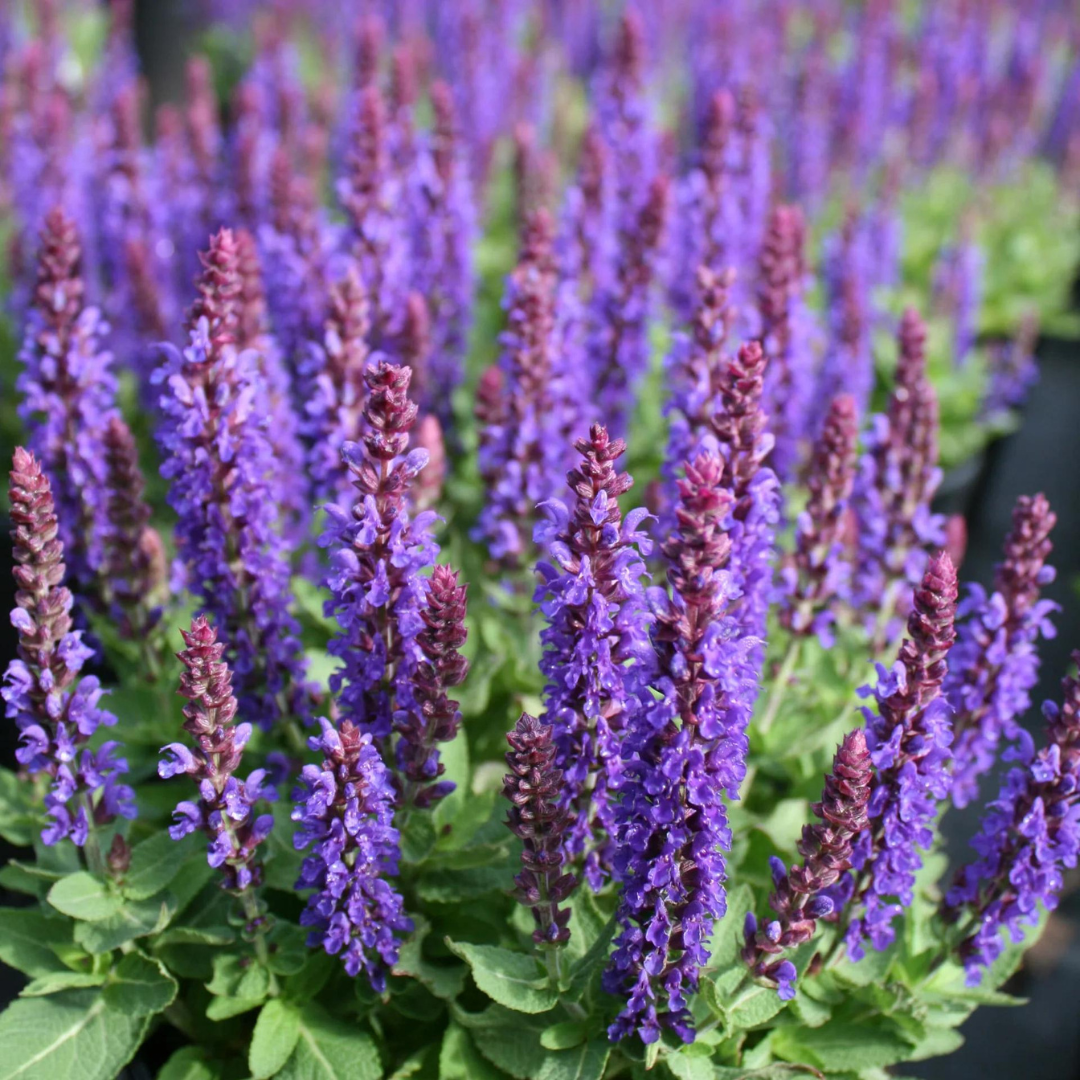
Salvia Marcus®
- In stock, ready for delivery
Salvia Marcus®: Half the Height, All the Violet
This sage is short, stocky and built for tight spaces, like a driver who parallel parks on the first try. Deep violet-blue spikes on a tidy mound that fits a patio pot. COMPACT. CONFIDENT. A LITTLE SMUG.
Plant Characteristics:
- Botanical Name: Salvia nemorosa 'Haeumanarc'
- Common Name: Meadow Sage
- Height: 25–30 cm (10–12 in) in flower
- Spread: About 30 cm (12 in)
- Flowers: Deep violet-blue spikes from purple buds, with purple-tinted calyxes
- Bloom Time: Early to midsummer (June to July), with rebloom when sheared
- Foliage: Green, aromatic, in a tight, compact mound
- Features: Very compact, good for containers, sold under the trade name Marcus®, registered cultivar name 'Haeumanarc'
Where to Plant: This is the salvia for the front row: edge a path or patio with it, tuck it into a rock garden, or plant it in pots and window boxes where taller types would flop over the rim. A row of five makes a tidy violet hedge, a natural fit for small city gardens.
Companion Plants: Plant compact Marcus® at the front of a sunny, dry bed with red poppies, ruby coneflowers and tall blazing star. Papaver 'Brilliant' opens fiery red poppies at 60 to 80 cm in May and June. Echinacea Sunny Days™ 'Ruby' adds double ruby coneflowers at 45 to 60 cm from July to October. Liatris pycnostachya brings tall rose-purple spikes at 90 to 150 cm from July to September. Schizachyrium Prairie Winds® 'Brush Strokes' grows to 80 to 90 cm in powder blue.
Plant Care: Plant in full sun in average to lean, well-drained soil. It won't tolerate soggy winter soil, so improve heavy clay with compost or grit. Water through its first season, then only during long dry stretches. Shear the spent spikes back to the leaves after the first bloom to tidy it and encourage more flowers. Cut it back in late fall or early spring. Divide in spring if the clump gets crowded, though compact plants like this rarely need it.
History: German nurseryman Martin Häussermann found this plant in the summer of 1998 as a naturally occurring mutation in a bed of 'Ostfriesland' sage near Stuttgart, and in Canadian trials it averaged about half the height of its parent. Its cultivar name is 'Haeumanarc', and it is sold as Marcus®.
Final Thoughts: Balcony, container, the tiny strip by the mailbox. It doesn't need room to show off. JUST GIVE IT SUN AND A STAGE.