

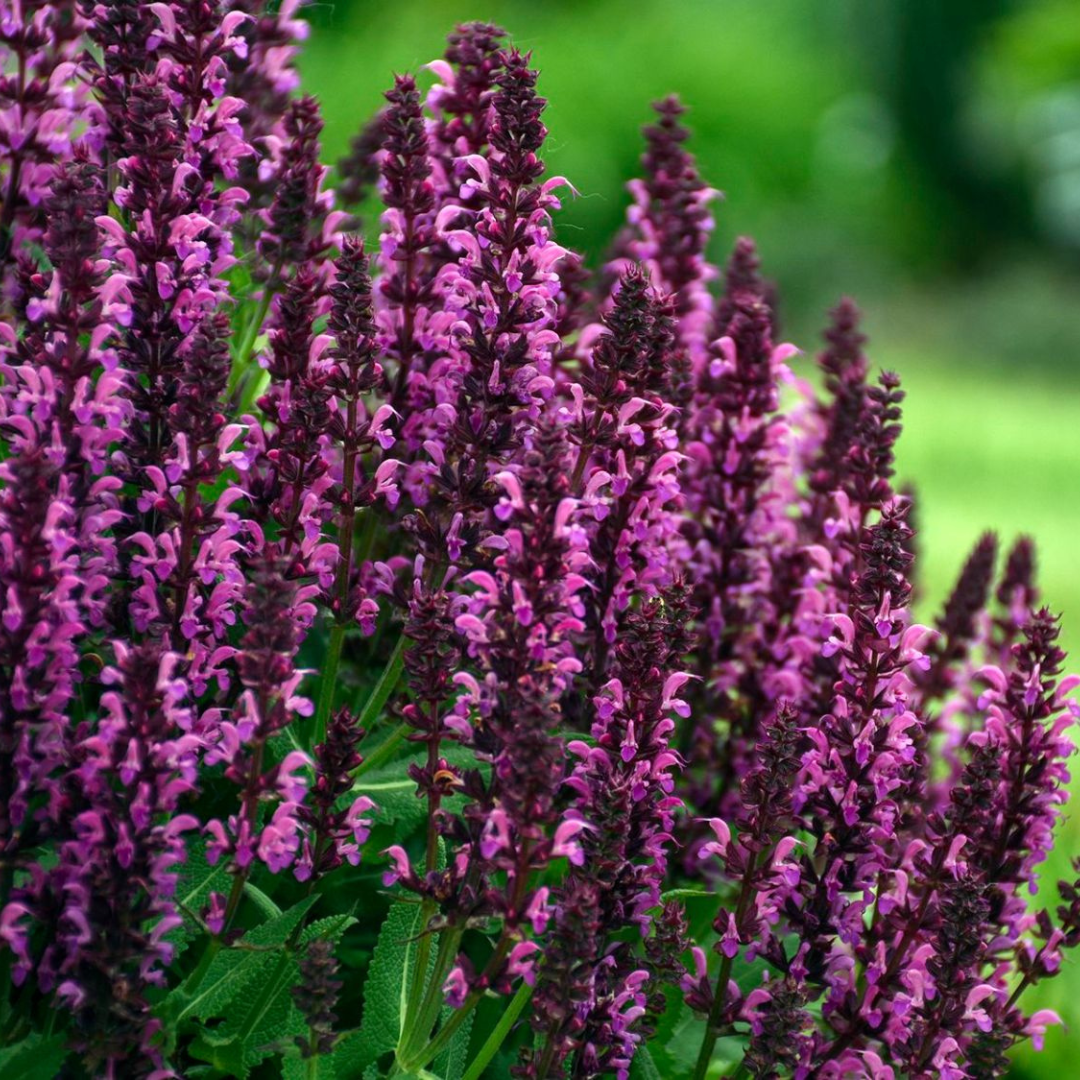
Salvia 'Bumbleberry'
- In stock, ready for delivery
Salvia 'Bumbleberry': Fuchsia Pink in a Tidy Package
Dark fuchsia-pink spikes with plum-purple calyces on a compact mound. 'Bumbleberry' looks like a bowl of jam with a bee problem. THE BUMBLEBEES CALLED DIBS.
Plant Characteristics:
- Botanical Name: Salvia nemorosa 'Bumbleberry'
- Common Name: Meadow Sage
- Series: Bumble series, from Walters Gardens
- Height: 25–30 cm (10–12 in)
- Spread: 30–35 cm (12–14 in)
- Flowers: Dark fuchsia-pink spikes with plum-purple calyces
- Bloom Time: Early summer (June to July), with repeat bloom after deadheading
- Foliage: Green, fragrant and slightly wrinkled, in a compact mound
- Features: Compact habit, rabbit resistant, salt tolerant, good for cutting
Where to Plant: Its small size makes it ideal for edging a sunny bed, lining a walkway, filling the front of a border or planting in containers. Mass a few together for a strong pink band, and lean on its salt tolerance for beds along a driveway or sidewalk.
Companion Plants: Use compact 'Bumbleberry' in a sunny, dry bed with late alliums, purple pea flowers and pink pinks. Allium senescens adds lavender-pink globes at 25 cm from July to September. Dianthus Rockin'™ Pink Magic brings white-to-pink fringed flowers at 45 to 60 cm from June to September. Baptisia 'Grape Escape' adds dusky purple spikes at 105 to 120 cm in May and June. Schizachyrium Prairie Winds® 'Brush Strokes' grows to 80 to 90 cm in powder blue.
Plant Care: Plant it in full sun in average, well-drained soil. Water regularly during the first season. After that it handles dry spells well, though it flowers best with an occasional deep drink in long droughts. Cut off faded spikes after the first flush to encourage more flowers later in summer. If the plant starts to sprawl, shear it back by about half. Cut the stems down in late fall or early spring. Divide in spring every few years if the centre opens up.
History: 'Bumbleberry' is part of the Bumble series from Walters Gardens in Zeeland, Michigan, a line of compact meadow sages for small spaces and containers whose other members were bred there by hybridizer Hans Hansen. The species, Salvia nemorosa, is a woodland and meadow sage of Europe and western Asia.
Final Thoughts: Deer, rabbits and salt don't bother it, and it reblooms after deadheading. Perfect for a pot. SMALL PLANT, BIG APPETITE FOR ATTENTION.