

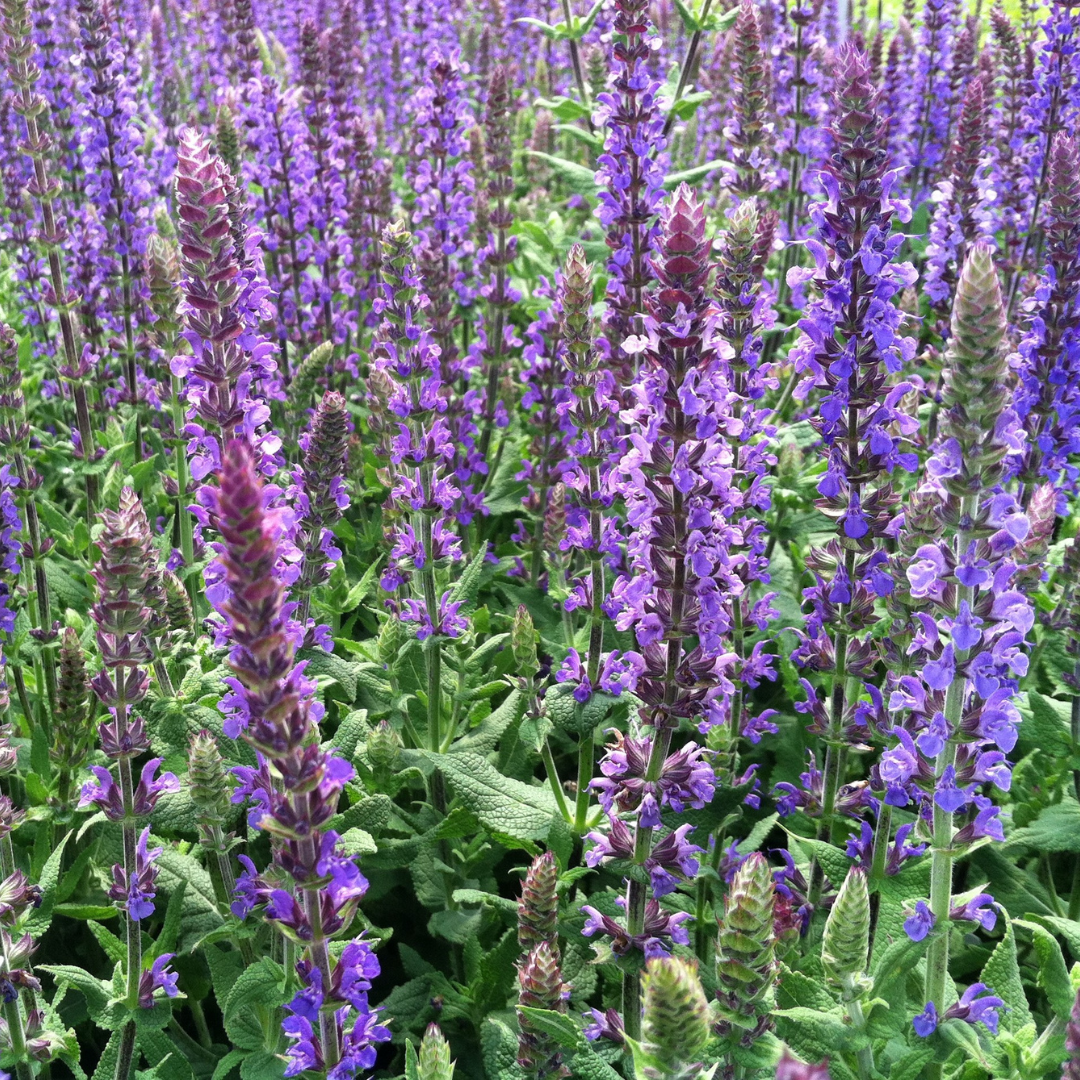
Salvia 'Blue Queen'
- In stock, ready for delivery
Salvia 'Blue Queen': Violet-Blue Spikes That Laugh at Winter
Vivid violet-blue spikes with reddish-purple bracts, standing in formation. 'Blue Queen' rules the sunny border and handles a frosty winter WITHOUT EVEN REACHING FOR A SHAWL.
Plant Characteristics:
- Botanical Name: Salvia × sylvestris 'Blaukönigin'
- Common Name: Meadow Sage
- Height: 45–60 cm (18–24 in)
- Spread: 45–60 cm (18–24 in)
- Flowers: Vivid violet-blue on slender spikes, with reddish-purple bracts
- Bloom Time: Early to late summer (June to August), with repeat bloom after deadheading
- Foliage: Dark green and aromatic, forming an upright clump
- Features: Very cold hardy, rabbit resistant, good for cutting
Where to Plant: Use it in the front to middle of a sunny border, in a cottage garden or in a pollinator planting, where its spikes bring strong vertical lines. The spikes make good cut flowers, so plant a few extra to raid.
Companion Plants: Plant 'Blue Queen' in a sunny, dry bed with pink thrift, white lavender and blue Russian sage. Armeria maritima edges the front with pink pompoms at 15 to 20 cm in May and June. Lavandula 'Ellagance Snow' adds fragrant white spikes at 30 to 40 cm from June to August. Perovskia 'Denim 'n Lace' brings blue Russian sage at 70 to 80 cm from July to October. Sorghastrum nutans rises behind at 90 to 180 cm in flower, a native Indian grass.
Plant Care: Plant it in full sun in average, well-drained soil. It tolerates poor and sandy soils and dislikes sitting wet over winter. Water regularly the first season, then mostly leave it be. When the first flush fades, cut the flower stems back to encourage another round. If the clump looks floppy or tired, shear it back hard and fresh foliage will follow. Cut it down in late fall or early spring. Divide in early spring or fall when the centre starts to thin.
History: 'Blue Queen' is the English name for the German cultivar 'Blaukönigin', part of Salvia × sylvestris, a group of hybrid sages related to Salvia nemorosa, the woodland sage of central and eastern Europe and western Asia. It has been a garden standard for decades because it's so reliable in cold climates.
Final Thoughts: Deer and rabbits bow out, hummingbirds bow in. Cut it back for another round. ALL HAIL THE BLUE.