

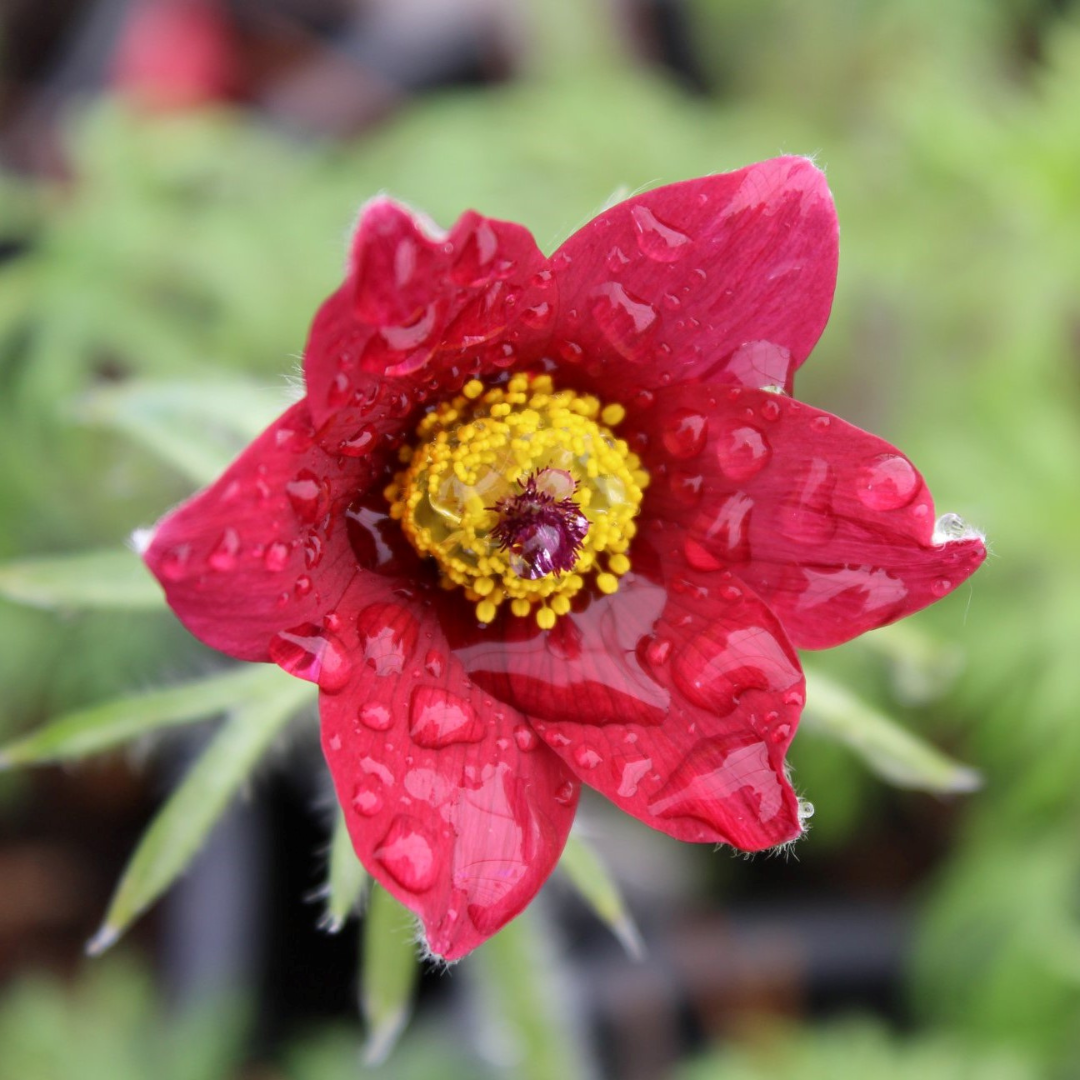
Pulsatilla vulgaris 'Red Bells'
- In stock, ready for delivery
Pulsatilla vulgaris 'Red Bells': Silky Red Bells Breaking the Spring Dress Code
Bright red, silky flowers covered in soft down, like tiny velvet ring boxes popping open all over the rock garden. 'Red Bells' is A PROPOSAL YOU CAN'T SAY NO TO.
Plant Characteristics:
- Botanical Name: Pulsatilla vulgaris 'Red Bells' (also sold as 'Rote Glocke')
- Common Name: Pasque Flower
- Height: 15–30 cm (6–12 in)
- Spread: 20–30 cm (8–12 in)
- Flowers: Bright red, silky and downy, with yellow stamens, followed by feathery seed heads
- Bloom Time: Early to mid-spring (April to May)
- Foliage: Finely divided, soft, hairy and deep green
Where to Plant: Plant it in a rock garden, gravel garden, sunny slope or along the front edge of a dry border. A small cluster near a path lets you enjoy the fuzzy buds and silky seed heads up close.
Companion Plants: Plant 'Red Bells' in a sunny, well-drained bed with pink pinks, hot pink sedum and red coneflowers. Sedum SunSparkler® 'Blue Pearl' adds blue leaves and hot pink flowers at 15 to 20 cm in August and September. Dianthus Rockin'™ Pink Magic brings white-to-pink fringed flowers at 45 to 60 cm from June to September. Echinacea 'Mellow Scarlets' adds orange and red coneflowers at 80 cm from June to October. Elymus canadensis stands behind at 90 to 150 cm with nodding, bristly seed heads.
Plant Care: Plant in full sun in fertile, well-drained soil. Avoid spots that stay wet over winter. On heavy clay, add grit or plant it in a raised bed. Water through the first growing season and during prolonged drought after that. Let the seed heads stay for their display, and the plant may self-sow a little. Pasque flowers have deep roots and do not like being moved once established, so pick the spot carefully. Wear gloves when handling, because the sap can irritate skin.
History: This red selection of the European pasque flower, a wildflower of dry, chalky grassland, is widely sold under the German name 'Rote Glocke', meaning red bell. The common name pasque comes from Pasch, an old word for Easter, when the flowers appear.
Final Thoughts: Sunny, dry and low maintenance, with feathery seed heads to follow. Deer stay away. RING THE BELLS AND PLANT IT.