

Pulmonaria 'Shrimps on the Barbie'
- In stock, ready for delivery
Pulmonaria 'Shrimps on the Barbie': Coral Clusters to Wake Up Spring Shade
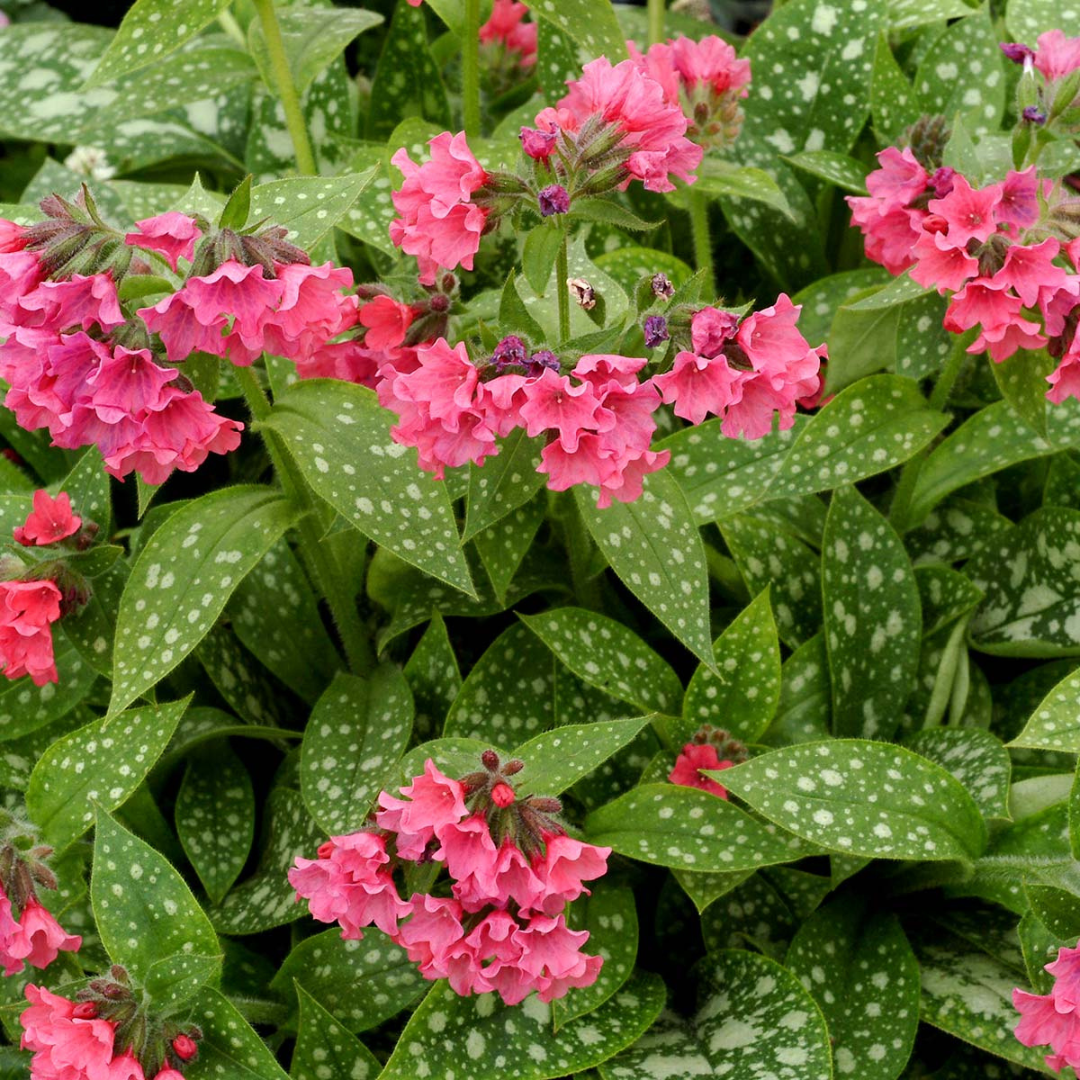
Big, fluted coral-pink bells the exact colour of dinner on the grill. 'Shrimps on the Barbie' brings cookout energy to the shady side of the yard. FIRE UP THE PATIO.
Plant Characteristics:
- Botanical Name: Pulmonaria hybrid
- Common Name: Lungwort
- Height: 20–25 cm (8–10 in)
- Spread: 45–60 cm (18–24 in)
- Flowers: Large, fluted, coral-pink to shrimp-pink bells in generous clusters
- Bloom Time: Early to mid-spring (April to May)
- Foliage: Medium-large green leaves boldly spotted in white
- Features: Rabbit resistant, mildew resistant
Where to Plant: Because it spreads wide and stays low, it's a fine choice for covering ground under trees and shrubs, or for a front-of-border edge in the shade. A small group makes a bright patch of colour in early spring.
Companion Plants: Plant 'Shrimps on the Barbie' in a moist, shady bed with lime heuchera, red astilbe and a big hosta. Heuchera 'Lime Marmalade' adds ruffled lime-gold leaves at 25 cm. Astilbe 'Vision in Red' brings deep red plumes at 40 to 50 cm in July and August. Hosta 'Earth Angel' adds big blue-green leaves edged in cream at 75 to 90 cm. Liriope 'Royal Purple' edges the front with grass-like leaves and purple spikes at 30 to 45 cm.
Plant Care: Plant in moist, rich, well-drained soil in part to full shade. Work compost into clay soils. Water regularly during its first season and in dry spells after that. Mulch keeps the roots cool and the leaves looking fresh. Cut it back hard once flowering is over and a new flush of spotted leaves will follow. Divide in early fall when the clump gets crowded.
History: 'Shrimps on the Barbie' was developed by Terra Nova Nurseries in Oregon, which tested it for several years before releasing it, mainly to be sure of its colour and mildew resistance. The name borrows a famous Australian catchphrase about a backyard barbecue.
Final Thoughts: Deer and rabbits won't touch it, and the white-spotted leaves look good long after spring. Plant it by the deck. NO TONGS REQUIRED.