

Primula vulgaris
- In stock, ready for delivery
Primula vulgaris: First Butter Yellow of the Woodland Year
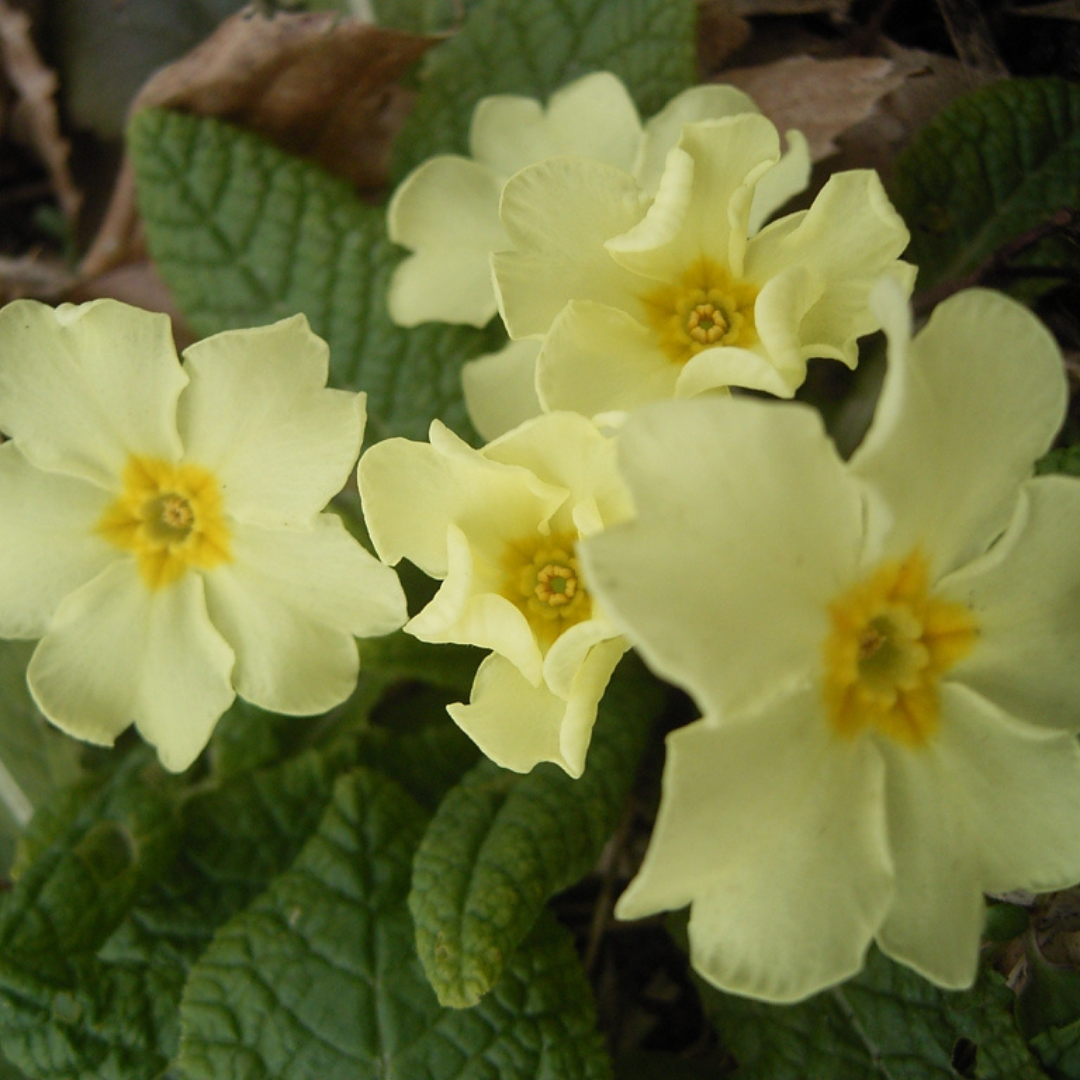
Pale yellow flowers tucked into a rosette of crinkled leaves, lightly scented and right on time for the first hungry bees. The common primrose may be common, but it has EXCELLENT TIMING.
Plant Characteristics:
- Botanical Name: Primula vulgaris
- Common Name: Common Primrose, English Primrose
- Height: 10–20 cm (4–8 in)
- Spread: 20 cm (8 in)
- Flowers: Pale yellow with a deeper yellow centre, about 2.5–3.5 cm (1–1.5 in) across, lightly scented
- Bloom Time: Early to mid-spring (April to May)
- Foliage: Crinkled, oblong green leaves in a low rosette
- Features: Compact
Where to Plant: This is a woodland plant at heart, so let it drift along a shady path, under deciduous trees, or along the front of a part-shade border. Plant it in small groups so the soft yellow reads from a distance, and give it shelter from hot afternoon sun.
Companion Plants: Tuck English primrose into a moist, part-shade bed with Jacob's ladder, bright heuchera and orange ligularia. Heuchera FYRE WING™ 'Heliodor' adds bright foliage at 28 cm. Polemonium 'Touch of Class' brings variegated leaves and blue flowers at 30 to 40 cm in May and June. Ligularia 'Pandora' adds yellow-orange daisies over dark leaves at 30 to 40 cm from July to September. Deschampsia cespitosa adds fine blades and airy flower clouds at 60 to 90 cm.
Plant Care: Plant in moist, humus-rich soil that drains well. It tolerates clay if you add compost, but it doesn't want to dry out, so keep it watered through summer dry spells. A thin layer of leaf mulch mimics the forest floor it grew up on. Pull off faded flower stems after blooming. Divide crowded clumps every few years, right after flowering, to keep them blooming well. Replant the divisions at the same depth and water them in.
History: The common primrose grows wild in woods, hedgerows and shady banks across western and southern Europe, including Britain and Ireland, and on into western Asia. Primula comes from the Latin primus, meaning first, and it holds the RHS Award of Garden Merit.
Final Thoughts: Compact and low maintenance. Plant a dozen along the shady path and the bees will leave you a five-star review. COMMON? HARDLY.