

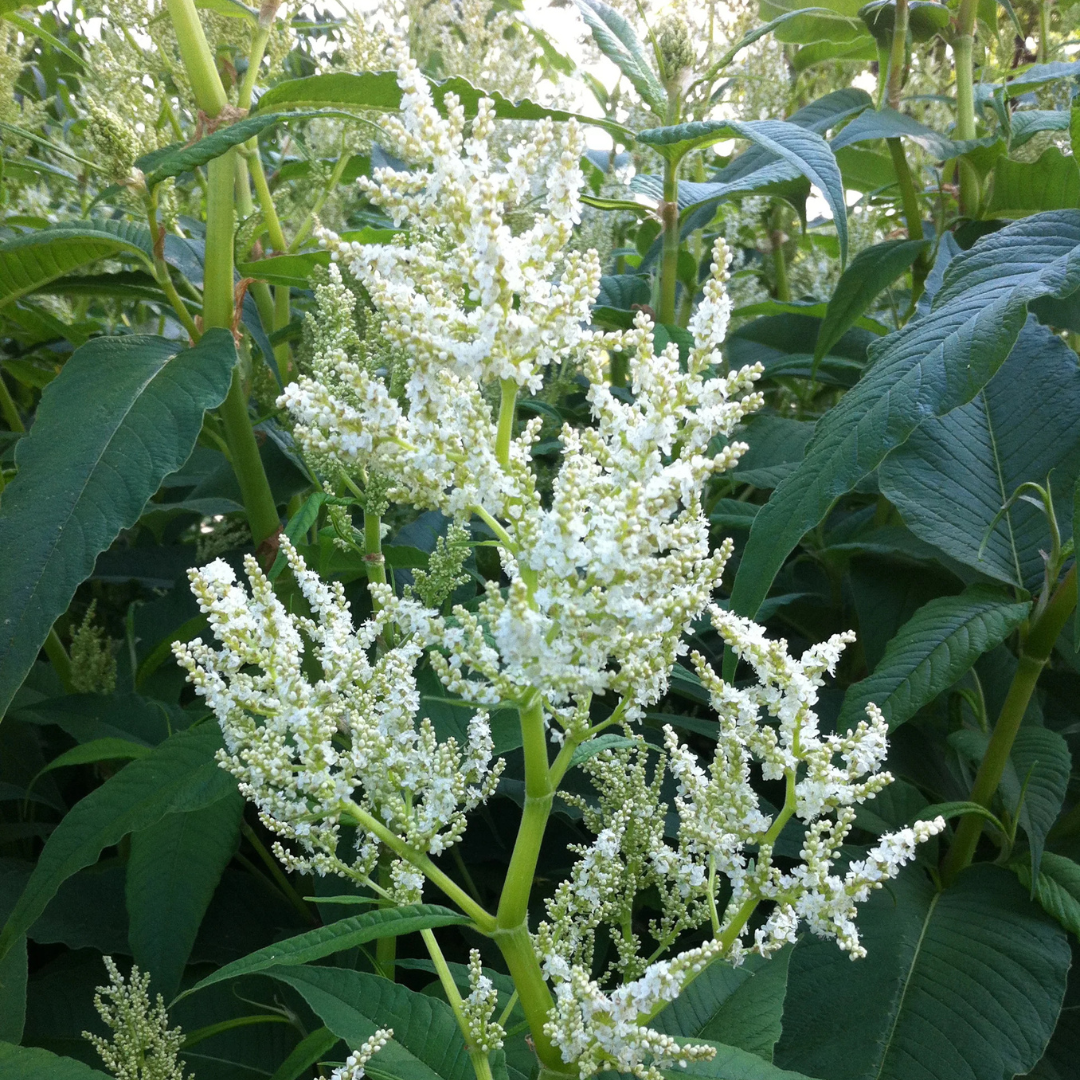
Persicaria polymorpha
- In stock, ready for delivery
Persicaria polymorpha: Shrub-Sized Plumes Without the Shrub
Feathery cream plumes on a plant as tall as your brother-in-law and far more helpful around the yard. This giant fleeceflower stays in its clump and DOESN'T OVERSTAY ITS WELCOME. UNLIKE SOME PEOPLE.
Plant Characteristics:
- Botanical Name: Persicaria polymorpha (also listed as Aconogonon polymorphum)
- Common Name: Giant Fleeceflower, White Dragon
- Height: 120–180 cm (4–6 ft)
- Spread: 120–150 cm (4–5 ft)
- Flowers: Large, feathery plumes of creamy white, ageing to pink and reddish brown
- Bloom Time: Early to late summer (June to August)
- Foliage: Long, lance-shaped green leaves on stout, upright stems
- Features: Clump-forming and not invasive
Where to Plant: Use it at the back of a large border, as a seasonal screen, or as a single focal point in a lawn or meadow planting. It does the job of a flowering shrub, then disappears underground in winter. It looks wonderful against a dark fence.
Companion Plants: Plant giant fleeceflower at the back of a moist bed in sun or part shade, with lower plants in front. Bergenia cordifolia opens pink bells at 35 to 45 cm in April and May. Heuchera FYRE WING™ 'Rhodonite' adds colourful foliage at 20 cm. Aconitum 'Album' brings white monkshood at 90 to 120 cm in July and August. Molinia 'Moorflamme' adds a fine clump at about 60 cm that turns orange-red in fall.
Plant Care: Plant in full sun to part shade, in fertile soil that stays evenly moist. It copes with clay, and once established it handles short dry spells, but it looks its best with regular water. Give it plenty of room at planting time, because it fills out over two or three seasons. The stems are strong and rarely need staking. Cut it back to the ground in late fall, or leave the dried plumes for winter interest and cut in early spring. It rarely needs dividing; if you do, use a sharp spade in early spring. Wear gloves when handling it, as the sap can irritate sensitive skin.
History: This fleeceflower comes from eastern Asia and belongs to the buckwheat family, and Flora of China now places it in the genus Aconogonon, as Aconogonon polymorphum. The name polymorpha means "many forms", and gardeners have embraced it as a non-spreading alternative to its more aggressive relatives.
Final Thoughts: The bees and butterflies treat it like an all-you-can-eat buffet, and deer leave it alone. Give it the back row. SUPERSIZE THE BACK ROW.