

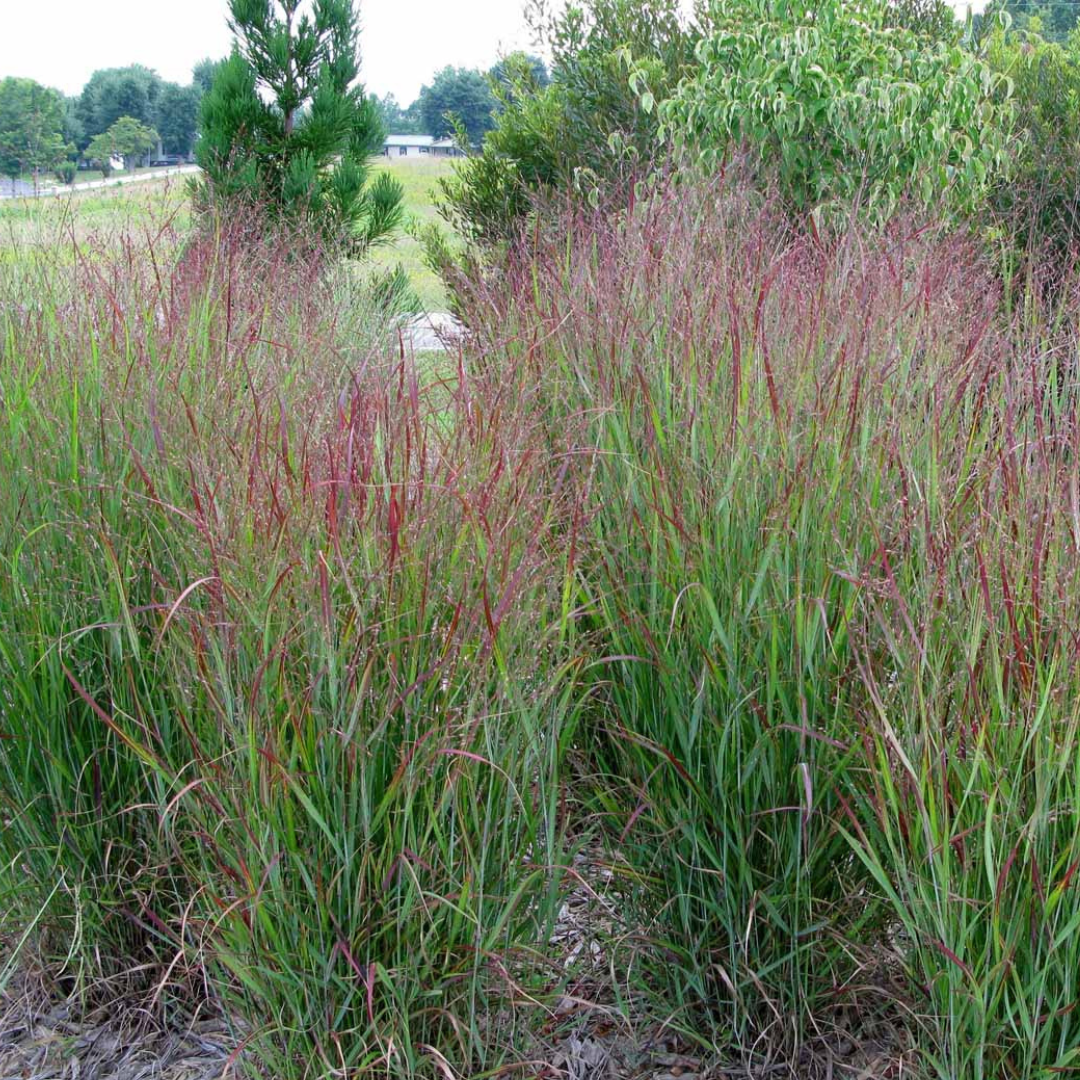
Panicum 'Shenandoah'
- In stock, ready for delivery
Panicum 'Shenandoah': Burgundy Blush in a Smaller Package
Starts the year plain green, then the tips go red and by fall the whole clump is burgundy. 'Shenandoah' has the slowest, most satisfying glow-up in the garden. MOVE OVER, MAKEOVER SHOWS.
Plant Characteristics:
- Botanical Name: Panicum virgatum 'Shenandoah'
- Common Name: Red Switch Grass
- Height: 90–120 cm (3–4 ft) in flower
- Spread: 60 cm (2 ft)
- Flowers: Airy, finely textured panicles tinted red, maturing to silvery tan
- Bloom Time: Late summer into fall (August to October)
- Foliage: Green blades that develop red tips by July and turn burgundy red by early fall
- Features: Fall and winter interest
Where to Plant: It's one of the more compact red switch grasses, so it fits mid-border spots and smaller yards. Plant it in a drift for a wash of red in late summer, or use one as an accent near a path. It handles clay and sandy soil.
Companion Plants: Use 'Shenandoah' in a sunny, dry bed where its burgundy fall blades back pink, terracotta and white. Armeria Dreameria® 'Daydream' edges the front with soft pink globes at 25 to 30 cm from May to September. Coreopsis 'American Dream' adds light pink daisies at 30 to 40 cm from June to September. Echinacea Kismet® 'White' brings white coneflowers at 45 cm from June to October. Achillea 'Terracotta' adds peach to terracotta heads at 60 to 75 cm from June to September.
Plant Care: Plant in full sun for the best red colour. Average, well-drained soil suits it, and it doesn't need fertilizer. Water through its first season, then only during long droughts. Leave it standing over winter. Cut back to about 10 cm (4 in) in early spring, before new growth starts. It's a warm-season grass and wakes up late in spring. Divide in spring every few years if the middle of the clump dies out.
History: 'Shenandoah' was selected in Germany by Dr. Hans Simon from a seedling of the cultivar 'Hänse Herms', then introduced to North American gardens. Its species, switch grass, is native to the North American tallgrass prairie from southern Canada to Mexico.
Final Thoughts: Shorter than most switch grasses, so it fits the border without blocking the view. Deer leave it alone. BURGUNDY IS THE NEW BLACK.