

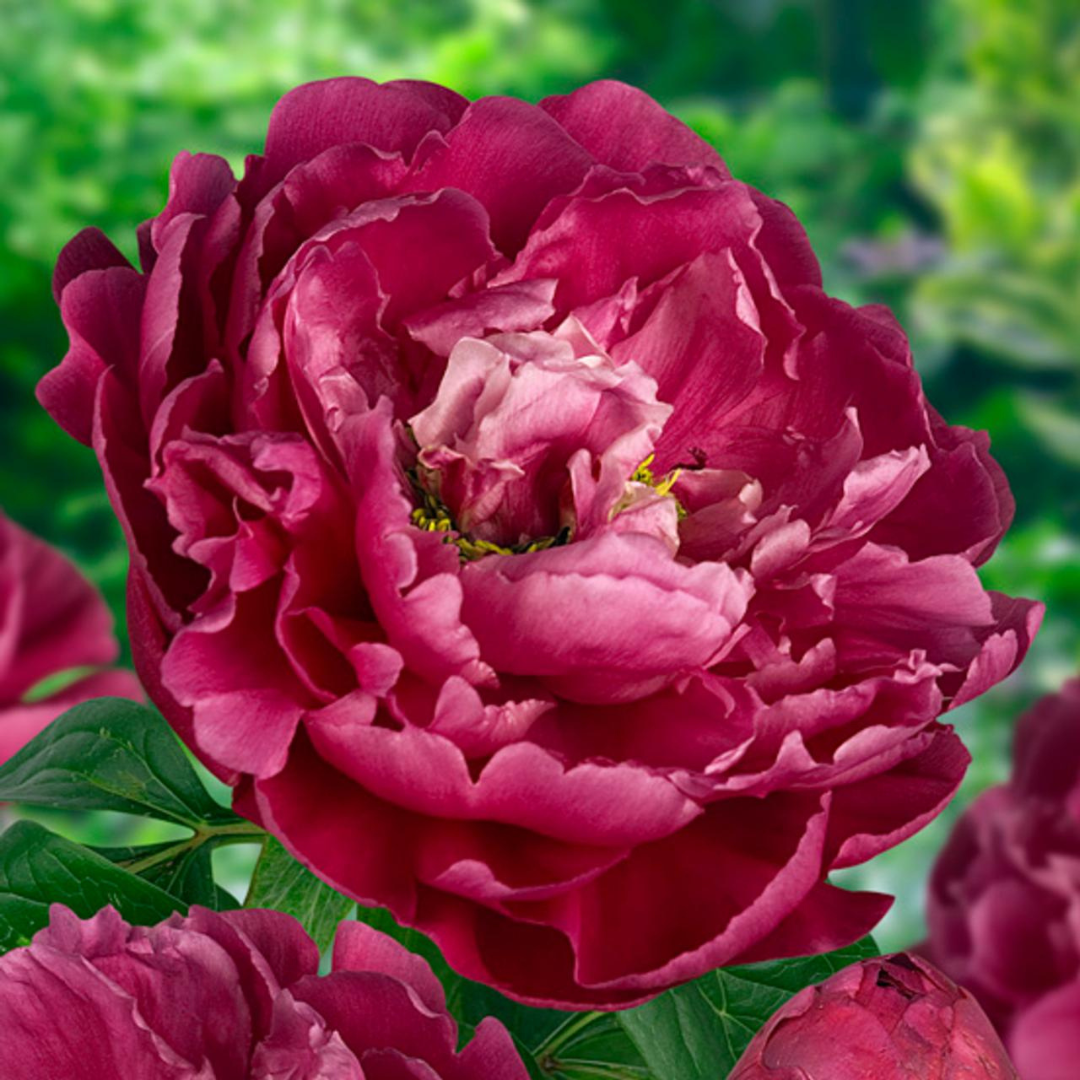
Paeonia 'Karl Rosenfield'
- In stock, ready for delivery
Paeonia 'Karl Rosenfield': Velvet Crimson That Carries Across the Yard
'Karl Rosenfield' is deep crimson, full and old-school, the kind of classic that never needs a comeback because it never left. Rose-like doubles on a bushy clump. VINTAGE NEVER GOES OUT OF STYLE.
Plant Characteristics:
- Botanical Name: Paeonia lactiflora 'Karl Rosenfield'
- Common Name: Garden Peony
- Height: 80–90 cm (31–35 in)
- Spread: 80–90 cm (31–35 in)
- Flowers: Large, fully double, rose-like blooms in deep crimson red
- Bloom Time: Late spring to early summer (May to June)
- Foliage: Dark green, divided leaves on a full, bushy clump
- Features: Long-lived
Where to Plant: Plant it in a sunny border, a cutting garden or a row along a fence where the deep red can carry across the yard. It handles cold winters with ease and a well-placed clump can outlive the garden shed, so pick a permanent spot.
Companion Plants: Plant deep red 'Karl Rosenfield' in a sunny or part-shade bed with white daisies, blue cranesbill and red daylilies. Leucanthemum 'Snowcap' edges the front with white daisies at 30 to 35 cm from June to August. Geranium 'Johnson's Blue' adds lavender-blue cranesbill at 30 to 60 cm in June and July. Hemerocallis 'Moses' Fire' brings double red daylilies at 55 to 60 cm in July and August. Miscanthus 'Gracillimus' rises behind at 150 to 180 cm with fine, arching blades.
Plant Care: Plant in full sun to part sun, in rich, well-drained soil. Set the eyes on the crown no more than 5 cm (2 in) below the soil surface. Planting too deep is the classic reason a peony won't bloom. Water well through the first season. The big double flowers get heavy in the rain, so put a peony ring in place in early spring. Deadhead after bloom. Cut the stems to the ground in fall and clear away the old foliage. It doesn't need dividing and does best left undisturbed.
History: 'Karl Rosenfield' was introduced in the United States in 1908 by the peony grower Rosenfield. More than a century later, it's still widely grown and easy to find.
Final Thoughts: Low maintenance, long-lived and ignored by deer. Plant it for the garden you'll still love in twenty years. OLD SCHOOL, NEW FAN.