

Paeonia 'Honey Gold'
- In stock, ready for delivery
Paeonia 'Honey Gold': Cream Petals With a Golden Pompom Heart
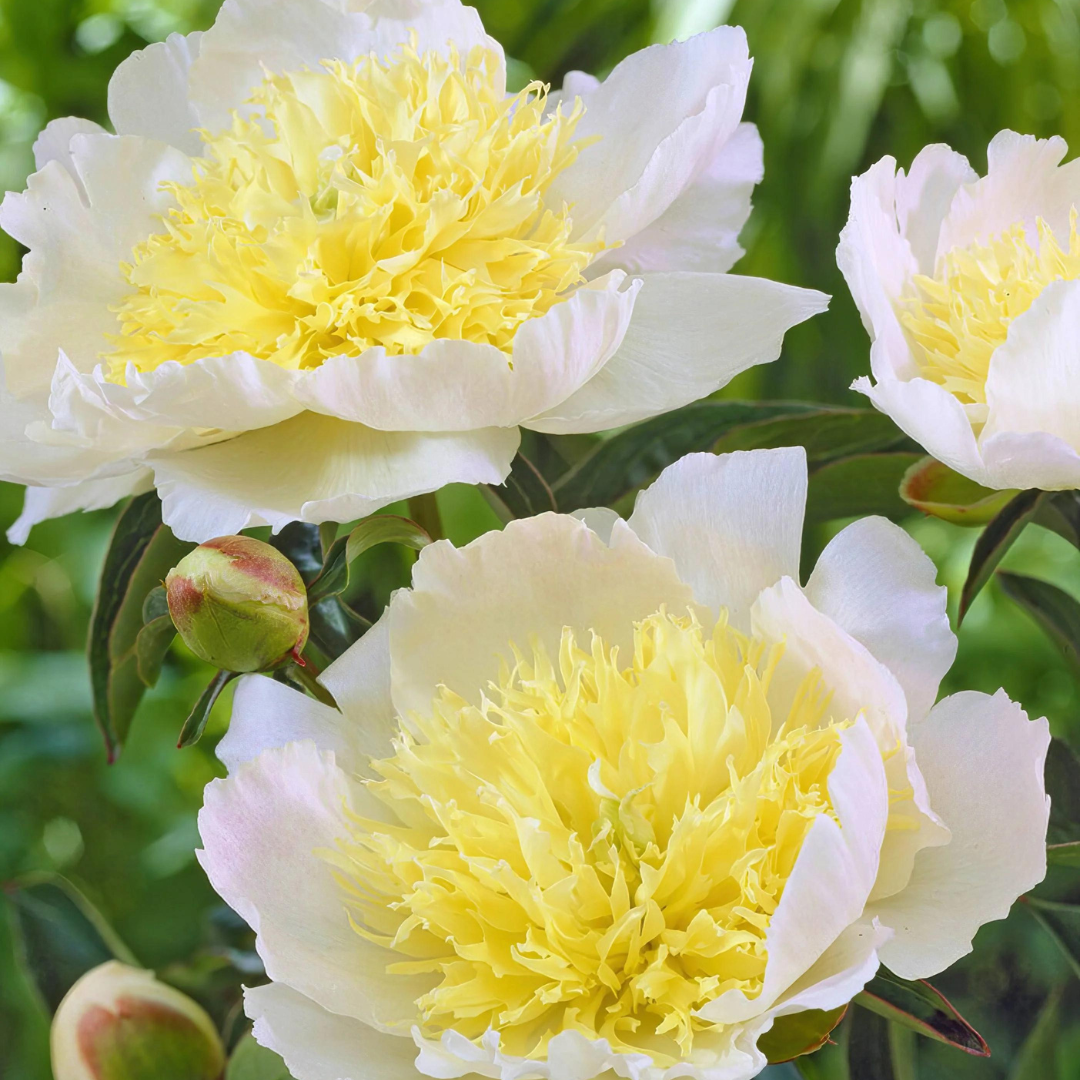
'Honey Gold' is creamy white on the outside and a pile of golden fluff in the middle, like a fried egg that went to art school. Lightly sweet-scented. BRUNCH JUST GOT FANCY.
Plant Characteristics:
- Botanical Name: Paeonia lactiflora 'Honey Gold'
- Common Name: Garden Peony
- Height: 75–90 cm (30–35 in)
- Spread: 60 cm (2 ft)
- Flowers: Japanese form: creamy white guard petals around a full centre of golden yellow petaloids, lightly sweet-scented
- Bloom Time: Early summer (June)
- Foliage: Deep green, divided leaves on an upright, bushy clump
- Features: Fragrant, long-lived
Where to Plant: It's lovely in a white or yellow theme garden and works in any sunny mixed border. Its Japanese-form flowers are lighter than full doubles and tend to hold up well in wind and rain. Cut a few for the house.
Companion Plants: Give 'Honey Gold' a sunny or part-shade bed with white daisies, white anemones and lavender bee balm. Leucanthemum 'Sugar Bowl' edges the front with white daisies at 20 to 25 cm from May to August. Monarda Grand Parade™ adds lavender-purple bee balm at 40 to 45 cm in July and August. Anemone 'Dainty Swan' brings white, purple-backed anemones at 46 to 61 cm from June to September. Miscanthus 'Gracillimus' rises behind at 150 to 180 cm with fine, arching blades.
Plant Care: Plant in full sun to part sun, in rich, well-drained soil. Set the eyes on the crown no more than 5 cm (2 in) below the soil surface. Planting too deep is the classic reason a peony won't bloom. Water well through the first season. Japanese-form flowers usually stand without much help, though a peony ring doesn't hurt in a wet spring. Deadhead after flowering. Cut the stems to the ground in fall and remove the old leaves. It rarely needs dividing, so let it settle in and build up for years.
History: 'Honey Gold' was introduced by the Klehm family's peony nursery in the 1970s. The Japanese form it shows, with a centre of narrow petal-like stamens, was developed by peony breeders in Japan and became popular in North American gardens in the 1900s.
Final Thoughts: Long-lived, deer resistant and happy through dry spells. Plant it where the morning sun hits. SUNNY SIDE UP, EVERY YEAR.