

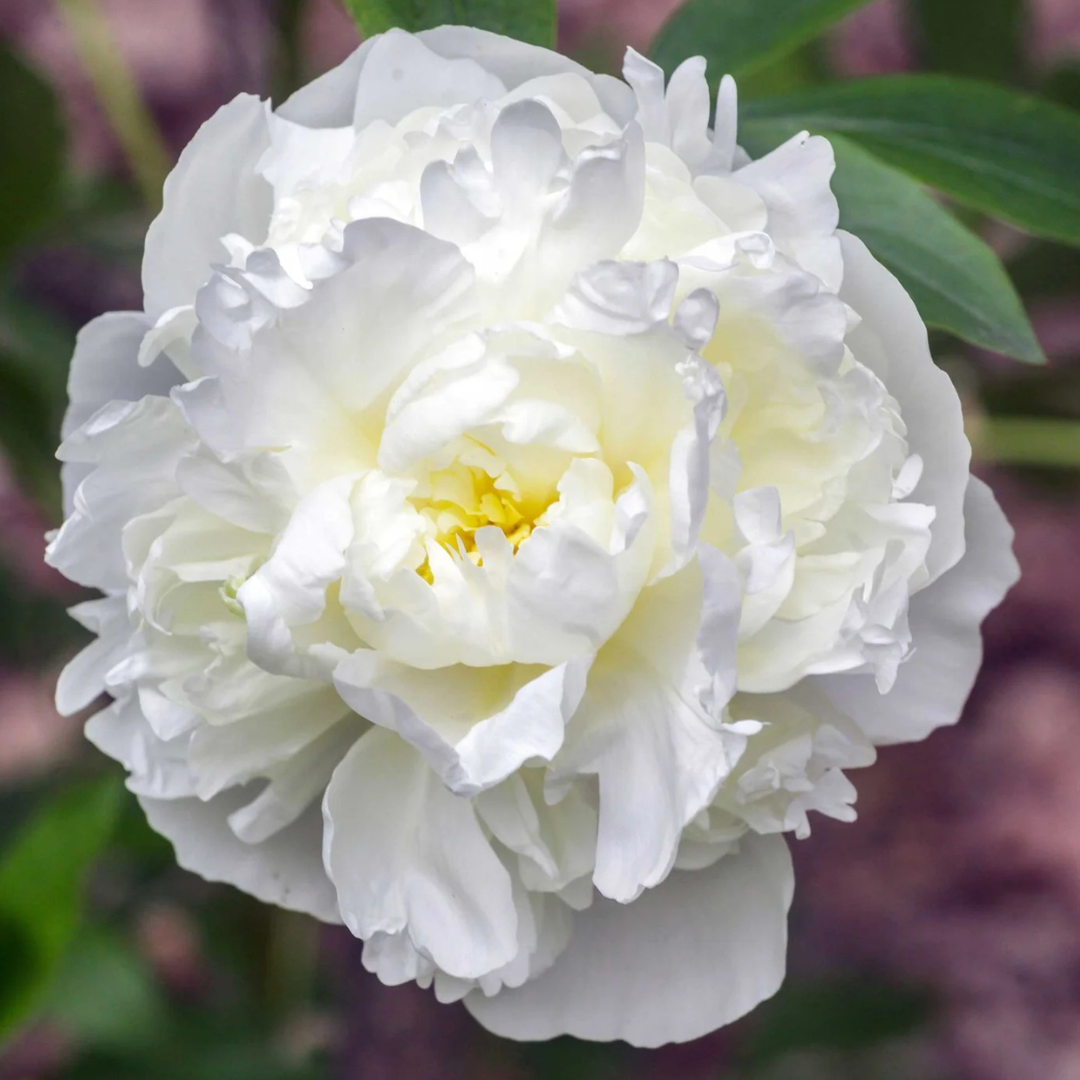
Paeonia 'Duchesse de Nemours'
- In stock, ready for delivery
Paeonia 'Duchesse de Nemours': Creamy Heirloom Blooms Worth Sniffing
'Duchesse de Nemours' carries itself like nobility and smells like the inside of a very expensive perfume shop. Fully double, creamy white blooms with a pale yellow glow. DO CURTSY ON YOUR WAY PAST.
Plant Characteristics:
- Botanical Name: Paeonia lactiflora 'Duchesse de Nemours'
- Common Name: Garden Peony
- Height: 80–100 cm (31–39 in)
- Spread: 60–90 cm (2–3 ft)
- Flowers: Fully double, creamy white with a pale yellow glow at the centre, about 15 cm (6 in) across, and very fragrant
- Bloom Time: Late spring to early summer (May to June)
- Foliage: Deep green, divided leaves on a tall, upright clump
- Features: Fragrant, long-lived, RHS Award of Garden Merit
Where to Plant: She belongs in a white garden, a classic border, or anywhere near a door or bench where you can catch the scent. The flowers are a florist favourite, so plant one for the garden and one for cutting. She's long-lived, so choose a permanent spot.
Companion Plants: Plant fragrant white 'Duchesse de Nemours' in a sunny or part-shade bed with pink veronica, white spiderwort and pale daylilies. Veronica Magic Show® 'Pink Potion' adds pink spikes at 36 to 41 cm in June and July. Tradescantia 'Innocence' brings white spiderwort at 50 to 60 cm from June to September. Hemerocallis 'Gentle Shepherd' adds near-white daylilies at 70 to 75 cm in July and August. Miscanthus 'Huron Sunrise' rises behind at 150 to 180 cm with red-tinged plumes.
Plant Care: Plant in full sun to part sun, in rich, well-drained soil. Set the eyes on the crown no more than 5 cm (2 in) below the soil surface. Deeper than that and she may sulk without blooming. Water well in the first season. The heavy double flowers can bow in a hard rain, so a peony ring placed in early spring is a good idea. Cut spent flowers off for a tidy look. Cut the stems to the ground in fall and clear away the leaves. She doesn't need dividing and is happiest left where she is.
History: 'Duchesse de Nemours' was introduced in France in 1856 by the nurseryman Calot. More than a century and a half later it's still widely grown, and it holds the Royal Horticultural Society's Award of Garden Merit.
Final Thoughts: Long-lived, deer resistant and tough once established. Plant it by the entrance. HER GRACE WILL SEE YOU NOW.