

Muhlenbergia capillaris
- In stock, ready for delivery
Muhlenbergia capillaris: September's Pink Haze, Lit From Behind
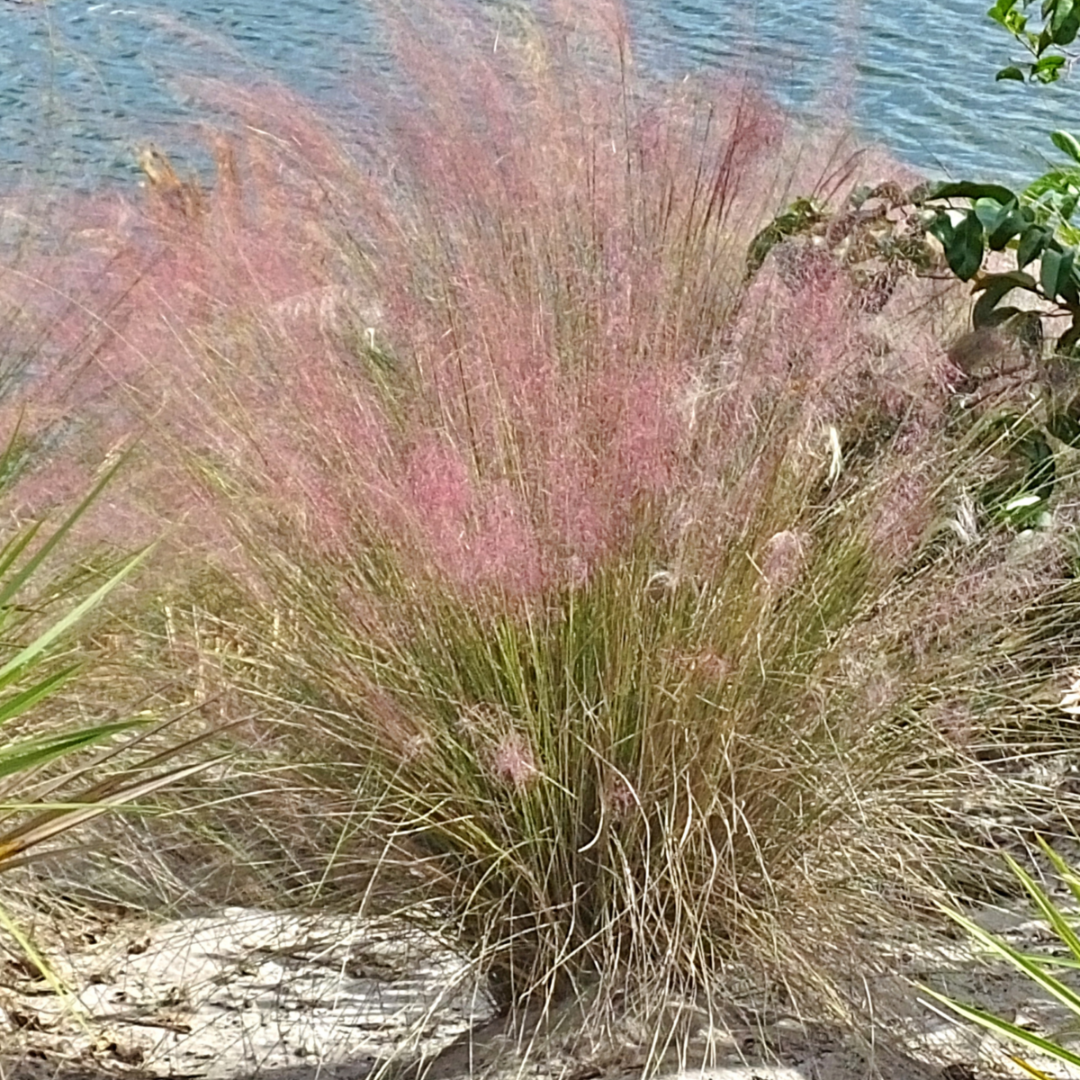
Pink Muhly Grass looks like a cloud of cotton candy drifted into your yard and decided to stay. Airy, hazy pink plumes float over a fine, wiry clump. SWEETEST GRASS ON THE BLOCK.
Plant Characteristics:
- Botanical Name: Muhlenbergia capillaris
- Common Name: Pink Muhly Grass, Hair-awn Muhly
- Height: 60–90 cm (2–3 ft) in flower
- Spread: 60–90 cm (2–3 ft)
- Flowers: Airy, hazy pink to purplish-pink plumes that dry to light tan
- Bloom Time: Late summer to fall (September to October)
- Foliage: Fine, wiry, green blades in a dense clump
- Features: Salt tolerant, winter interest
Where to Plant: Pink muhly looks best in groups, where the plumes merge into one long pink haze. Plant it along a path, at the front of a sunny border, in a gravel garden or anywhere the evening sun can shine through it. Its salt tolerance helps along driveways.
Companion Plants: Give pink muhly a sunny, dry bed where its pink fall cloud follows giant alliums and lemon yarrow. Sempervivum 'Kalinda' tucks in at the front at 10 to 15 cm with pink flowers in summer. Salvia 'Bumblesky' adds sky blue spikes at 35 to 40 cm in June and July. Achillea 'Little Moonshine' brings lemon-yellow heads at 30 to 35 cm from June to September. Allium giganteum towers at 90 to 150 cm with purple globes in May and June.
Plant Care: Plant it in full sun, in very well-drained soil. Sandy, gravelly or lean soil is ideal. It hates wet feet in winter, which is the main reason it fails in cold, heavy clay. In our region, give it the warmest, sunniest, best-drained spot you have and plant it in spring so it can settle in before its first winter. Water through the first season, then only in long dry spells. No fertilizer needed. Leave the foliage up over winter for protection and cut it back to a few centimetres in early spring, before new growth starts.
History: Pink muhly grows wild in the central and eastern United States south into Mexico and Central America, often in thin, rocky or sandy soils and open pinelands. The genus honours Gotthilf Heinrich Ernst Muhlenberg, an 18th-century Pennsylvania botanist, and capillaris is Latin for hair-like, a nod to its fine leaves.
Final Thoughts: Salt, drought and deer don't bother it. Plant a drift in full sun and let it float. CLOUD NINE, BUT MAKE IT A GRASS.