

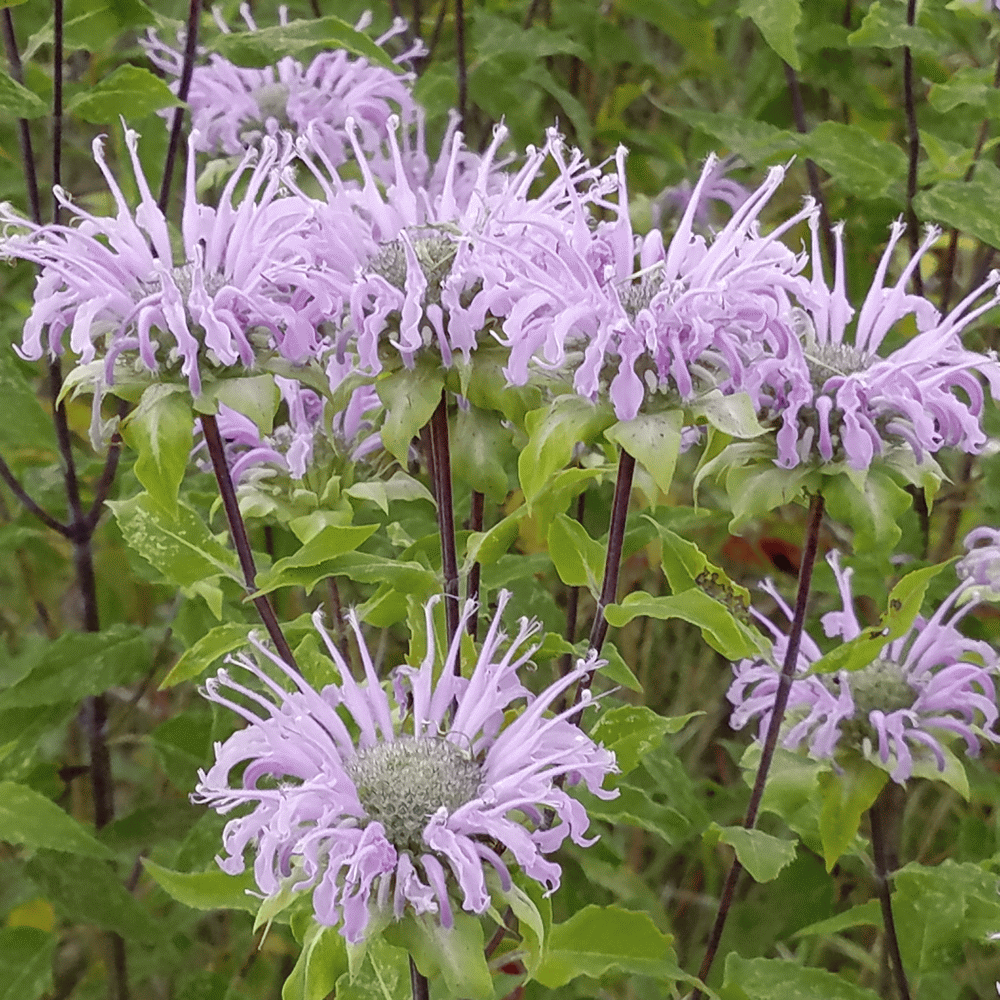
Monarda fistulosa
- In stock, ready for delivery
Monarda fistulosa: Pompoms That Laugh at Clay and Sand
Wild Bergamot is the native that thrives on neglect and still shows up looking like a lavender cloud. Rounded heads over pink-tinged bracts, buzzing with bees, butterflies and hummingbirds. LOW EFFORT. HIGH REWARD.
Plant Characteristics:
- Botanical Name: Monarda fistulosa
- Common Name: Wild Bergamot, Bee Balm
- Height: 60–120 cm (2–4 ft)
- Spread: 60–90 cm (2–3 ft)
- Flowers: Lavender to pale pink-purple tubular flowers in rounded heads at the stem tips, over pale, pink-tinged bracts
- Bloom Time: Early summer to late summer (June to August)
- Foliage: Grey-green, aromatic, lance-shaped leaves on square stems
- Features: Rabbit resistant, seed heads for winter interest
Where to Plant: Wild bergamot is at home in meadows, prairie-style plantings, pollinator gardens and the back of an informal border. It spreads by roots into a loose colony, so give it room to roam. It shrugs off clay and dry sandy soil alike, which makes it useful on tricky sites.
Companion Plants: Plant wild bergamot in a sunny or part-shade native bed with a long run of flowers and a native love grass. Geranium maculatum opens pale pink wild geranium at 45 to 60 cm in May and June. Anemone virginiana adds greenish-white thimbleweed at 60 to 90 cm from June to August. Helenium autumnale brings golden sneezeweed at 90 to 150 cm from July to October. Eragrostis spectabilis adds a pink-purple haze at 30 to 60 cm from July to September.
Plant Care: Plant it in full sun for the most flowers. It accepts part sun but may lean. Average, well-drained soil is ideal, and it tolerates dry and poor soils once established. Water through the first season. It is less prone to powdery mildew than scarlet bee balm, but it can still show some in late summer. Thinning a few stems in spring helps air move through. Leave the seed heads standing for winter and cut the stems down in early spring. Divide every few years in spring to keep the clump vigorous.
History: Wild bergamot grows wild across much of North America, from Quebec and Manitoba south to Georgia and Arizona, and Indigenous peoples and later settlers used its leaves in teas and home remedies. The aromatic leaves are rich in thymol, the same compound found in thyme.
Final Thoughts: Drought, deer and rabbits don't faze it, and the seed heads stand through winter. Plant a meadow's worth. YOUR WATERING CAN CAN RETIRE.