

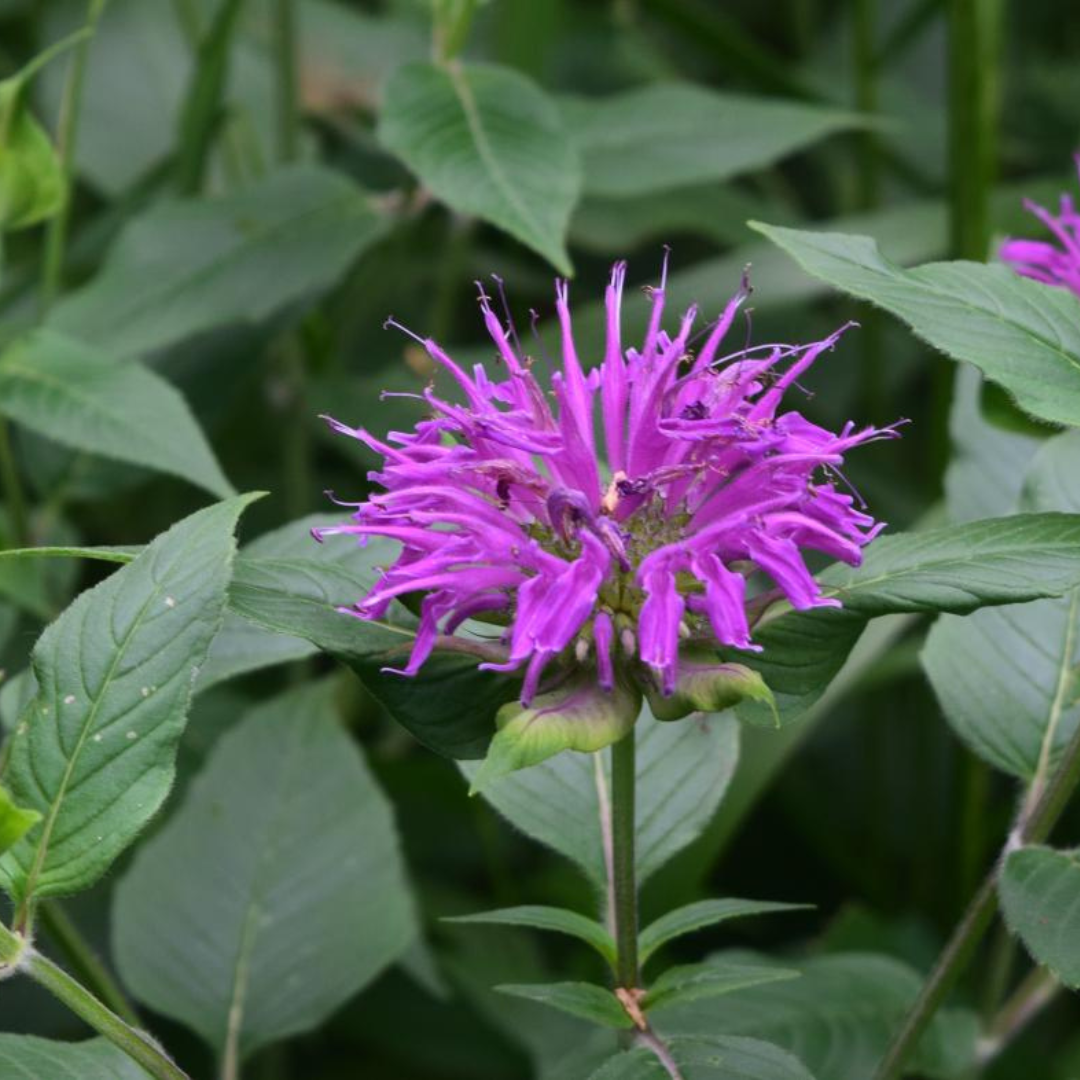
Monarda 'Purple Rooster'
- In stock, ready for delivery
Monarda 'Purple Rooster': Royal Purple, No Stakes Required
'Purple Rooster' struts around the garden in royal purple and crows loud enough to wake the hummingbirds. Big, shaggy heads on stems that never need a stake. COCKY? THAT'S RICH COMING FROM YOU.
Plant Characteristics:
- Botanical Name: Monarda didyma 'Purple Rooster'
- Common Name: Bee Balm
- Height: 90–100 cm (3–3.25 ft)
- Spread: 65–80 cm (26–31 in)
- Flowers: Large, shaggy heads of royal purple
- Bloom Time: Midsummer to early fall (July to September)
- Foliage: Dark green and aromatic, with better powdery mildew resistance than most older bee balms
- Features: Rabbit resistant, fragrant foliage, sturdy stems that don't need staking
Where to Plant: Put it in the middle or back of a sunny border, in a cottage garden or in a pollinator patch. It also works in rain gardens and moist meadows where the soil stays damp.
Companion Plants: Plant 'Purple Rooster' in a sunny or part-shade bed with orange geum, a fuchsia peony and rose-apricot daylilies. Geum TEMPO™ 'Orange' opens orange flowers at 23 to 38 cm from April to June. Paeonia 'Bowl of Beauty' adds fuchsia and cream peonies at 60 to 90 cm in May and June. Hemerocallis 'Awesome Blossom' brings rose to apricot daylilies at 60 cm from July to September. Sesleria autumnalis adds chartreuse tufts at 30 to 45 cm.
Plant Care: Plant in full sun to part sun in fertile, evenly moist, well-drained soil. Give it room for air to circulate, and water at the base in dry weather. Dry, stressed plants are the ones that get mildew. Deadhead to extend the bloom. Cut the stems to the ground in late fall or early spring. It spreads quickly by shallow runners. Divide every two or three years in early spring, or simply trim back the outer edge of the clump to keep it in bounds.
History: 'Purple Rooster' was bred by David Nedveck of The Flower Factory in Wisconsin. Its species, scarlet bee balm or Oswego tea, is native to eastern North America, including southern Ontario, and was used by Indigenous peoples and later by settlers as a tea plant.
Final Thoughts: Deer and rabbits won't touch it and the leaves smell great. Plant a few and let it rule the roost. THE HENHOUSE IS NOW A PENTHOUSE.