

Monarda bradburiana
- In stock, ready for delivery
Monarda bradburiana: Freckled Pink Before the Summer Rush
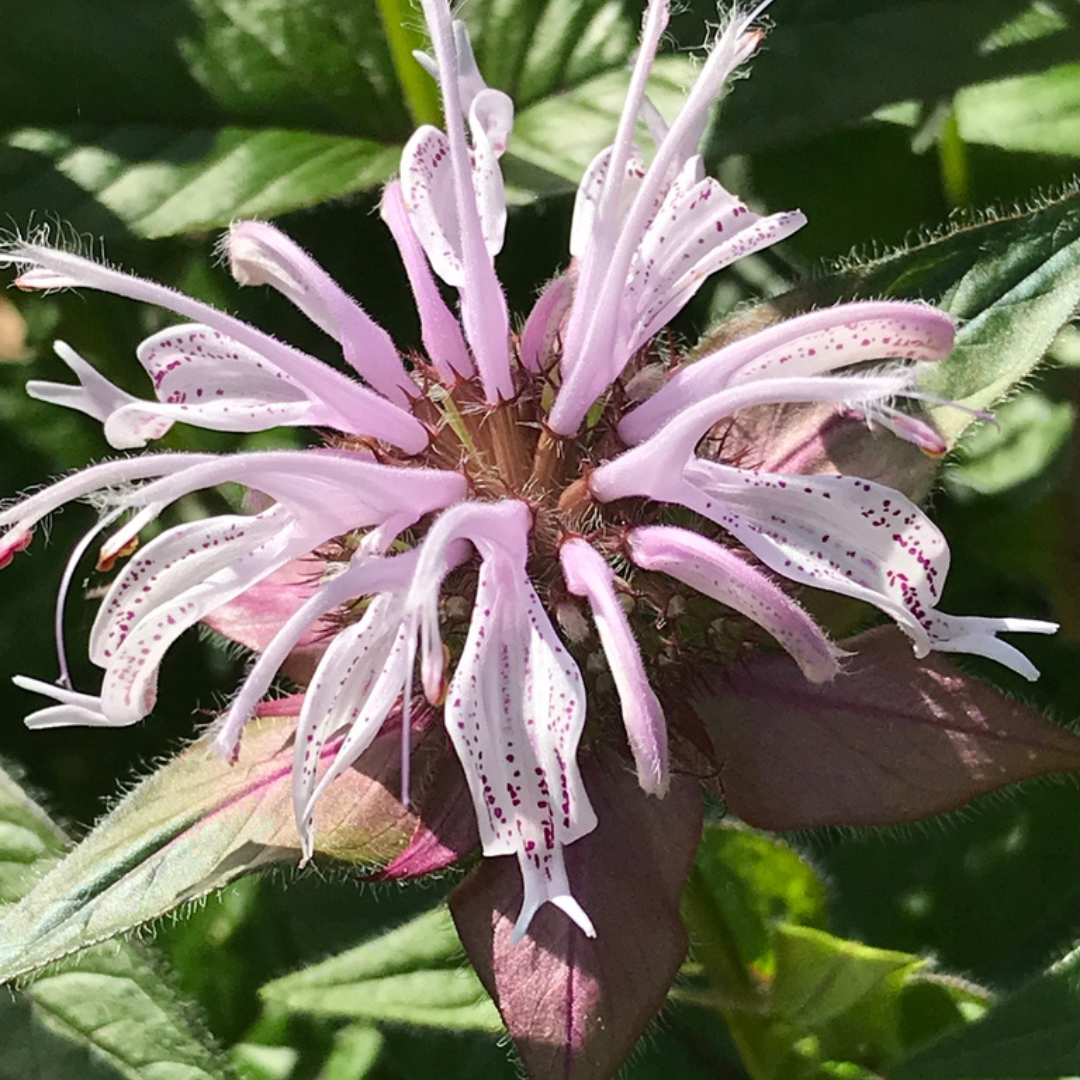
Eastern Bee Balm shows up early, before the rest of the bee balms have even found their keys. Pale pink to white flowers with purple freckles over purple-tinged bracts. THE EARLY BIRD GETS THE BUMBLEBEE.
Plant Characteristics:
- Botanical Name: Monarda bradburiana
- Common Name: Eastern Bee Balm, Bradbury's Bee Balm
- Height: 30–60 cm (1–2 ft)
- Spread: 30–60 cm (1–2 ft)
- Flowers: Pale pink to white with purple spots on the lower lip, in rounded heads 4–8 cm (1.5–3 in) across, over purple-tinged bracts
- Bloom Time: Late spring to early summer (May to June)
- Foliage: Greyish-green, aromatic, stalkless leaves that hug the stem
- Features: Rabbit resistant, tolerates dry soil, better mildew resistance than many bee balms
Where to Plant: Its short size and early bloom suit the front or middle of a prairie-style border, a rock garden, a dry slope or a woodland edge with some sun. It tolerates dry soil, so it's a good fit for lean, open spots.
Companion Plants: Use early-blooming eastern bee balm in a sunny or part-shade bed with pink clematis and summer daylilies to follow. Clematis 'Stand by Me Pink' adds soft pink nodding bells at 97 to 107 cm from June to August. Hemerocallis 'Joan Senior' brings near-white daylilies at 60 to 65 cm in July and August. Heliopsis 'Tuscan Sun' adds compact golden daisies at 60 to 90 cm from July to September. Miscanthus 'Huron Sunrise' rises behind at 150 to 180 cm with red-tinged plumes.
Plant Care: Plant it in full sun to part sun, in average to dry, well-drained soil. It handles clay, loam and thin rocky soil as long as water doesn't sit around the roots. Water through the first season, then only in long droughts. Give it room for air to move, which helps keep the leaves clean. It may self-seed and slowly form a colony, so pull extras in spring if you want it to stay put. Cut the stems back after flowering for a neater look, or in late fall or early spring. Divide in spring if the clump gets crowded.
History: Eastern bee balm grows wild in rocky open woods, glades, savannas and roadsides, mostly in the central and southern United States, and is usually the first Monarda to flower in the wild. The species name honours John Bradbury (1768–1823), an English botanist who travelled the American Midwest collecting plants.
Final Thoughts: It tolerates dry soil, shrugs off deer and rabbits and keeps mildew mostly at bay. Plant it where you can see it first thing. COFFEE WITH A VIEW.