

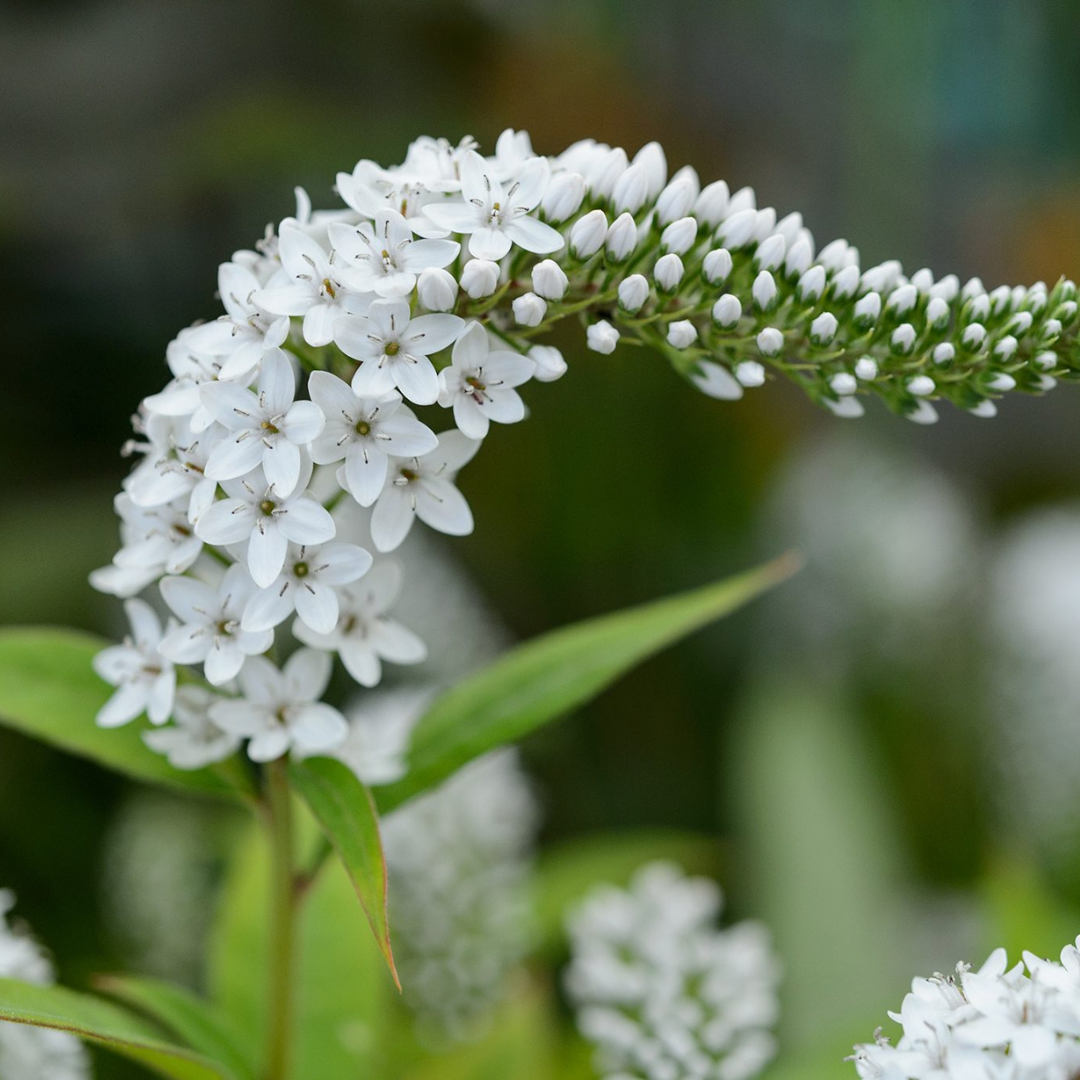
Lysimachia clethroides
- In stock, ready for delivery
HEADS UP. THIS ONE SPREADS.
Gooseneck loosestrife spreads quickly by underground runners and can take over a bed. Give it a spot of its own or plant it in a large bottomless pot, and keep it out of wetlands and other natural areas.
Lysimachia clethroides: Arching White Spikes Like a Flock of Geese
Gooseneck Loosestrife has white flower spikes that all curve and lean the same way, like a flock of geese listening to the same gossip. Then the leaves blush red in fall. EVERYBODY LOOK LEFT.
Plant Characteristics:
- Botanical Name: Lysimachia clethroides
- Common Name: Gooseneck Loosestrife
- Height: 60–90 cm (2–3 ft)
- Spread: 75–90 cm (30–36 in), spreading wider over time by underground runners
- Flowers: Tiny white flowers on tapering spikes that curve over at the tip, all leaning the same way
- Bloom Time: Midsummer to early fall (July to September)
- Foliage: Lance-shaped green leaves that often turn red or orange in fall, especially in sun
- Features: Rabbit resistant, good cut flower, handles moist and clay soils, RHS Award of Garden Merit
Where to Plant: It suits large, informal beds, damp spots, pond and stream edges you control, and areas where you want a fast, full planting, or a bed all its own. Keep it out of natural wetlands, as it can escape there, and cut the arching spikes for vases.
Companion Plants: Give gooseneck loosestrife room in a moist bed in sun or part shade, where it can spread among tough partners. Helleborus HGC® Ice N' Roses® Rosetta opens soft pink flowers at 45 to 60 cm from March to May. Heuchera FYRE WING™ 'Amber' adds amber foliage at 28 cm. Aruncus dioicus rises behind at 120 to 180 cm with creamy goat's beard plumes in June and July. Carex 'Gold Fountains' edges the front with gold-edged blades at 20 to 30 cm.
Plant Care: Plant it in average to moist, humus-rich soil. It handles clay well. In full sun, keep it watered so it doesn't dry out. Drier soil and part shade slow down its spread. Plan for its runners. A root barrier, a container sunk in the ground, or a bed edged by paving keeps it in place. Divide it in spring every few years and give away or compost the extras. It's late to wake up in spring, so mark its spot. Cut it back in late fall or early spring.
History: Lysimachia clethroides is native to China, Korea and Japan, and its species name means like Clethra, the summersweet shrub, whose white flower spikes look similar. It has been grown in Western gardens for well over a century and holds the Royal Horticultural Society's Award of Garden Merit.
Final Thoughts: Clay soil? Damp spot? It's in. Plant a patch and let the whole gaggle turn heads. HONK IF YOU LOVE IT.