

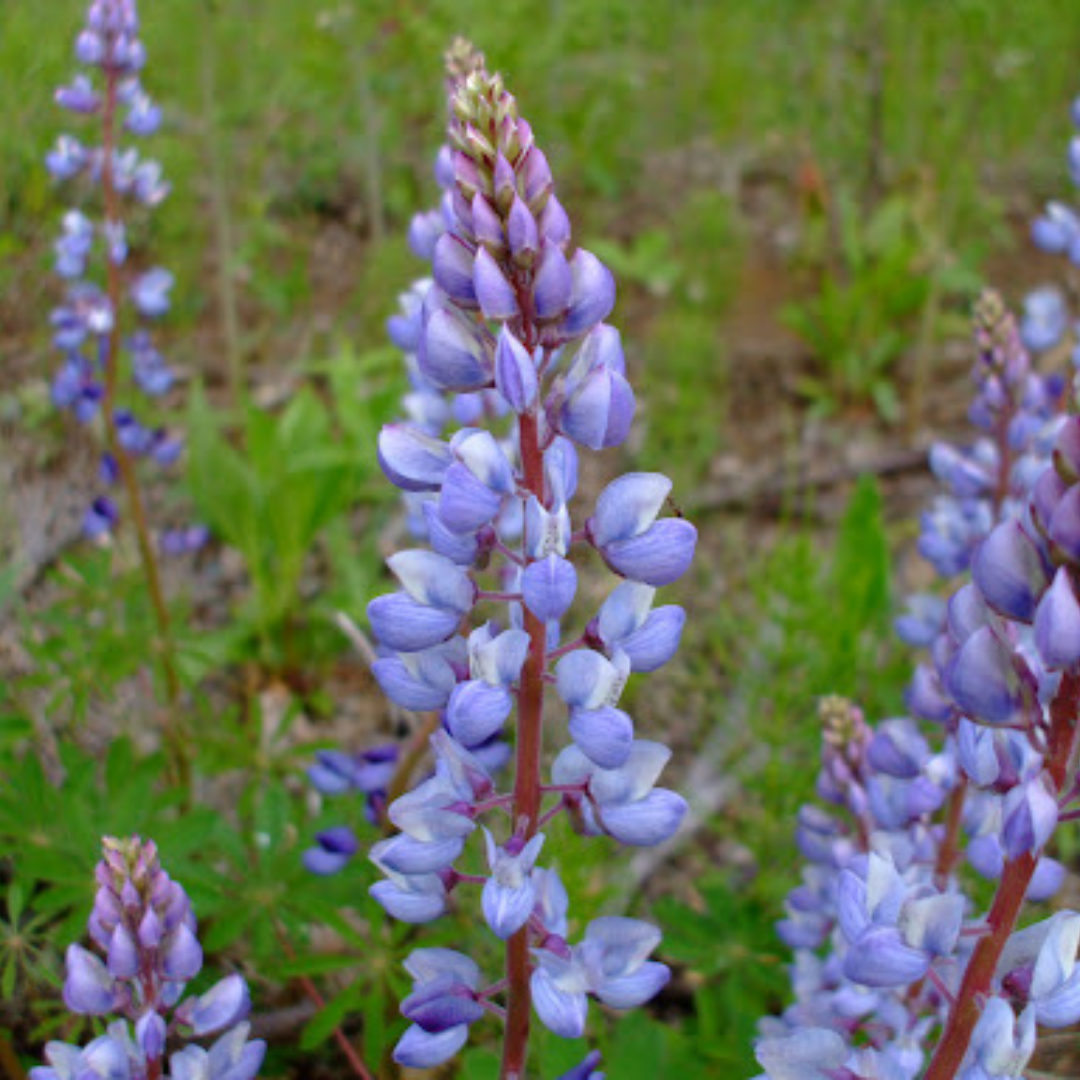
Lupinus perennis
- In stock, ready for delivery
Lupinus perennis: The Original Wild Blue Lupine
Wild Lupine is a native that makes its own fertilizer, feeds rare butterflies and thrives in sand. Blue to violet pea flowers on loose spikes. OVERACHIEVER? IT PREFERS THE TERM MULTITASKER.
Plant Characteristics:
- Botanical Name: Lupinus perennis
- Common Name: Wild Lupine, also called sundial lupine
- Height: 30–60 cm (1–2 ft)
- Spread: 30 cm (12 in)
- Flowers: Blue to violet pea-like flowers on loose upright spikes; occasionally pink or white
- Bloom Time: Late spring to early summer (May to June)
- Foliage: Soft green, palm-shaped leaves with seven to eleven leaflets
- Features: Larval host for Karner blue and frosted elfin butterflies, fixes nitrogen
Where to Plant: Wild lupine belongs in native plant gardens, sunny meadows, sandy slopes and dry, open spots with lean, well-drained soil. It's a smart choice for pollinator and butterfly gardens and for restoring oak savanna or sand barren habitat.
Companion Plants: Plant wild lupine in a sunny or lightly shaded native bed with sandy, well-drained soil. Monarda fistulosa adds lavender wild bergamot at 60 to 120 cm from June to August. Pycnanthemum virginianum brings white mountain mint at 60 to 90 cm from July to September. Solidago ptarmicoides adds white, daisy-like goldenrod at 30 to 60 cm from July to September. Elymus virginicus stands behind at 90 to 125 cm, a native wild rye.
Plant Care: Plant it in full sun or light shade, in sandy or gravelly soil with excellent drainage. Slightly acidic soil suits it best. Rich garden soil and fertilizer work against it. Water while it's getting established, then let it be. It forms a deep taproot, so it doesn't like being moved. Plant it where it can stay. Let the seed pods ripen if you want it to spread; they split open and fling seed in early summer. The foliage can fade by late summer, which is normal. Deer and rabbits will sometimes browse it, so protect young plants if they're a problem in your yard.
History: Lupinus perennis grows naturally from New England and southern Ontario west to Minnesota and south to Florida and Louisiana, mostly in sandy openings, savannas and open woods. In Ontario, the loss of oak savanna and its wild lupine led to the disappearance of the Karner blue butterfly, whose caterpillars eat nothing else.
Final Thoughts: Give it sun and sandy, well-drained soil, then step back. It's busy running a butterfly nursery. PLEASE DO NOT DISTURB.