

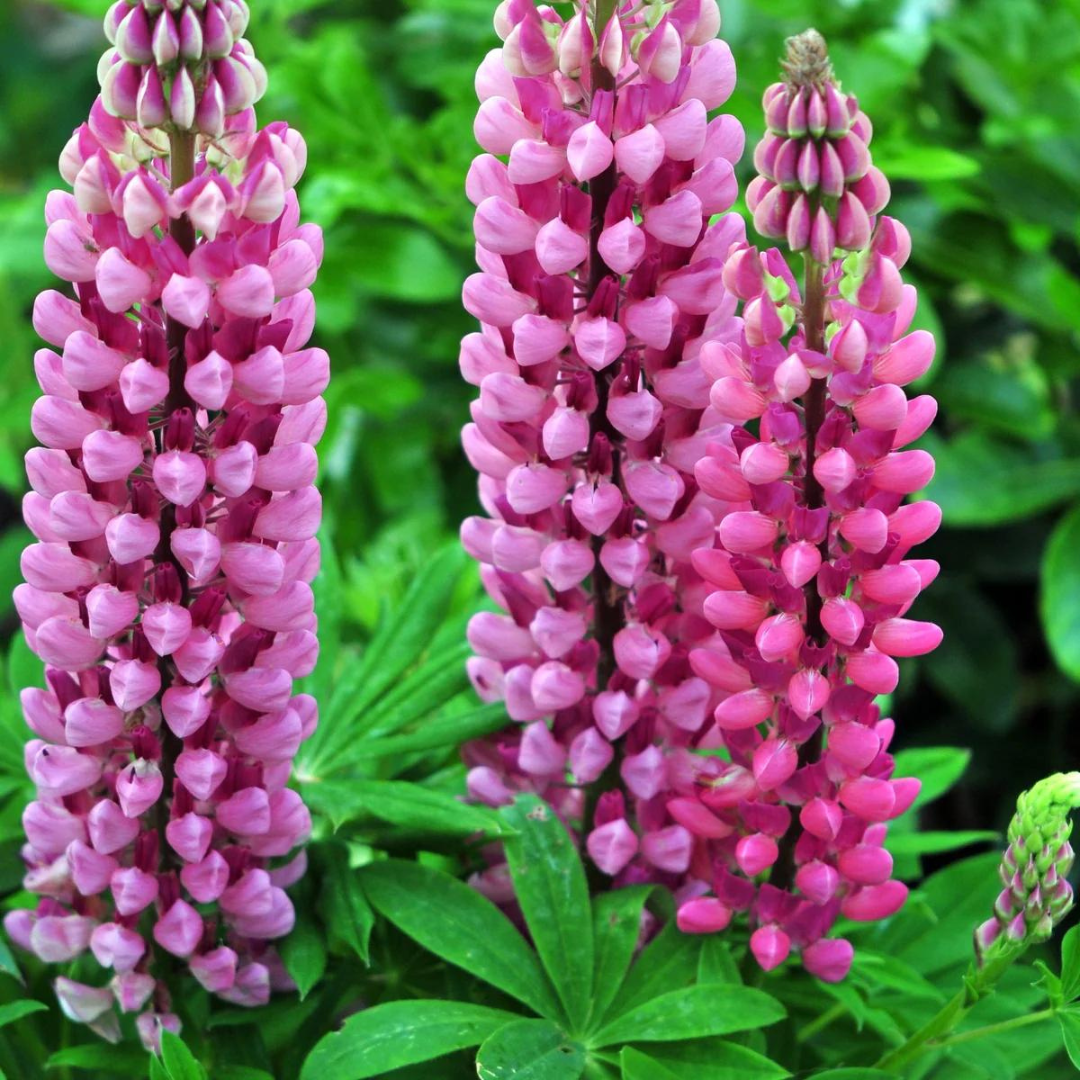
Lupinus 'Gallery Pink'
- In stock, ready for delivery
Lupinus 'Gallery Pink': Full-Size Pink Spikes Minus the Height
'Gallery Pink' stands tall and pink like it's holding up a sign that says pick me. Dense spires of pea flowers rise over a compact mound of palm-shaped leaves. THE BEES PICKED IT FIRST.
Plant Characteristics:
- Botanical Name: Lupinus 'Gallery Pink' (hybrid, Gallery series; derived from Lupinus polyphyllus)
- Common Name: Lupine, Dwarf Lupine
- Height: 45–60 cm (18–24 in)
- Spread: 45–60 cm (18–24 in)
- Flowers: Tall, dense spires of deep pink pea-like flowers
- Bloom Time: Late spring to early summer (June to July), with a possible second flush if deadheaded
- Foliage: Deep green, palm-shaped leaves in a compact mound
- Features: Good for cutting, suits containers, rabbit resistant
Where to Plant: Use it in cottage gardens, sunny borders and patio containers. Planted in groups of three or more, it makes a strong pink block in early summer.
Companion Plants: Plant 'Gallery Pink' in a sunny or part-shade bed with a soft pink peony, a white cranesbill and orange daylilies. Geranium 'Biokovo' carpets the front at 15 to 25 cm with pink-flushed white flowers from May to July. Paeonia 'Catharina Fontijn' opens soft pink double peonies at 90 cm in May and June. Hemerocallis 'Cool It' adds orange daylilies at 65 to 80 cm in July and August. Miscanthus 'Purpurascens' rises behind at 120 to 180 cm, turning red-orange in fall.
Plant Care: Plant in full sun to part sun, in well-drained, slightly acidic soil. Light, sandy soil gives the best flowering. Avoid heavy, soggy clay, which can rot the roots over winter. Water while it settles in, then only during dry spells. Lupines make their own nitrogen, so they don't need much fertilizer. Remove faded spikes to encourage a second, smaller round of flowers. Plants are often short-lived, so let a spike or two set seed to keep lupines in the garden. Their deep taproot doesn't like being moved, so plant them where they can stay. Aphids and powdery mildew can show up in summer. All parts, especially the seeds, are toxic if eaten.
History: George Russell of York, England worked for over twenty years with Lupinus polyphyllus, a lupine native to western North America, and his hybrids earned him the Royal Horticultural Society's Veitch Memorial Medal in 1937. The Gallery series continues his line in a dwarf, compact form.
Final Thoughts: Perfect for containers and for a vase on the kitchen table, and deer and rabbits keep their distance. GO AHEAD AND GET IT FRAMED.