

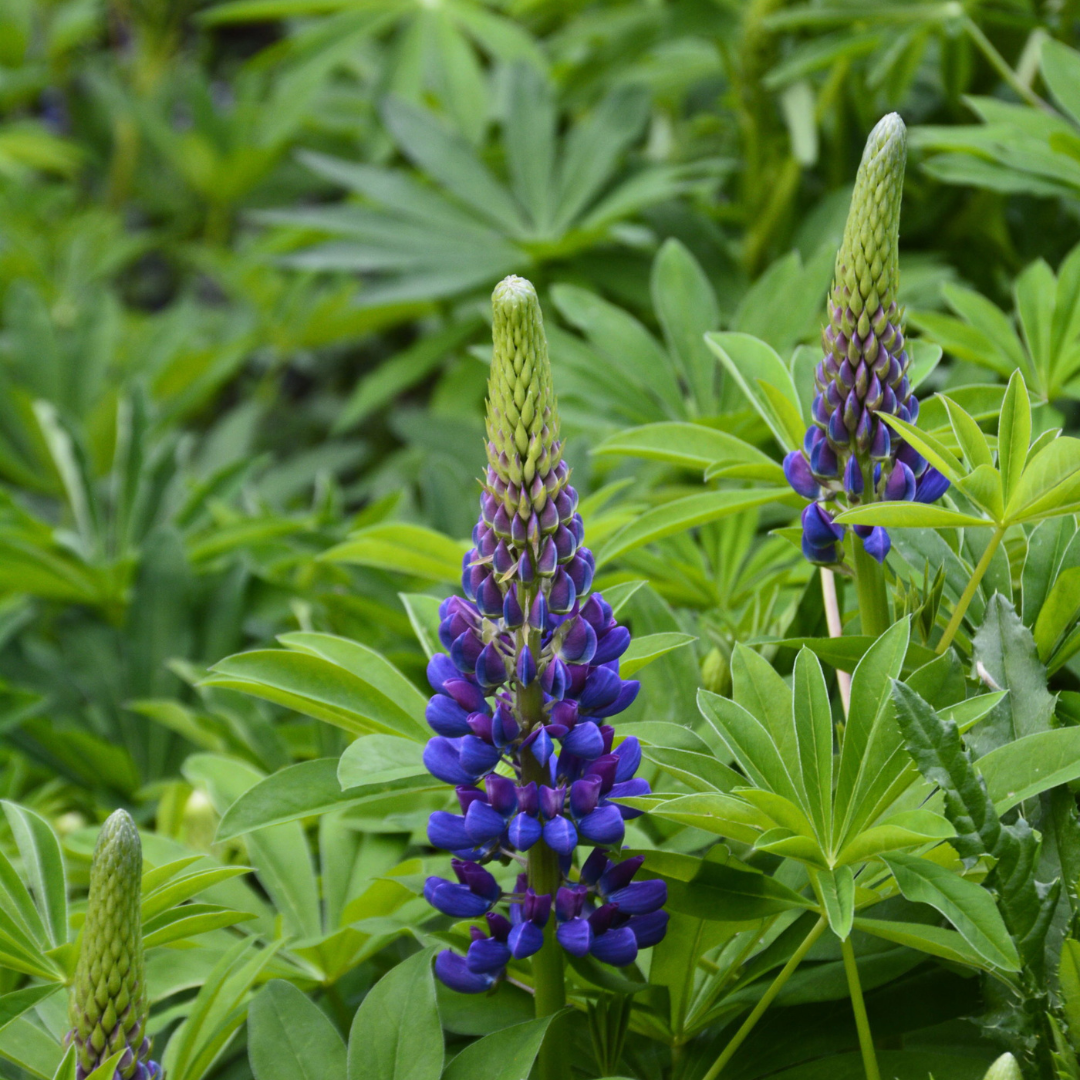
Lupinus 'Gallery Blue'
- In stock, ready for delivery
Lupinus 'Gallery Blue': Deep Blue Spires on a Short Leash
'Gallery Blue' is going through its blue period, and honestly, it's a masterpiece. Dense spikes of deep blue pea flowers over palm-shaped leaves, compact enough for a pot. HANG IT IN THE LOUVRE.
Plant Characteristics:
- Botanical Name: Lupinus 'Gallery Blue' (hybrid, Gallery series; derived from Lupinus polyphyllus)
- Common Name: Lupine, Dwarf Lupine
- Height: 45–60 cm (18–24 in)
- Spread: 45–60 cm (18–24 in)
- Flowers: Dense spikes of deep blue pea-like flowers, sometimes with a white bicolour
- Bloom Time: Late spring to early summer (June to July), with a possible second flush if deadheaded
- Foliage: Deep green, palm-shaped leaves in a compact mound
- Features: Good for cutting, compact enough for containers, rabbit resistant
Where to Plant: Plant it in groups near the front of a sunny cottage border, in a container, or anywhere you want vertical colour in early summer. Plant later-blooming perennials nearby to fill the gap once it finishes.
Companion Plants: Give 'Gallery Blue' a sunny or part-shade bed with well-drained soil, a red peony and white phlox to follow. Paeonia 'Karl Rosenfield' opens deep red double peonies at 80 to 90 cm in May and June. Phlox Luminary® 'Backlight' adds fragrant white heads at 71 to 76 cm from July to September. Aster 'Wood's Purple' brings purple asters at 30 to 40 cm from August to October. Miscanthus 'Morning Light' stands behind at 120 to 150 cm with fine, silver-edged blades.
Plant Care: Give it full sun to part sun and well-drained, slightly acidic soil. Sandy or loamy soil suits it best. Heavy, wet clay and winter wet can rot the roots. Water regularly during its first season, but don't overdo it. Skip the rich fertilizer, because lupines fix their own nitrogen. Cut spent flower spikes down to encourage a second, smaller flush of bloom. Lupines are often short-lived, so let a few spikes set seed if you want seedlings to carry on. They grow a deep taproot and resent being moved or divided, so choose their spot carefully. Watch for aphids and powdery mildew in mid summer. All parts, especially the seeds, are toxic if eaten.
History: Today's garden lupines trace back to George Russell, a gardener in York, England, who spent more than twenty years improving Lupinus polyphyllus, a species native to western North America, and received the Royal Horticultural Society's Veitch Memorial Medal in 1937. The Gallery series is a later, dwarf group of Russell-type lupines bred to stay short and compact.
Final Thoughts: Deadhead the first round and you might get a second exhibition. Deer and rabbits can't afford a ticket. OPENING NIGHT IS NOW.