

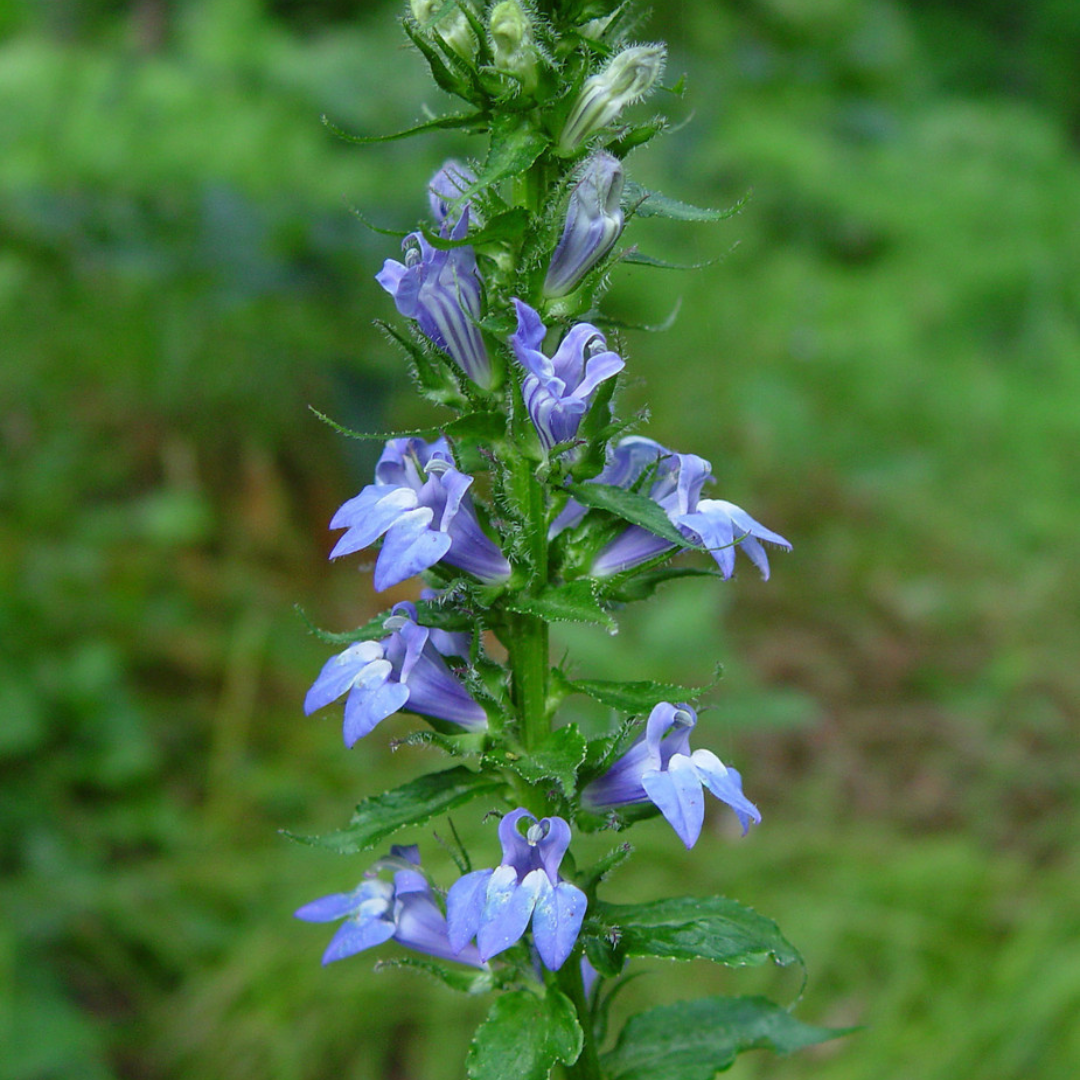
Lobelia siphilitica
- In stock, ready for delivery
Lobelia siphilitica: Bold Blue Spikes in Damp Ground
Great Blue Lobelia is the native that gives bumblebees a reason to get out of bed. Dense spikes of true blue in a garden full of pink and yellow. FINALLY, SOMEBODY BROUGHT THE COOL COLOUR.
Plant Characteristics:
- Botanical Name: Lobelia siphilitica
- Common Name: Great Blue Lobelia, Blue Cardinal Flower
- Height: 60–90 cm (2–3 ft)
- Spread: 30–45 cm (1–1.5 ft)
- Flowers: Dense spikes of blue, tubular, two-lipped flowers on unbranched stems
- Bloom Time: Midsummer to early fall (July to September)
- Foliage: Lance-shaped, light green leaves up to 12 cm (5 in) long
- Features: Tolerates wet soil, can self-seed into small colonies
Where to Plant: Plant it in rain gardens, along streams and ponds, in moist meadows and at the shady edge of a woodland garden. It's also a handy plant for heavy clay that stays damp, and it can self-seed into small colonies.
Companion Plants: Plant great blue lobelia in a wet, sunny or part-shade native bed with other moisture-loving natives. Caltha palustris opens golden marsh marigolds at 30 to 45 cm in April and May. Veronicastrum virginicum adds white Culver's root spikes at 120 to 180 cm in July and August. Chelone glabra brings white turtleheads at 60 to 120 cm in August and September. Hierochloe odorata adds sweetgrass at 30 to 60 cm, its blades scented of vanilla.
Plant Care: Grow it in rich, humus-filled soil that stays moist to wet. It takes full sun if the soil never dries out, but it's happiest with a little shade in the afternoon. Water during dry spells. Individual plants are fairly short-lived, but they renew themselves through self-sown seedlings and basal offsets. Leave some flower stalks standing to set seed and keep thick mulch off the crowns in winter. Divide clumps in spring as needed. It has no serious pest or disease problems. All parts are toxic if eaten.
History: Lobelia siphilitica is native across eastern and central North America, from Maine to Manitoba and south to North Carolina and Texas, in swamp forests, floodplains, wet prairies, ditches and lake margins. Its odd species name comes from a belief among early European settlers that the plant could cure syphilis, which it couldn't.
Final Thoughts: It handles wet soil and quietly seeds around into small colonies. Pair it with Cardinal Flower. RED AND BLUE, BETTER TOGETHER.