

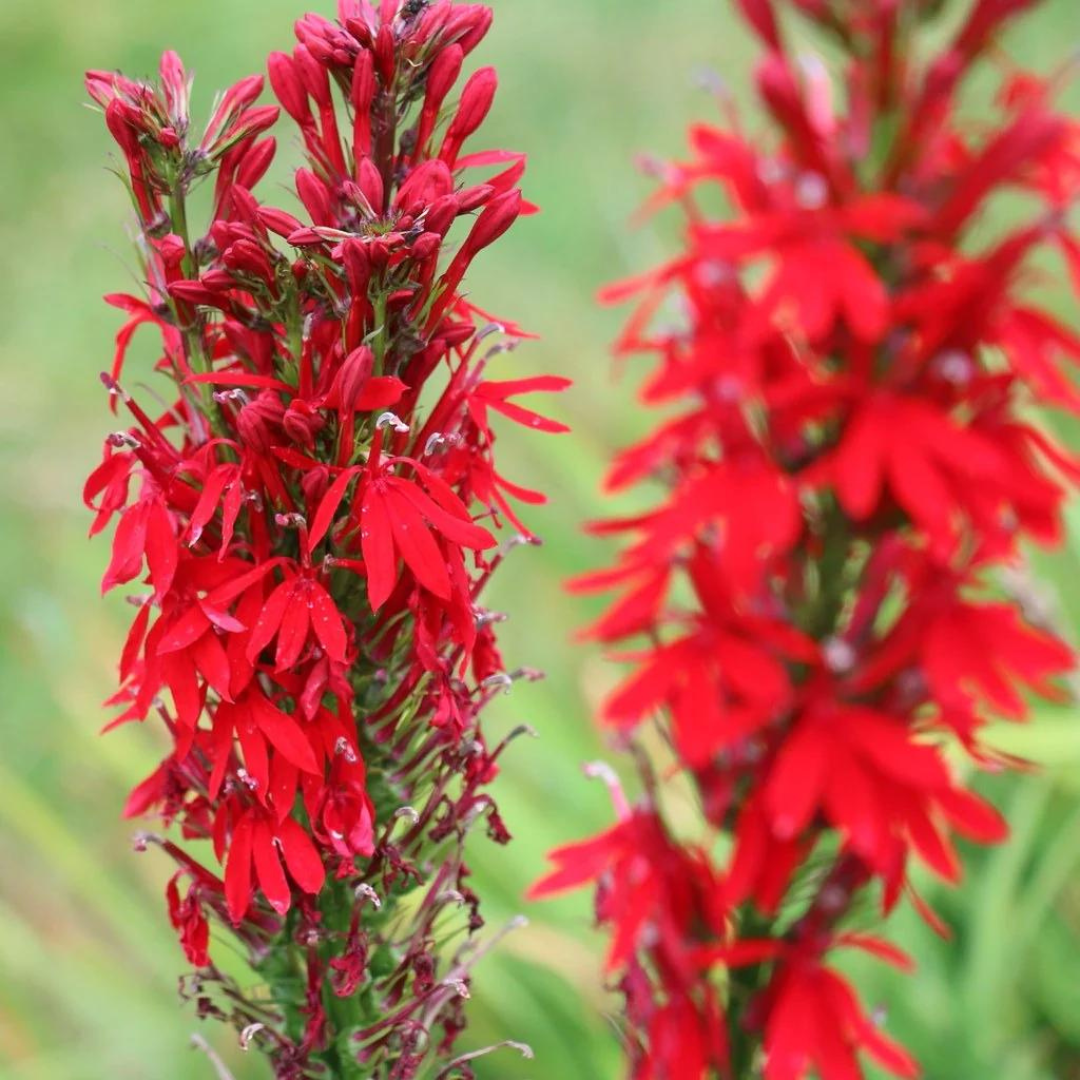
Lobelia cardinalis
- In stock, ready for delivery
Lobelia cardinalis: Cardinal Red Where Water Lingers
Cardinal Flower is a native that wears scarlet so bright the hummingbirds slam on the brakes mid-flight. And it loves wet feet. RED CARPET, SOGGY GROUND, ZERO REGRETS.
Plant Characteristics:
- Botanical Name: Lobelia cardinalis
- Common Name: Cardinal Flower
- Height: 60–120 cm (2–4 ft)
- Spread: 30–60 cm (1–2 ft)
- Flowers: Brilliant scarlet, tubular, two-lipped flowers on upright spikes
- Bloom Time: Midsummer to early fall (July to September)
- Foliage: Lance-shaped, dark green leaves, sometimes tinged bronze, from a basal rosette
- Features: Rabbit resistant, tolerates wet soil and brief flooding
Where to Plant: It belongs where water lingers: stream banks, pond edges, rain gardens, low spots and bog gardens, and it tolerates heavy, wet clay much better than most perennials. In a regular border, give it a spot you water often.
Companion Plants: Plant cardinal flower in a wet, sunny or part-shade native bed, at a pond edge or in a rain garden. Caltha palustris opens golden marsh marigolds at 30 to 45 cm in April and May. Iris versicolor adds violet-blue flag iris at 60 to 80 cm in May and June. Veronicastrum virginicum brings white Culver's root spikes at 120 to 180 cm in July and August. Hierochloe odorata adds sweetgrass at 30 to 60 cm, its blades scented of vanilla.
Plant Care: Plant in rich, moist to wet soil in full sun to part sun. The soil should never dry out. In hot, exposed spots, afternoon shade helps. Mulch the root zone to hold moisture, but keep it off the crown itself. Individual plants can be short-lived. They stay going through the small offset rosettes they form at the base, and through self-sown seedlings. Don't bury those rosettes under thick mulch or matted leaves in winter, because they need air. Leave a few flower stalks to drop seed. In spring, you can separate rosettes from the parent to make new plants. All parts are toxic if eaten.
History: Cardinal flower grows wild from southeastern Canada, including southern Ontario and Quebec, south through the eastern United States, Mexico and Central America, and its name, already in use by 1629, refers to the scarlet robes of Roman Catholic cardinals. Its main pollinator is the ruby-throated hummingbird, whose bill fits the tubular flowers perfectly.
Final Thoughts: Got a ditch, a rain garden or a spot that floods? Plant it there and watch the hummingbird traffic jam begin. SOMEBODY CALL A CROSSING GUARD.