

Ligularia 'The Rocket'
- In stock, ready for delivery
Ligularia 'The Rocket': Lemon Torches Lighting Up Wet Shade
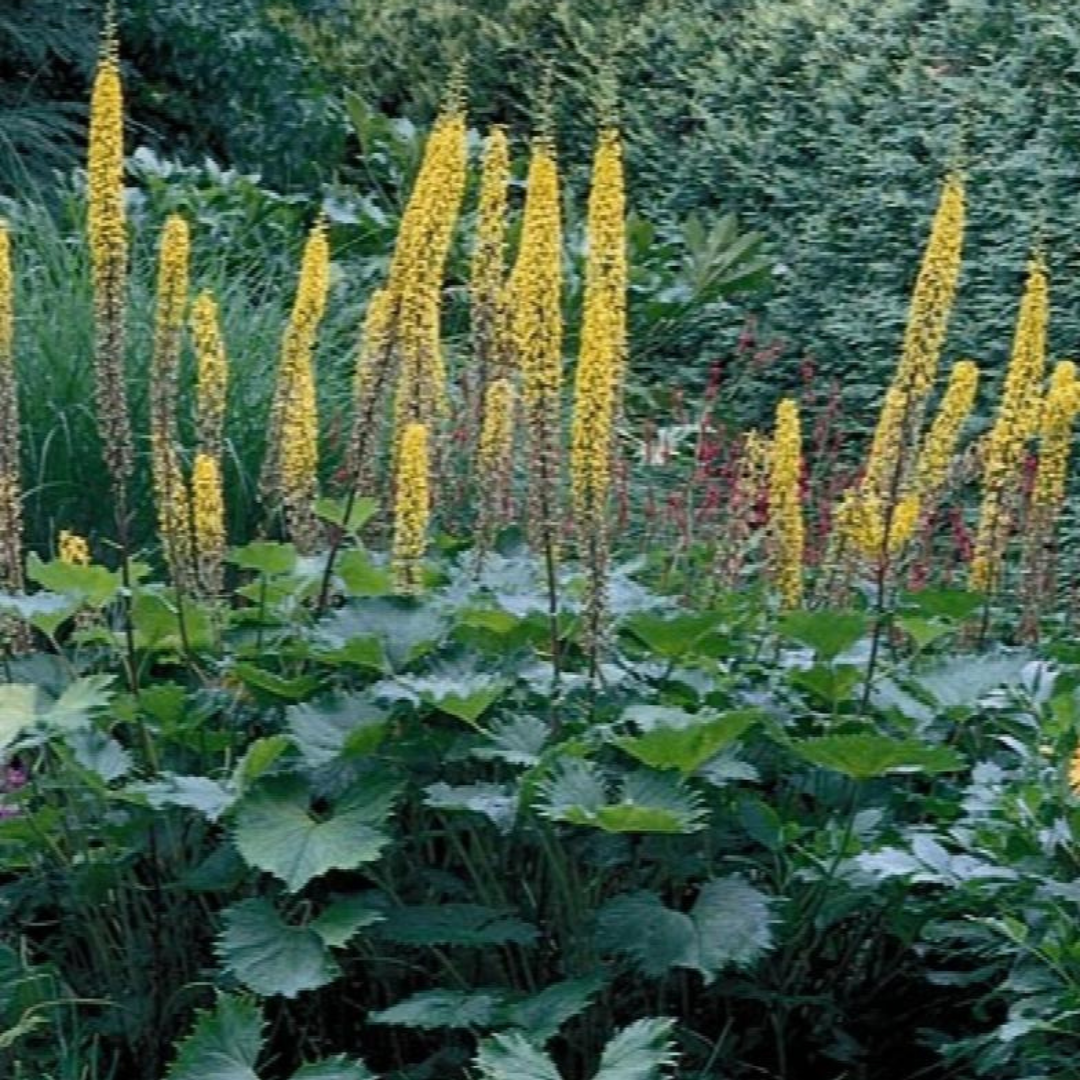
'The Rocket' doesn't do small talk. Long, narrow spikes of lemon-yellow blast off from purplish-black stems and tower over the shade garden like they've got somewhere to be. HOUSTON, WE HAVE A SHOWOFF.
Plant Characteristics:
- Botanical Name: Ligularia 'The Rocket', often listed under L. stenocephala or L. przewalskii
- Common Name: Ligularia, also called leopard plant or golden ray
- Height: 120–180 cm (4–6 ft) in bloom
- Spread: 60–90 cm (2–3 ft)
- Flowers: Small lemon-yellow daisies packed into long, narrow spikes on purplish-black stems
- Bloom Time: Midsummer (July to August)
- Foliage: Large, heart-shaped, deeply toothed green leaves
- Features: RHS Award of Garden Merit, handles wet soil
Where to Plant: Plant it at the back of a moist shade border, along a pond or stream, or in a wet low spot where it can soar and give instant height. Planted in a group, it reads like a row of yellow torches, and the spikes are good for cutting.
Companion Plants: Give 'The Rocket' the back of a moist, shady bed with silver brunnera, a big blue hosta and magenta astilbe. Brunnera 'Alexander's Great' opens sky-blue flowers at 35 to 40 cm in April and May over big silver leaves. Hosta 'Blue Angel' adds big blue-grey leaves at 80 to 90 cm. Astilbe 'Superba' brings tall magenta-pink plumes at 90 to 120 cm in August and September. Carex rosea edges the front with a fine native sedge at 30 cm.
Plant Care: Plant it in deep, fertile soil that stays reliably moist. Clay is fine. Protect it from hot afternoon sun and drying wind. In dry soil or strong sun, the leaves wilt badly on summer afternoons. Water deeply during dry spells and mulch well. Slugs and snails can chew the leaves. Cut flower stems back after blooming. Cut the foliage down in late fall or early spring. Divide in spring every three or four years if the clump gets crowded.
History: 'The Rocket' holds the Royal Horticultural Society's Award of Garden Merit and is also a parent of the compact 'Little Rocket'. Ligularias mostly come from damp places in central and eastern Asia, especially China, and the name comes from the Latin for strap, after the shape of their petals.
Final Thoughts: Wet soil? Perfect. Deer? Not interested. Plant it at the back of the shade border and enjoy the launch. BLAST OFF, BABY.