

Ligularia 'Britt-Marie Crawford'
- In stock, ready for delivery
Ligularia 'Britt-Marie Crawford': Chocolate Leaves with Late Orange Daisies
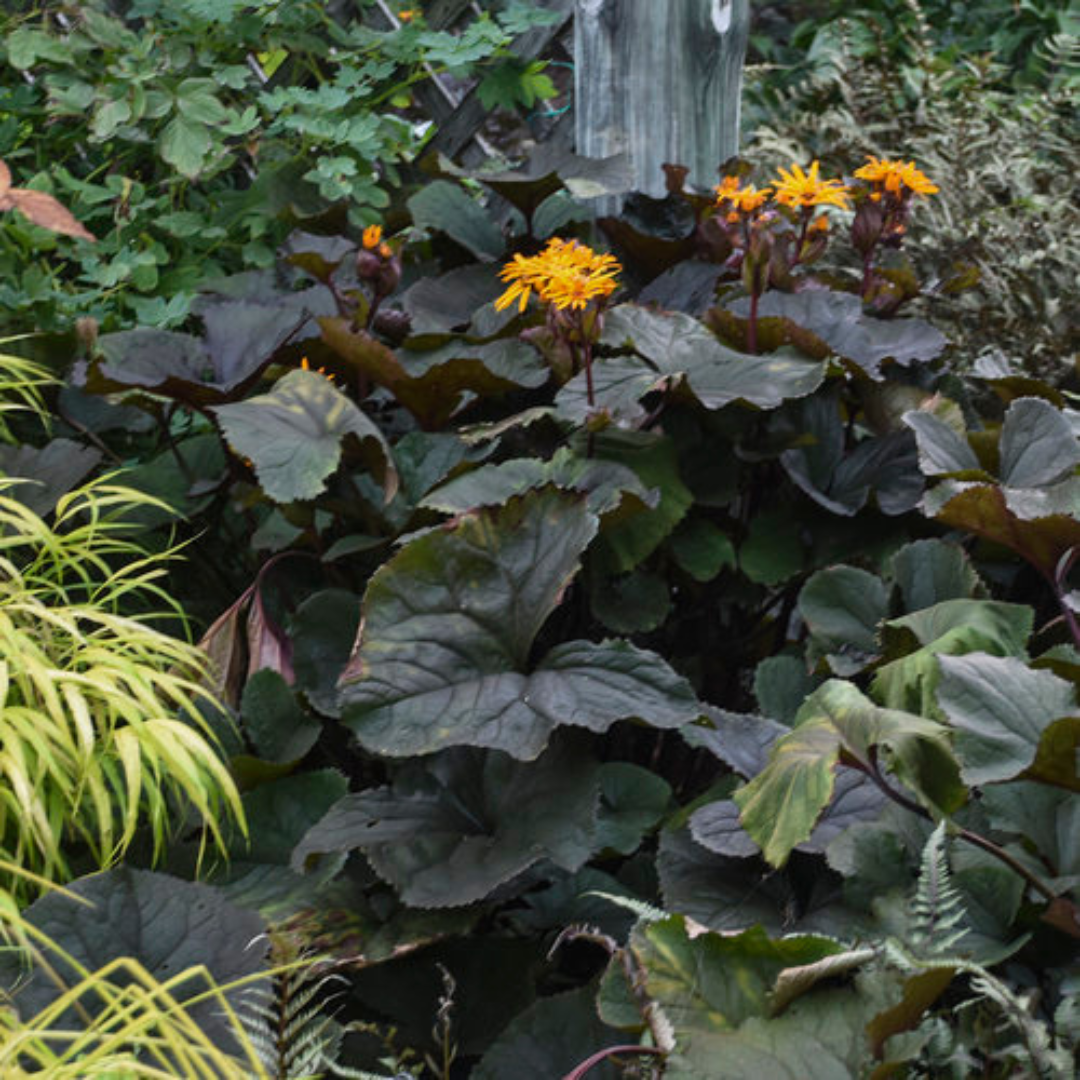
This ligularia has glossy leaves the colour of dark chocolate, and it keeps them that way all season with no touch-ups. Golden-orange daisies on dark stems finish the look. THE SHADE GARDEN JUST GOT A MAKEOVER.
Plant Characteristics:
- Botanical Name: Ligularia dentata 'Britt-Marie Crawford'
- Common Name: Bigleaf Ligularia, also called leopard plant
- Height: 90–120 cm (3–4 ft) in bloom
- Spread: 60–90 cm (2–3 ft)
- Flowers: Golden-orange daisies with dark centres, held on dark stems above the leaves
- Bloom Time: Late summer (August to September)
- Foliage: Large, rounded, toothed leaves in a glossy, deep chocolate-purple that stays dark all season
- Features: Handles wet soil and pondside planting
Where to Plant: Use it as a bold focal point in a damp, shady bed, beside a pond or stream, or in a low spot where water collects. It also works as the tall centrepiece of a large container, as long as you water it faithfully.
Companion Plants: Plant 'Britt-Marie Crawford' in a moist, shady bed where its dark leaves sit above violets and salmon astilbe. Viola labradorica carpets the front at 5 to 10 cm with purple-tinged leaves and violet flowers. Hosta 'Gypsy Rose' adds green leaves with a gold centre at 45 to 50 cm. Astilbe 'Delft Lace' brings salmon-pink plumes over dark leaves at 65 to 80 cm in July and August. Carex 'Ice Dance' edges the bed with white-edged blades at 30 cm.
Plant Care: Plant it in rich soil that stays consistently moist. This is the key to happy ligularia. In dry soil or hot afternoon sun, the big leaves wilt dramatically by mid-afternoon, then perk up in the evening. Give it shelter from afternoon sun and water deeply during dry spells. A layer of mulch helps hold moisture. Slugs like the leaves, so keep an eye out in wet springs. Cut spent flower stems after blooming, and cut the foliage back in late fall or early spring. Divide in spring every few years if the clump gets crowded.
History: James Crawford found this plant in 2001 in a garden in Fife, Scotland, as a seedling of the older ligularia 'Othello', and named it after his late wife for its unusually dark, glossy leaves. Ligularia dentata itself is native to China and Japan, where it grows in damp places.
Final Thoughts: Wet corner by the pond? Soggy spot nobody wants? Hand it over. THIS PLANT LIVES FOR DAMP DRAMA.