

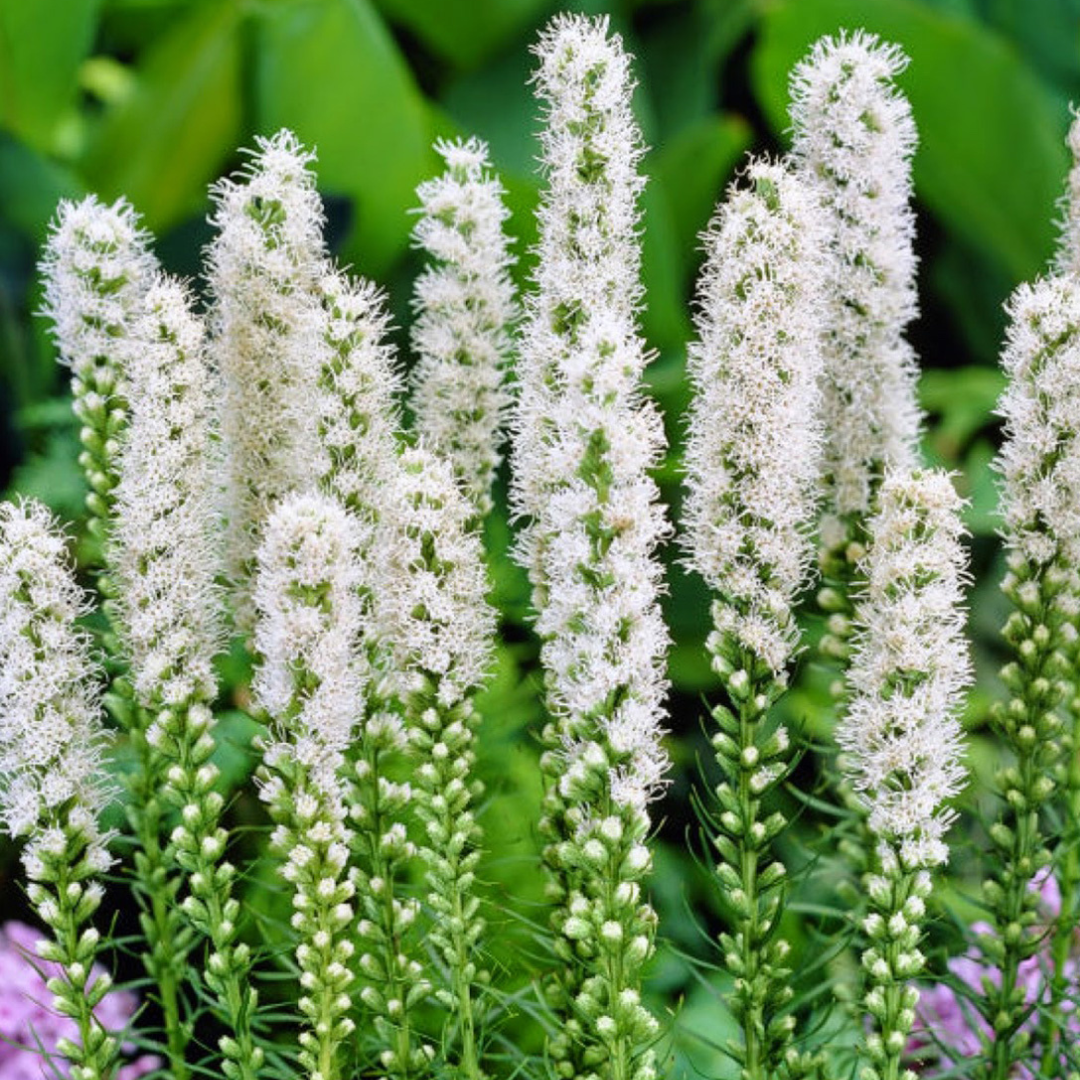
Liatris 'Floristan White'
- In stock, ready for delivery
Liatris 'Floristan White': Top-Down Bloomers in Cool Cream
Most flowers open from the bottom up. 'Floristan White' reads the instructions, ignores them and starts at the top. Fluffy creamy white spikes that pull in butterflies, bees and hummingbirds like a free buffet. REBEL WITH A CAUSE.
Plant Characteristics:
- Botanical Name: Liatris spicata 'Floristan White'
- Common Name: Blazing Star, Dense Blazing Star, Gayfeather
- Height: 75–90 cm (30–35 in)
- Spread: 30–45 cm (12–18 in)
- Flowers: Creamy white, fluffy flower heads packed into tall, dense spikes that open from the top down
- Bloom Time: Midsummer to early fall (July to September)
- Foliage: Deep green, narrow, grass-like leaves in a low clump
- Features: Rabbit resistant, excellent cut flower
Where to Plant: Plant it in groups of three or more for the strongest vertical effect in a sunny border, meadow or pollinator garden. The white spikes cool down hot colours and glow at dusk, and they make a classic cut flower, fresh or dried.
Companion Plants: Use white 'Floristan White' in a sunny bed with rose yarrow, plum lewisia and tall rose hollyhocks. Lewisia 'Little Plum' tucks in at the front at 15 cm with plum-pink flowers in May and June. Achillea 'Saucy Seduction' adds rose-pink heads at 50 to 65 cm from June to September. Alcea 'Radiant Rose' rises at the back to 175 to 180 cm with rose-pink hollyhocks. Pennisetum 'Little Bunny' fills in at 25 to 40 cm with tiny, fluffy plumes.
Plant Care: Plant in full sun in average, well-drained soil. Liatris grows from a corm-like rootstock that can rot in soggy winter soil, so in heavy clay, plant it slightly high or improve the drainage. Water regularly the first season; after that it handles dry spells well. Tall spikes may lean in rich soil or wind, so avoid over-feeding. Cut the spent spikes for a tidier look, or leave them for seed-eating birds. Cut the foliage to the ground in late fall or early spring. Divide crowded clumps every three or four years in spring.
History: Liatris spicata is native to eastern North America, including the tallgrass prairies of southwestern Ontario, where wild populations are now listed as threatened. The Floristan strain was developed in Europe as a uniform, seed-grown cut-flower line and is sometimes sold under its German name, 'Floristan Weiss'.
Final Thoughts: Deer and rabbits leave it alone and it makes a stunning cut flower. Plant a clump and let your inner florist out. THE VASE HAS BEEN WAITING.