

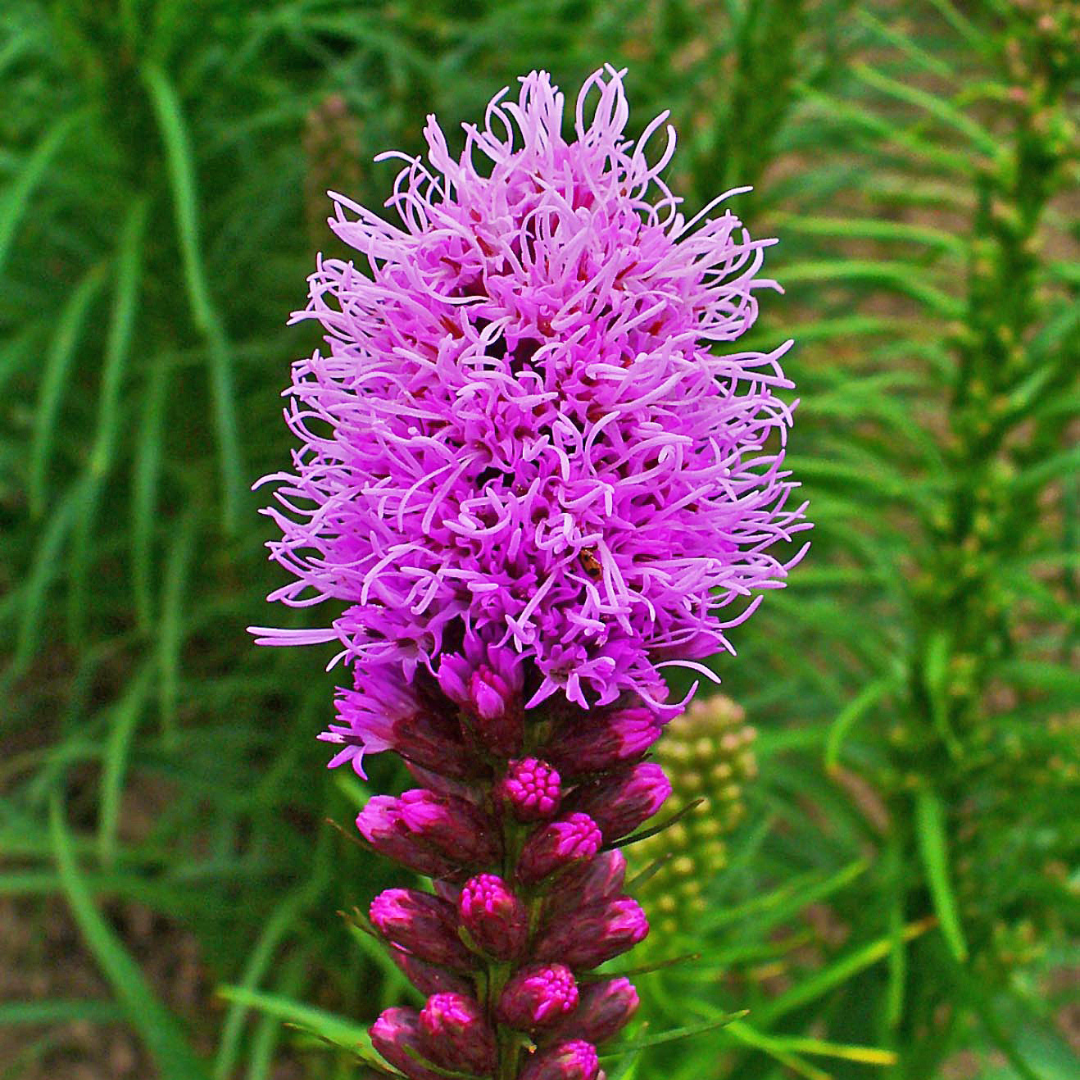
Liatris spicata
- In stock, ready for delivery
Liatris spicata: Purple Prairie Wands for Small Gardens
Dense Blazing Star packs its flowers tighter than a subway car at rush hour. Purple spikes open top to bottom, buzzing with bees and butterflies. STANDING ROOM ONLY.
Plant Characteristics:
- Botanical Name: Liatris spicata
- Common Name: Dense Blazing Star, also called gayfeather
- Height: 90–120 cm (3–4 ft)
- Spread: 30–45 cm (12–18 in)
- Flowers: Small purple flower heads packed tightly along tall spikes, opening from the top of the spike down
- Bloom Time: Midsummer to early fall (July to September)
- Foliage: Narrow, grass-like bright green leaves
Where to Plant: Its upright spikes add a strong vertical line to a sunny border, a pollinator garden or a native meadow, and they make a classic cut flower. Because it grows from a compact clump, it fits small gardens where bigger prairie plants would sprawl.
Companion Plants: Plant dense blazing star in a sunny native bed with chives, butterfly weed and late white asters. Allium schoenoprasum adds lavender chive flowers at 30 cm in May and June. Asclepias tuberosa brings bright orange butterfly weed at 30 to 75 cm in July and August. Symphyotrichum ericoides adds tiny white heath asters at 30 to 90 cm from August to October. Bouteloua gracilis adds blue grama grass at 30 to 60 cm with eyelash-like seed heads.
Plant Care: Plant it in full sun. It grows in clay, loam or sand and likes average to moist soil that drains reasonably well. In the wild it often grows in damp prairie, so it handles more moisture than most blazing stars, but soggy winter ground can still rot the corm. It can cope with an occasional dry spell once established. Too much shade makes the stems twist and lean, so give it a bright spot. No feeding needed. Cut stems back in late fall, or leave the seed heads for winter interest and the birds and tidy up in spring. Divide crowded clumps in spring every few years.
History: Dense blazing star is native to central and eastern North America, but in Canada it grows wild only in a few corners of southwestern Ontario, mostly in remnant tallgrass prairie on Walpole Island First Nation. It's listed as Threatened federally and in Ontario, largely because so little of that prairie is left.
Final Thoughts: A true native for your sunny bed that asks for almost nothing back. Plant a drift and watch the pollinators line up for a seat. NEXT STOP, YOUR GARDEN.