

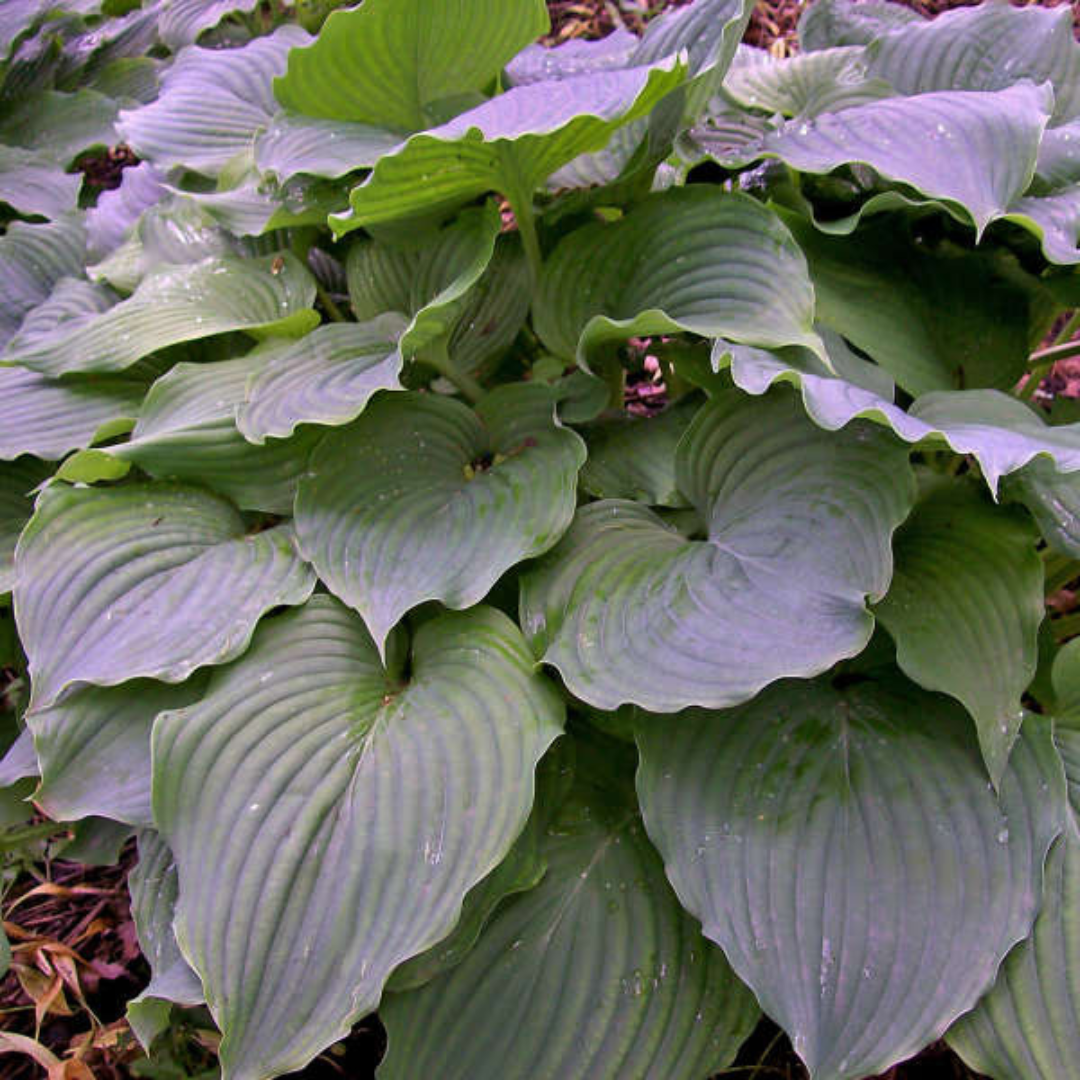
Hosta 'Komodo Dragon'
- In stock, ready for delivery
Hosta 'Komodo Dragon': Piecrust Edges on a Sprawling Mound
Huge, thick, deep green leaves with rippled edges like scales on something you'd only watch from behind glass. 'Komodo Dragon' guards the shade garden, and THE SLUGS HAVE HEARD THE RUMOURS.
Plant Characteristics:
- Botanical Name: Hosta 'Komodo Dragon'
- Common Name: Plantain Lily, Hosta
- Height: 70–75 cm (27–29 in)
- Spread: 200–215 cm (78–84 in)
- Flowers: Pale lavender bells on tall scapes
- Bloom Time: Midsummer (July to August)
- Foliage: Large, thick, deep green leaves with heavily rippled, piecrust edges
- Features: Good slug resistance
Where to Plant: Use it where you need one plant to cover a lot of ground: a woodland edge, the back of a large shade bed, or under mature trees. It handles average clay soil as long as it doesn't sit in standing water, though deer and rabbits may still sample it.
Companion Plants: Plant 'Komodo Dragon' in a moist, shady bed with Jack-in-the-pulpit, a crested lady fern and dark bugbane. Arisaema triphyllum adds hooded Jack-in-the-pulpit flowers at 30 to 60 cm from April to June. Athyrium filix-femina 'Victoriae' brings crested lady fern fronds at 45 to 60 cm. Cimicifuga 'Brunette' rises behind at 120 to 150 cm with dark leaves and fragrant spikes from August to October. Carex appalachica carpets the front with fine native blades at 15 to 30 cm.
Plant Care: Plant in part sun to full shade, in moist, well-drained soil enriched with compost. Keep it watered through its first summer and during dry spells. Shelter it from hot afternoon sun. Give it plenty of room. It needs a few seasons to reach full width, and crowding hides the rippled edges. Cut the flower stems after bloom and remove the foliage once frost knocks it down. Divide in early spring or early fall if you want more plants, though a mature clump is happiest left alone.
History: Mildred Seaver of Massachusetts, a prolific hosta breeder whose plants are still widely grown, hybridized 'Komodo Dragon' and registered it in 2004. It is a seedling of her hosta 'Donahue Piecrust', which explains the wavy, crimped leaf edges.
Final Thoughts: Plant it where you want something big and a little dangerous-looking. DO NOT TAP ON THE GLASS.