

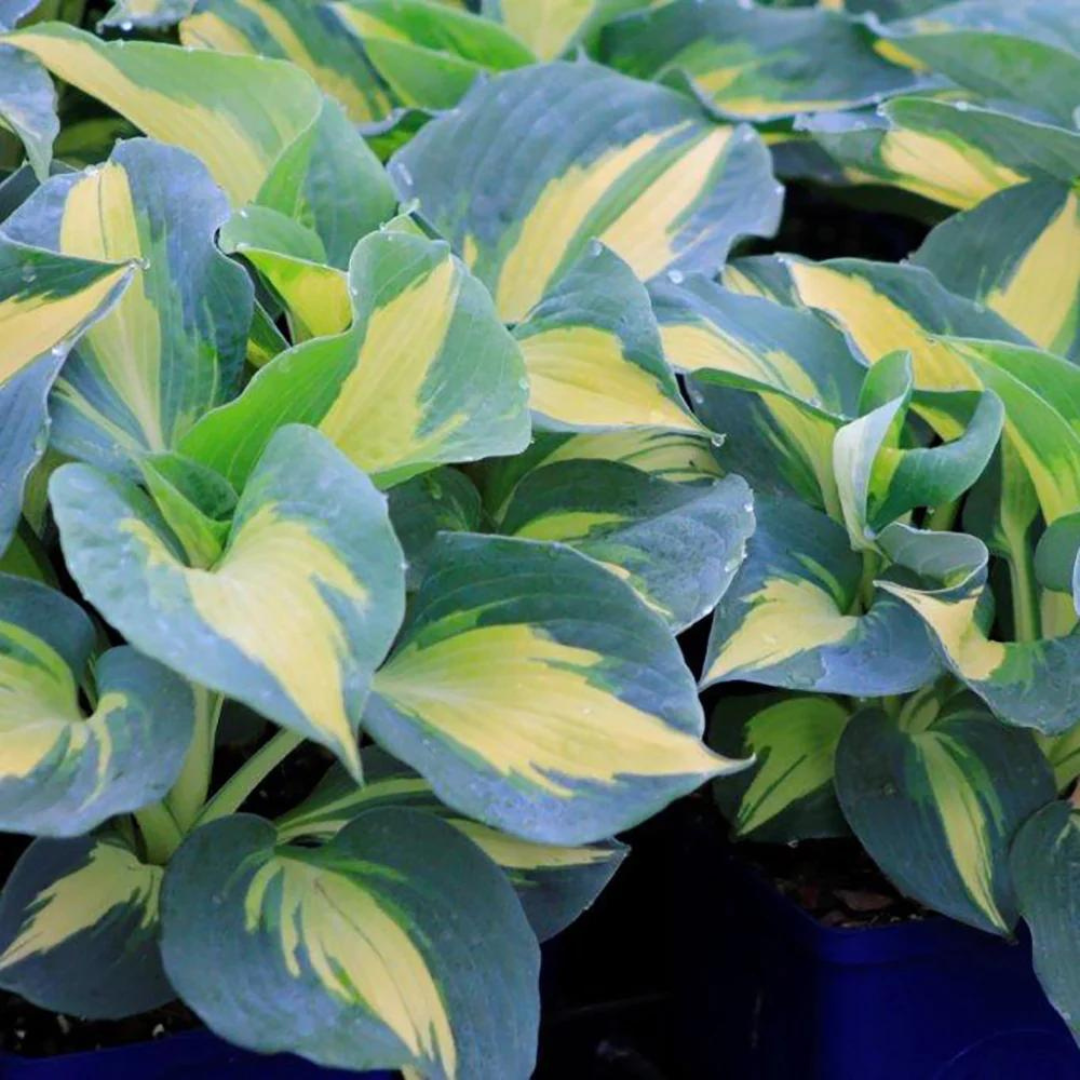
Hosta 'Dream Weaver'
- In stock, ready for delivery
Hosta 'Dream Weaver': Creamy Centres Inside Bold Blue
Creamy white centres framed by wide blue-green borders, so thick and ridged it looks hand-woven. 'Dream Weaver' brings cozy throw-blanket energy to the shade garden. THE COUCH CAN'T COMPETE.
Plant Characteristics:
- Botanical Name: Hosta 'Dream Weaver'
- Common Name: Plantain Lily, Hosta
- Height: 40–45 cm (16–18 in)
- Spread: 70–75 cm (27–29 in)
- Flowers: White to near-white
- Bloom Time: Midsummer (July)
- Foliage: Large, rounded, heavily ridged leaves with creamy white centres and broad blue-green margins; thick substance
- Features: Good slug resistance
Where to Plant: Plant it as a focal point in a shady bed, under high-branched trees or beside a path where you'll see the leaf pattern up close. The cream centres brighten dark corners without going full yellow.
Companion Plants: Use 'Dream Weaver' in a moist, shady bed with maroon hellebores, spotted toad lilies and dark bugbane. Helleborus HGC® Ice N' Roses® Bennotta opens maroon-red flowers at 30 to 40 cm from March to May. Tricyrtis hirta adds spotted toad lily flowers at 60 to 90 cm in August and September. Cimicifuga 'Chocoholic' brings dark leaves and mauve-pink spikes at 90 to 120 cm from August to October. Carex rosea edges the front with a fine native sedge at 30 cm.
Plant Care: Plant it in moist, rich, well-drained soil with compost mixed in. Give it shade during the hottest part of the day. Cream centres can scorch in strong afternoon sun, and blue leaves keep their colour best in shade. Water deeply during dry spells, especially in the first year. Deer and rabbits will happily eat hostas, so protect it where they roam. The thick leaves hold up better to slugs than most. Remove the flower stems after blooming and clear the foliage after a hard frost. Divide in early spring as the shoots emerge, if needed.
History: Bonnie Ruetenik of Ohio found 'Dream Weaver' as a sport, or natural mutation, of Hosta 'Great Expectations' and registered it in 1996. Many favourite hostas arrive this way, when a single shoot shows a new leaf pattern and a sharp-eyed grower keeps it going.
Final Thoughts: Low effort, good slug resistance and a look worth daydreaming about. Plant it, then go ahead and daydream. YOU'VE EARNED A NAP.