

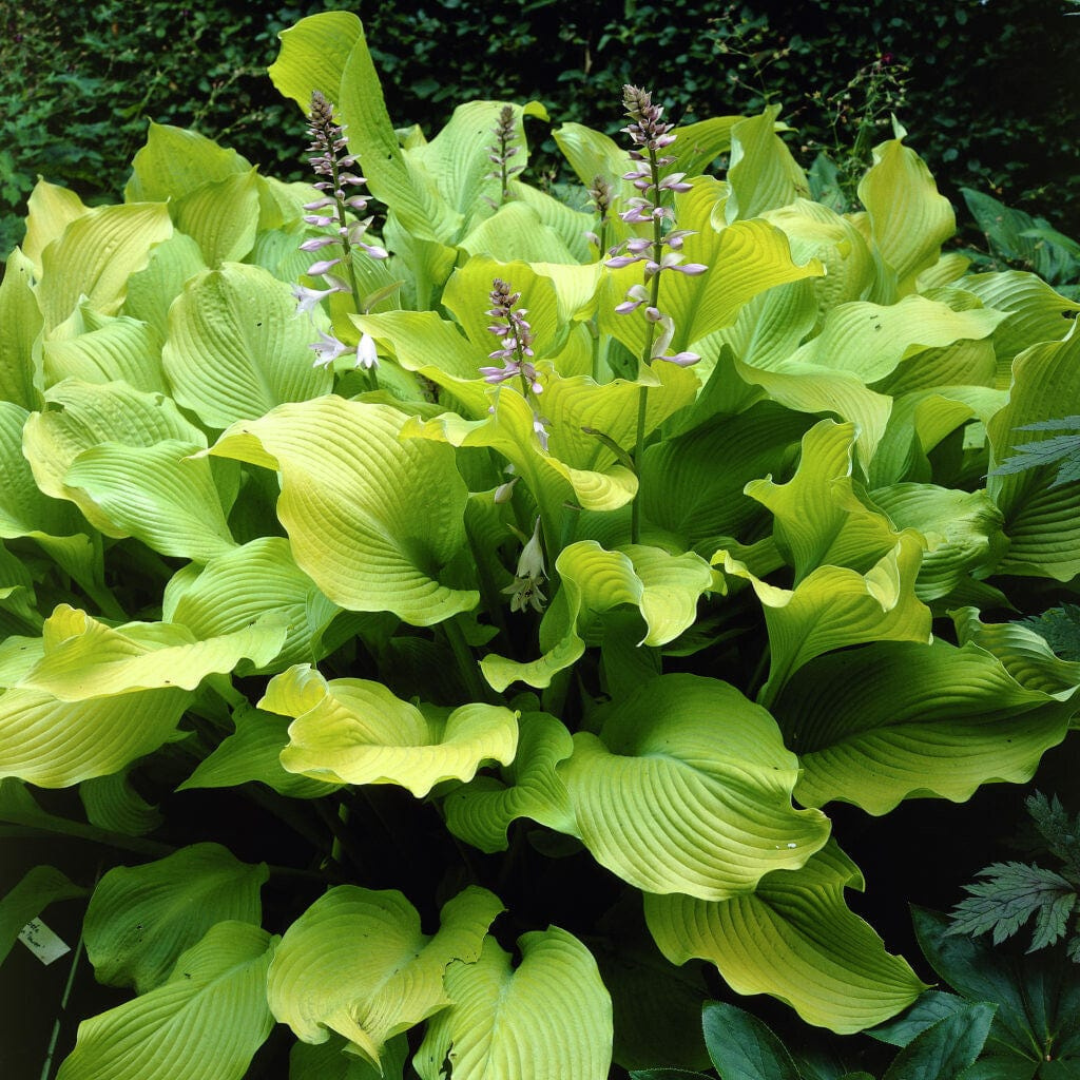
Hosta 'August Moon'
- In stock, ready for delivery
Hosta 'August Moon': Moonlit Chartreuse Going Gold
Chartreuse leaves in spring that turn gold as summer heats up, like a slow tan done responsibly. 'August Moon' handles more sun than most hostas and still glows like it's GOT A SECRET.
Plant Characteristics:
- Botanical Name: Hosta 'August Moon'
- Common Name: Plantain Lily, Hosta
- Height: 50–60 cm (20–24 in)
- Spread: 90–105 cm (3–3.5 ft)
- Flowers: Pale lavender, funnel-shaped, on scapes above the leaves
- Bloom Time: Mid to late summer (July to August)
- Foliage: Large, broad, moderately puckered leaves, chartreuse in spring maturing to gold
- Features: More sun tolerant than most hostas
Where to Plant: Use it to brighten a shady border, light up the base of a tree, or edge a woodland path, and since gold reads from a distance, it suits the far end of a shady yard. Morning sun makes it glow, but give it shade after lunch in hot summers to prevent scorch. It tolerates black walnut, though deer and rabbits find it very tasty.
Companion Plants: Plant 'August Moon' in a moist, shady bed where its gold leaves set off lavender, pink and cherry. Epimedium 'Lilafee' opens lavender-violet flowers at 25 to 30 cm in April and May. Tiarella 'Sugar and Spice' adds light pink foamflower spikes at about 20 cm in May and June. Astilbe Mighty® 'Chocolate Cherry' brings tall cherry-red plumes at 120 cm in July and August. Hakonechloa macra edges the bed at 30 to 45 cm with bright green, cascading blades.
Plant Care: Plant in moist, rich, well-drained soil with compost mixed in. Water deeply during dry spells, especially if it gets some sun. A layer of mulch keeps the roots cool and the soil evenly moist. Remove the flower scapes once they finish, and clear the leaves after a hard frost. Divide in spring as the pointed shoots come up, or leave it alone. It's happy to stay in one spot for years.
History: 'August Moon' turned up in Richard Langfelder's garden in Chappaqua, New York, and was named by hosta collector Alex Summers of Delaware after Langfelder shared it with him in 1964. Its parents were never recorded, but it became one of the classic gold hostas and a parent of many newer cultivars.
Final Thoughts: Give it a little morning sun and it'll light up the bed long after dark. HOWLING AT IT IS OPTIONAL.