

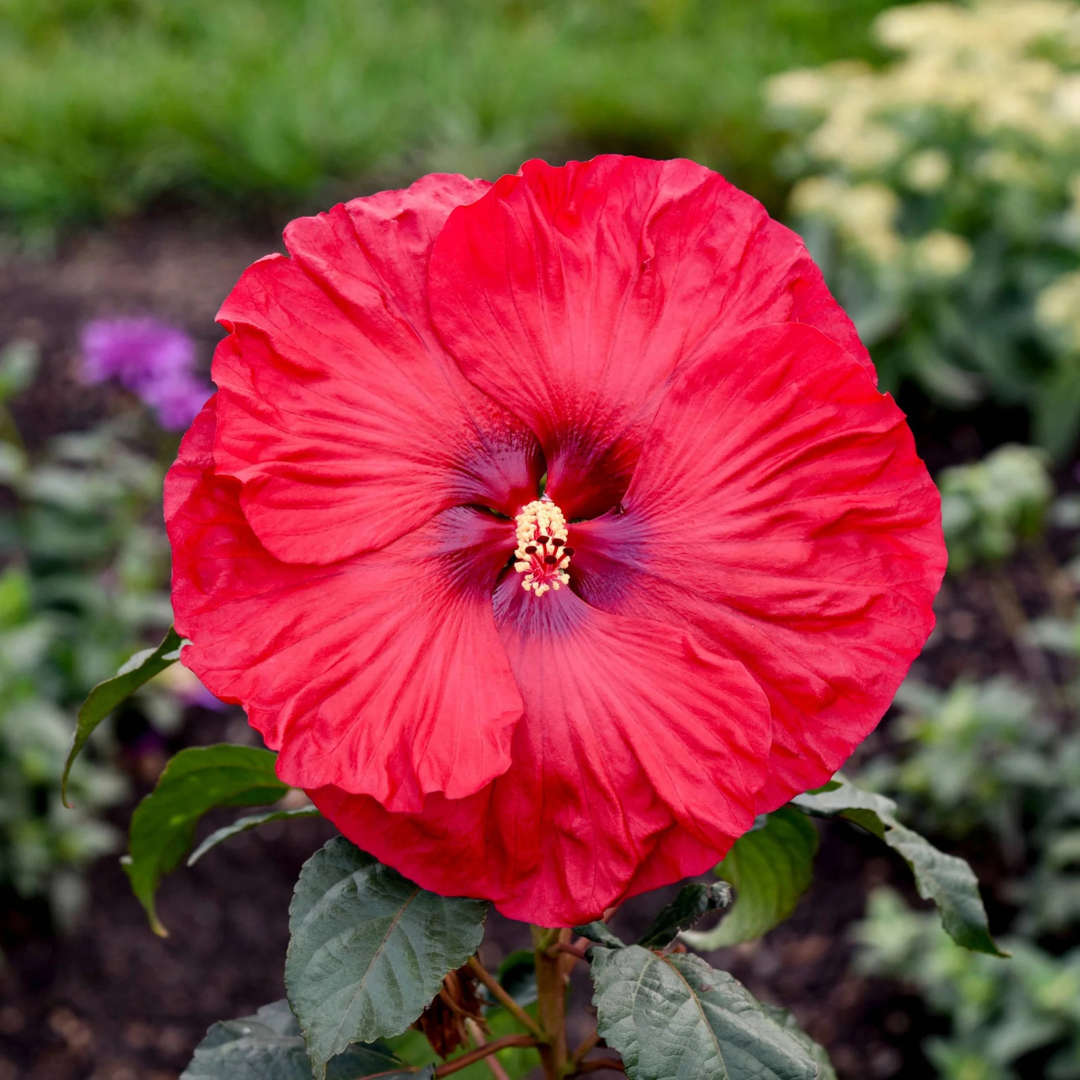
Hibiscus Summerific® 'Valentine's Crush'
- In stock, ready for delivery
Hibiscus Summerific® 'Valentine's Crush': Valentine Red at Eye Level
Bright red flowers that open flat and wide, like a heart-shaped box of chocolates somebody already tore into. 'Valentine's Crush' is tall, sturdy and COMES ON STRONG AND MEANS IT.
Plant Characteristics:
- Botanical Name: Hibiscus hybrid
- Common Name: Rose Mallow, Hardy Hibiscus
- Series: Summerific®, a Proven Winners® perennial
- Height: 150 cm (5 ft)
- Spread: 105 cm (3.5 ft)
- Flowers: Bright red, opening flat, 18–20 cm (7–8 in) across
- Bloom Time: Midsummer to late summer (July to August)
- Foliage: Large, rounded green leaves with a dark bronze tint in full sun
- Features: Sturdy upright stems, Mississippi State University Consumer Preference Selection (2022)
Where to Plant: Tall and narrow, it suits the back of a border, a sunny fence line or a spot by the front walk where you want colour at eye level. It's comfortable in moist soil, including damp clay and rain gardens.
Companion Plants: Use 'Valentine's Crush' in a sunny, moist bed with rose obedient plant, white turtleheads and a golden-flowered grass. Heuchera FYRE WING™ 'Rhodonite' edges the front at 20 cm with colourful foliage. Physostegia 'Crown Rose' adds rose-pink spikes at 50 cm from July to September. Chelone 'Black Ace' brings white turtleheads over dark stems at 120 to 150 cm from August to October. Deschampsia 'Goldschleier' fills in with fine blades and golden flower clouds at 60 to 90 cm.
Plant Care: Full sun gives the best bloom and the darkest leaves. Part sun is fine but means fewer flowers. Plant in rich, moisture-holding soil and water deeply whenever summer turns dry. Drooping leaves or dropped buds are its way of asking for a drink. Be patient in spring. Hardy hibiscus emerge late, often after everything else is up, then make up for lost time with very fast growth. Mark where it is. Cut the old woody stems down to roughly 15 cm (6 in) in spring before new shoots appear. Add a thick mulch for the first winter. Don't trim it in summer, because that removes flower buds. Division is rarely needed. Japanese beetles like it, so check the leaves in midsummer.
History: Walters Gardens in Zeeland, Michigan, bred 'Valentine's Crush' to replace 'Cranberry Crush' in the Summerific® collection, and it was named a Consumer Preference Selection in Mississippi State University's 2022 trials. Hardy hibiscus are bred largely from Hibiscus moscheutos, the swamp rose mallow, a wetland wildflower of eastern North America that reaches its northern edge in the marshes of southwestern Ontario.
Final Thoughts: Full sun, room to stretch and none of that flowers-from-the-gas-station energy. THIS IS THE GRAND GESTURE.