

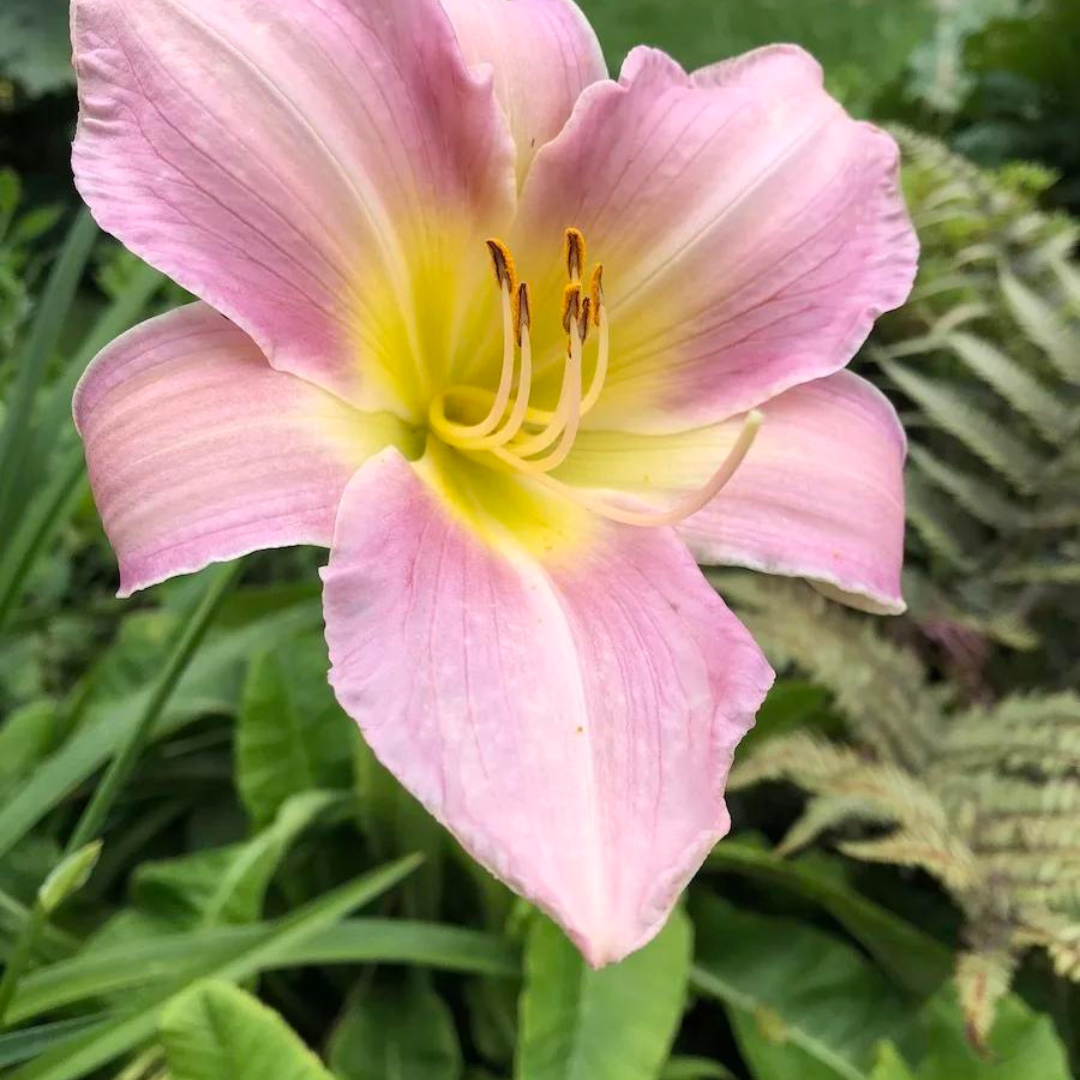
Hemerocallis 'Catherine Woodbery'
- In stock, ready for delivery
Hemerocallis 'Catherine Woodbery': A Scented Pink Classic Still Going Strong
Pale pink with a lavender wash and a yellow-green throat, this daylily smells so good you'll catch yourself sniffing the garden like a dog at a barbecue. SOFT COLOUR. SERIOUS PERFUME.
Plant Characteristics:
- Botanical Name: Hemerocallis 'Catherine Woodbery'
- Common Name: Daylily
- Height: 75 cm (30 in) in flower
- Spread: 60 cm (24 in)
- Flowers: Pale pink to lavender-pink with a yellow-green throat, about 15 cm (6 in) across, very fragrant. Each bloom lasts a day.
- Bloom Time: Mid to late summer (July to August)
- Foliage: Arching, strap-like green leaves that die back in winter
- Features: Fragrant
Where to Plant: Soft colour and height make it a natural middle-of-the-border plant that blends into pastel schemes and calms down bold ones. Plant it near a patio or path where you'll catch the scent, and keep it where deer and rabbits don't graze.
Companion Plants: Plant 'Catherine Woodbery' in a sunny or part-shade bed with orange geum, lavender phlox and gold goldenrod. Geum TEMPO™ 'Orange' opens orange flowers at 23 to 38 cm from April to June. Phlox Super Ka-Pow™ Lavender adds lavender heads at 45 to 50 cm from June to August. Solidago 'Golden Baby' brings golden plumes at 60 to 70 cm in August and September. Andropogon 'Red October' rises behind at 150 to 180 cm, turning deep red in fall.
Plant Care: Plant it in full sun for the best show. In part sun it still blooms, just a little less. Set the crown about 2.5 cm (1 in) deep in average, well-drained soil and water regularly through the first season. Established plants tolerate dry spells. Remove spent stalks after flowering, and clear the foliage in late fall or early spring. Divide in spring or late summer every few years, when the clump gets crowded or flowering thins out.
History: 'Catherine Woodbery' is a diploid daylily registered in 1967 by the hybridizer Childs, often spelled Woodbury, though Woodbery is the registered name. It has stayed in catalogues for decades thanks to its fragrance, height and easy nature.
Final Thoughts: Plant it by the patio where evening company can enjoy it. It's drought tolerant once settled and easy to please. THE NOSE KNOWS.