

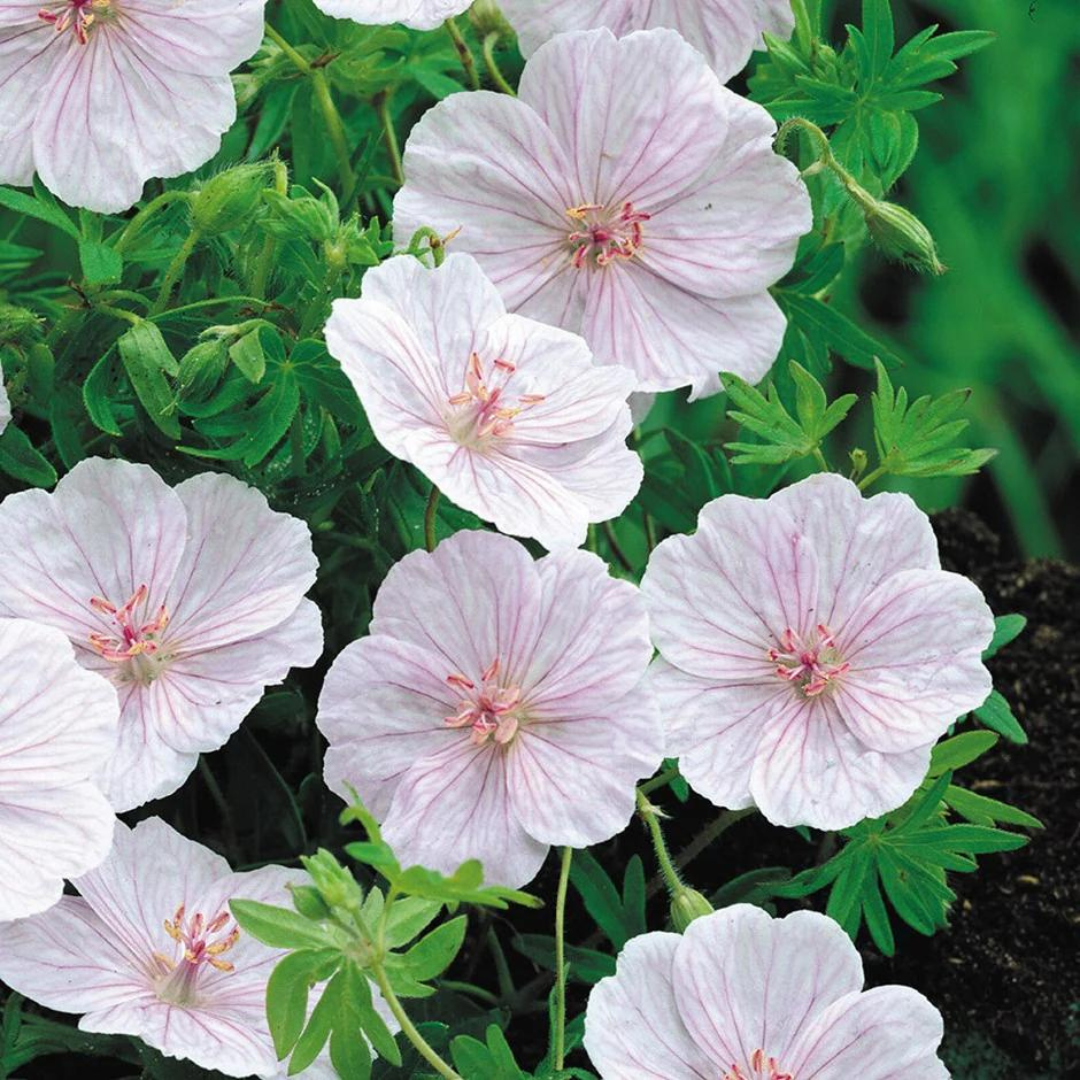
Geranium 'Striatum'
- In stock, ready for delivery
Geranium 'Striatum': The Pinstriped Rebel of the Family
'Striatum' looks like it was drawn with a fine-tip pen. Pale pink petals, every one pinstriped in deeper rose, on a low, tidy mound. Heat, humidity and a dry week don't faze it. PINSTRIPES, BUT MAKE IT GARDEN PARTY.
Plant Characteristics:
- Botanical Name: Geranium sanguineum var. striatum (also sold as var. lancastriense)
- Common Name: Striped Bloody Cranesbill
- Height: 15–20 cm (6–8 in)
- Spread: 45–60 cm (18–24 in)
- Flowers: Pale pink, about 4 cm (1.5 in) across, with deeper rose-pink veins
- Bloom Time: Late spring to late summer (June to August)
- Foliage: Fine, narrowly lobed, deep green leaves that often turn bronzy red in fall
- Features: Rabbit resistant, tolerates heat and humidity, RHS Award of Garden Merit
Where to Plant: Use it at the very front of a border, along a path, spilling over a low wall or in a rock garden. Several plants together make a soft, low ground cover in sun.
Companion Plants: Plant 'Striatum' at the front of a sunny, dry bed with purple pea flowers, ruby coneflowers and a pink haze in fall. Dianthus Fruit Punch® 'Whipped Cream' adds fragrant white pinks at 20 to 25 cm in June and July. Echinacea SunMagic® Vintage Ruby brings ruby-red coneflowers at 45 to 60 cm from June to September. Baptisia 'Grape Escape' adds dusky purple spikes at 105 to 120 cm in May and June. Muhlenbergia capillaris adds a fine clump that turns into a pink haze in September and October.
Plant Care: Plant it in full sun to part sun, in average, well-drained soil. It handles sandy or gravelly ground well, and copes with heavier clay as long as it isn't waterlogged in winter. Water regularly the first season. After that, water only in long dry spells. A light trim after the first flush of flowers keeps the mound tidy. Cut back old growth in late fall or early spring. Divide in spring or fall when the clump gets crowded.
History: This pale, striped form of bloody cranesbill grows wild in northwest England, which is where its older name lancastriense, after Lancashire, comes from. Sanguineum means blood red and refers to the usual magenta flowers and red fall leaves, which makes this soft pink form the odd one out in the family.
Final Thoughts: Line the front of the border with it and call it your dress code. The deer can stay home. NO STRIPES, NO ENTRY.